Thule Roof Rack Replacement Parts: Identification and Selection
What is the answer to my immediate question?
Locating correct Thule roof rack replacement parts begins with the exact Thule kit or component number and the vehicle fitment details that apply to that system. A replacement foot, fitting kit, end cap, lock cylinder or load bar is not universally interchangeable. The relevant condition is that the replacement part must match the specific Thule system generation, load bar profile and vehicle fit kit already installed or selected.
For a vehicle-specific fitting component, match the four-digit Thule kit number and the listed model years, body style, roof type and any noted exclusions such as a panoramic roof or raised roof rails. For system hardware such as feet and bars, confirm the square, rectangular or aerodynamic bar profile and the compatible foot or fitting kit generation. If the original part number is unavailable, identify the system by its physical markings and bar profile before ordering.
How can I identify or locate the correct item?
Start with identifiers on the hardware itself. Many Thule load bars carry a printed or etched part number and length marking, while feet, fitting kits and adapters often have molded part numbers or generation labels. Record those numbers exactly because similar systems from different generations can share a general appearance but use incompatible clamping, spacing or attachment geometry.
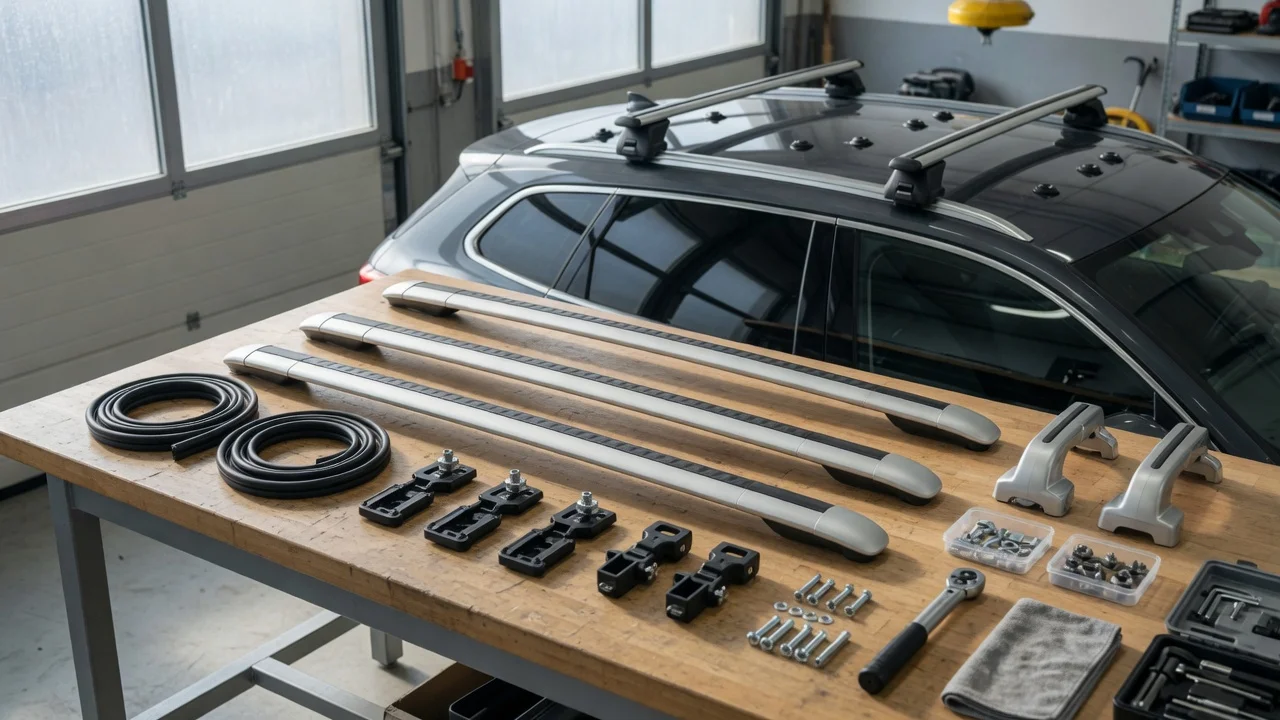
Physical landmarks also help separate look-alike variants. Check the bar profile first: a square bar has a clearly rectangular section, while aerodynamic bars have a flattened or wing-shaped section that differs among generations. Feet and fitting kits can then be matched by the shape of the clamp pad, the engagement area where the foot meets the bar, and the hardware supplied for a flush rail, raised rail, fixed point or door-jamb style roof.
When vehicle-specific identification is required, compare the Thule kit number and the component landings against the fitment for the applicable model year, market and body style. Resolve uncertainty by checking the roof structure itself and matching its contact points to the kit instructions, since a vehicle may be covered by several kits depending on whether it has factory rails, flush longitudinal bars or a bare roof.
Gaps and final selection notes
Specific prices, current inventory and every possible cross-compatible substitute are not supplied here and should be confirmed against current Thule fitment information for the exact system and vehicle. The safest selection path is to use the original part number or a confirmed Thule kit number, then verify the vehicle conditions and roof contact points before buying a replacement part.