Throttle Body Service Explained: What It Includes and Whether You Need It
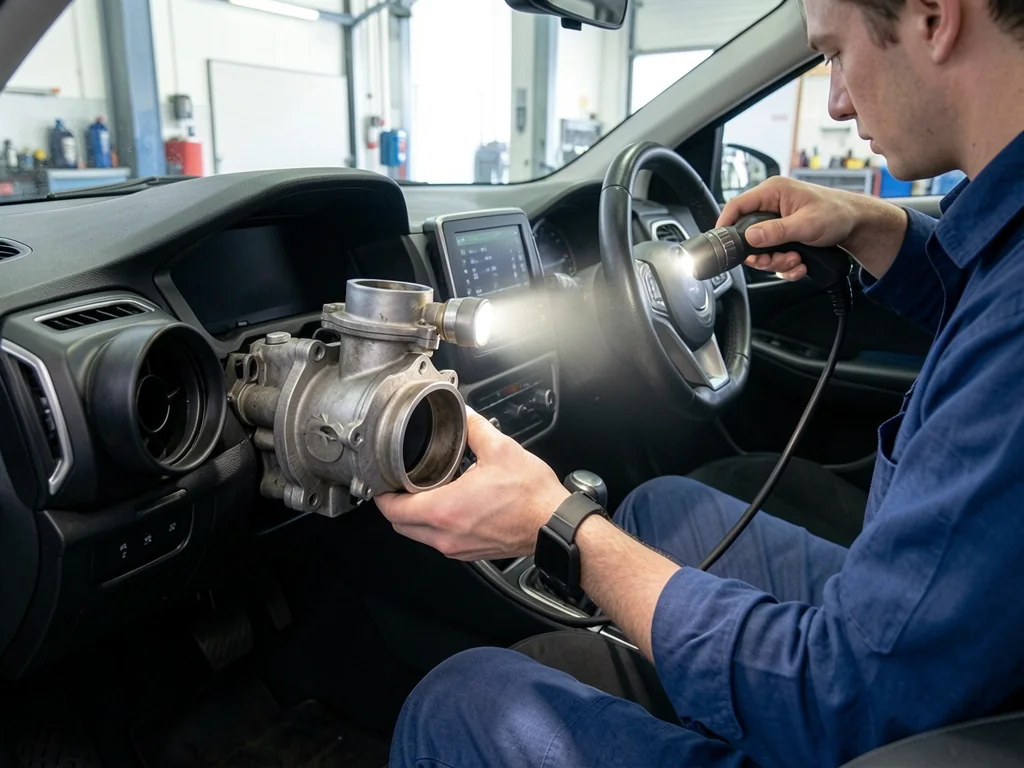
A throttle body service sounds simple, but shops use the name for different work. It helps to know what the technician inspects, how cleaning spray is used, and how a fuel injection and throttle body service package differs from basic cleaning. With that, you can judge whether a recommendation is necessary. Knowing what is included and how the estimate is built also makes it easier to approve only work that has a clear reason behind it.
What Throttle Body Service Means
The throttle body sits between the air filter ducting and the intake manifold. Its throttle plate opens and closes to control how much air flows into the engine. On most modern vehicles, electronic throttle control moves that plate with a motor commanded by the engine computer rather than a direct cable. Over time, carbon deposits and oily residue from crankcase ventilation vapors can build up around the plate edge and bore. Because the plate is nearly closed at idle, even a thin layer can shrink the small airflow gap the computer expects, which may affect idle quality.
In practical terms, throttle body service means an inspection, plus cleaning when the findings support it. The exact scope depends on the vehicle design and the shop's procedure. A full body throttle service is not a standardized package. One shop's version may include an intake duct inspection, while another adds a fuel additive, so ask for a written list of the included work. Replacing the unit and any relearn steps are separate jobs. They fall outside what a routine appointment to service the throttle body normally covers.
What a Shop Inspects Before Cleaning
A throttle body inspection usually starts with the parts that can be seen: the bore, the face of the throttle plate, and the edges where deposits tend to build up. The technician should also check the intake duct, clamps, and nearby hoses for cracks, looseness, or visible damage. Unmetered air that enters after the airflow sensor can cause idle problems that feel like a dirty throttle. Before recommending cleaning, a careful shop records the symptom, when it happens, the engine temperature, and any stored fault codes or live data related to airflow or idle control.
Visible carbon alone does not prove that deposits are causing a rough idle or hesitation, and it does not automatically mean cleaning is needed. A fault code is evidence to interpret, not proof that a part has failed. Codes that vary by manufacturer need to be confirmed against information for your specific vehicle. Documented findings, ideally with notes or photos of the throttle before and after, give you a record to compare later. A check after the service should confirm whether the original complaint actually improved, not just that the throttle looks cleaner.
What Throttle Body Cleaning Spray Does
Throttle body spray is a solvent made to loosen and dissolve carbon and varnish on approved throttle body surfaces so the residue can be wiped away. Using a compatible cleaner matters more than many owners expect. Some throttle bores have coatings that certain products can strip, and seals, plastic housings, and electronic throttle parts can be damaged by the wrong chemicals. Check the vehicle maker's guidance and the product label before use. Make sure the cleaner is suitable for that specific throttle body and is not meant only for carburetors or general parts cleaning.
In a shop, cleaner is applied in a controlled way, with attention to where the solvent runs, and connectors, sensors, and the throttle motor are protected. Technicians avoid soaking electrical parts and let the residue evaporate before running the engine. Spraying cleaner into a running intake or forcing an electronic throttle plate open by hand can create a fire risk. It can also damage the motor or its gears, or throw off the plate position the computer has stored. For those reasons, detailed cleaning steps are best left to qualified technicians who follow the vehicle's service information.
What a Fuel Injection and Throttle Body Service Package Includes
A fuel injection and throttle body service often pairs throttle cleaning with a separately listed fuel-system step. That step might be a fuel tank additive, machine-assisted cleaning that runs solvent through the fuel supply or intake, or injector testing, but no package automatically includes all of these. The estimate should name the actual method. It also matters which parts each item reaches. A tank additive works on the fuel side, and throttle cleaning covers the throttle bore and plate. Neither one guarantees a clean intake and fuel system from end to end.
Fuel injectors spray measured amounts of fuel into the engine. Clogged or leaking injectors can cause misfires, rough running, or fuel mixture problems, but other problems can cause those symptoms too. That means a fuel injector and throttle body service needs its own reason for each half. Bundling injector work with throttle cleaning is a pricing convenience, not evidence that the injectors need attention. If a shop recommends a fuel injector throttle body service, ask what evidence supports the injector part, such as misfire counts, fuel trim readings, or an injector balance test.
When Throttle Body Service Is Justified
Whether a throttle body service is necessary depends on the vehicle's maintenance schedule, what the inspection shows, and whether a symptom has been diagnosed. Guidance varies by manufacturer, and there is no universal cleaning interval that applies to every engine. Rough idle, stalling when coming to a stop, and uneven throttle response are common complaints linked to deposits. However, vacuum leaks, sensor faults, ignition problems, and fuel delivery issues can feel the same, so the complaint alone does not point to the throttle body.
Owners can help by making some safe observations. Note whether the symptom shows up only on a cold start or also after the engine warms up, whether it happens with the air conditioning on, and whether a check engine or electronic throttle warning light comes on. Repeated stalling or unusual throttle response, such as reduced power or an unexpected surge, calls for professional diagnosis rather than a quick cleaning, because the throttle system affects vehicle control. Cleaning may improve idle quality when deposits are the confirmed cause, but it is not a guaranteed fix.
How to Understand a Throttle Body Service Estimate
Throttle body service prices vary widely, and a single national figure would be misleading. In general, a standalone cleaning with a basic inspection costs less than a bundled package, which adds products and equipment time. Local labor rates, how hard the throttle body is to reach, how much cleaning is included, any diagnostic time, and bundled fuel-system work all move the total up or down. Comparing quotes only makes sense when each one describes the same work, so compare what is included, not just the final number.
An itemized estimate should list inspection or diagnosis, cleaning labor, materials such as cleaner or additives, any additional services you approved, and shop fees. Useful questions include what evidence supports the recommendation, whether photos or scan data are available, exactly what the quoted package includes, and which parts each product reaches. Also ask how the shop will judge the result, such as rechecking idle behavior and data against the original complaint. Clear answers let you approve the throttle body work that matches the findings and decline items without a clear reason.