Throttle Body Relearn: Reset and Calibration With or Without a Scan Tool
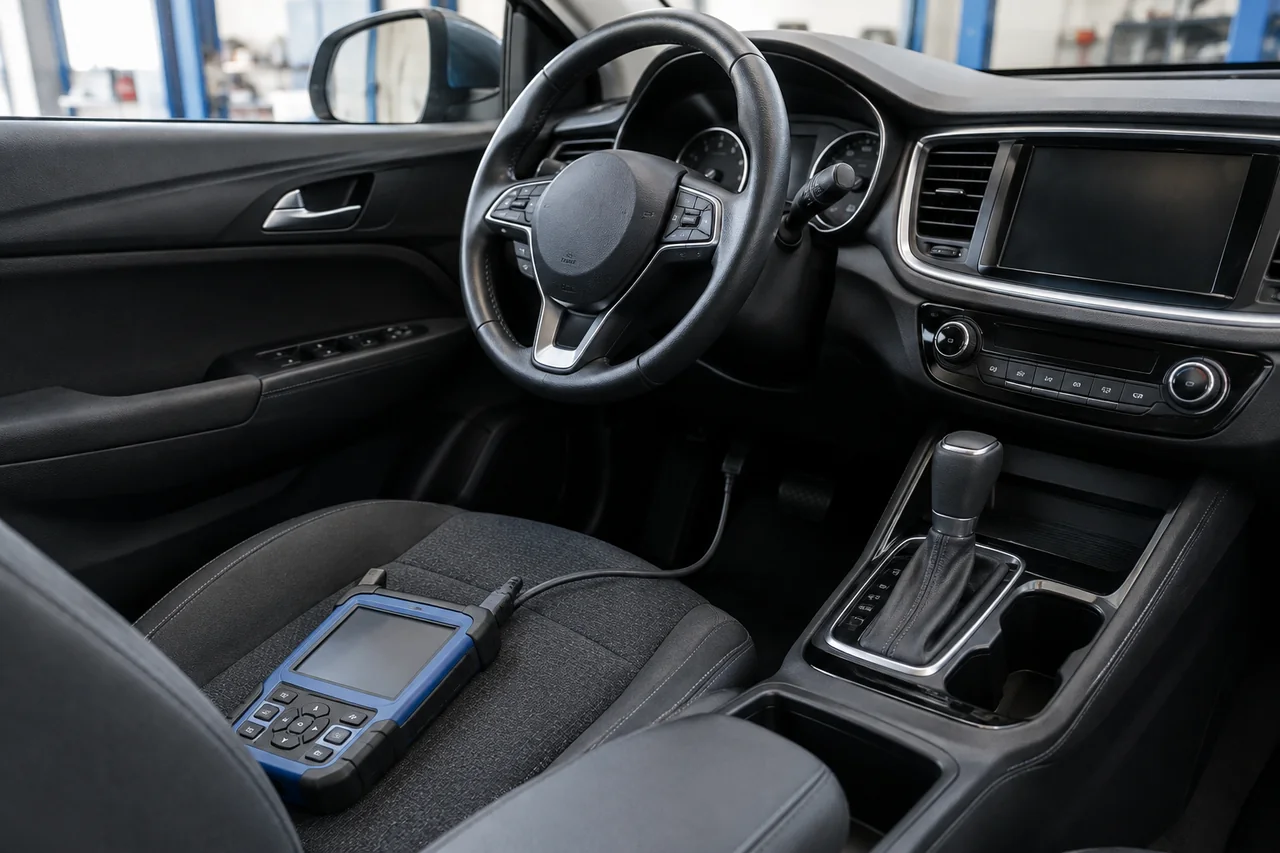
A throttle body relearn teaches the powertrain control module how electronic throttle control should manage airflow after service. Learned airflow values and idle adaptation can drift after cleaning or replacement, so idle speed stability may suffer until a supported relearn procedure for throttle body is completed. Reset, calibration, relearn prerequisites, no-tool and scan-tool methods, and Ford or GM variations all affect whether idle returns to a stable, usable state.
When a Throttle Body Relearn Is Needed
The powertrain control module stores learned airflow values so electronic throttle control can hold a stable idle as load changes. Those points describe how far the throttle plate should open for a given airflow and update as the system ages. Idle adaptation is part of that memory. When the learned map still matches the hardware, idle speed stability is usually acceptable. After the airflow path changes, the same stored values can leave the engine hunting or sitting high.
Cleaning or installing a different throttle assembly can change airflow at a given plate angle, so a throttle body relearn is often specified afterward. Requirements depend on the vehicle; some controllers adapt during a documented idle learn, while others need a reset or scan-tool routine. Rough idle, elevated idle, or stalling after service warrants checking the relearn requirement but does not establish the cause. Adaptation after service is the focus here, not removal, cleaning, or replacement.
What Resetting, Relearning, and Calibration Mean
Resetting a throttle body usually means clearing stored learned airflow values so the controller starts from a known baseline. Relearning then lets the powertrain control module rebuild idle adaptation and throttle position calibration under specified conditions. Calibrating a throttle body is often the same family of steps, teaching reference points and a stable idle airflow. Labels differ, so a throttle body reset on one brand may be listed as idle learn or electronic throttle control adaptation on another.
Requests to reprogram a throttle body usually concern idle adaptation rather than reprogramming controller software. Actual controller programming is a separate service requirement when a calibration file or module replacement calls for it. A supported calibration function may teach closed-throttle stop, pedal correlation, and idle airflow, but not every vehicle uses that process. Identify the year, model, engine, and applicable service procedure before selecting any reset, relearn, or calibrate function.
Checks to Make Before a Throttle Body Reset
A throttle body reset should follow the applicable service procedure, and it is not required before every relearn. Some applications rebuild learned values without a prior clear; others specify resetting throttle body memory first. Record symptoms and stored diagnostic information before clearing anything. Clearing codes can erase freeze-frame data and pending faults that explain why idle speed stability failed, so resetting throttle body memory without that record can hide the original evidence.
Relearn prerequisites often include battery condition, engine temperature, transmission position, accessory load, and unresolved faults. A weak battery or large electrical load can abort idle adaptation. Battery disconnection and code clearing cannot be assumed to perform a throttle body reset; many electronic throttle control systems keep learned airflow values through a simple power loss. Limit owner checks to safe observations with the vehicle secured and the engine off. Leave suspected wiring, intake, or throttle actuator faults to appropriate testing.
Following a Supported Relearn Without a Scan Tool
An electronic throttle body relearn without scan tool is valid only when the manufacturer documents that path for the exact vehicle. Confirm a supported no-tool procedure, meet its relearn prerequisites, follow the specified ignition or idle stages, then check the result. That path is not a universal pedal sequence, a fixed waiting period, or a promise that normal driving will always complete adaptation. Ignition timing, idle duration, pedal use, and any driving stage must come from that vehicle's instructions.
If any stage requires the engine running, provide ventilation and keep hands and tools away from the throttle mechanism. Electronic throttle control can move the plate without pedal input during idle adaptation. Relearning a throttle body without a tool still depends on those safety limits. If the no-tool attempt is unsupported or unsuccessful, use the specified diagnostic method rather than repeating improvised resets. Guessing at how to reset throttle body memory can add new learned errors without restoring idle speed stability.
Using a Scan Tool to Start the Relearn
A throttle body relearn with a scanner starts by verifying that the tool supports the required throttle or idle service function for that exact vehicle. A scanner that reads codes is not automatically a throttle body relearn scan tool. Identify the vehicle, review diagnostic information, then select the documented scan-tool service functions and follow their on-screen relearn prerequisites. Skipping a warm-up, gear position, or fault-status prompt can abort the routine even when the hardware is capable of idle adaptation.
Menu labels such as idle learn, throttle adaptation, or throttle position calibration vary and must be matched to the service procedure. After the routine runs, check completion status and relevant idle or throttle data the tool displays; there is no universal target reading that proves success on every engine. Failed routines, missing functions, or unmet prerequisites belong in qualified diagnosis rather than a bypass of tool safeguards. Forcing a throttle body relearn procedure the controller did not accept will not substitute for finding why the function aborted.
Finding the Correct Ford or GM No-Tool Procedure
A Ford throttle body relearn without scan tool is not a single brand-wide ignition, pedal, or idle routine. Confirm the year, model, engine, and documented procedure before following any sequence. Some Ford electronic throttle control applications allow a keyed idle adaptation after relearn prerequisites are met; others require a scan-tool service function and will not complete from ignition cycling alone. Using another model's idle learn can leave learned airflow values unchanged.
GM applications sit in the same scope: establish whether the particular vehicle permits automatic idle adaptation after a throttle body reset or requires a service-tool routine. Some GM controllers rebuild learned airflow values during a specified idle period; others need a throttle body relearn tool. A published Ford or GM sequence is useful only when it names the exact application and verified relearn prerequisites. Unsupported timing, pedal counts, or model claims do not transfer across engines or model years, so they cannot stand in for the documented sequence.
Checking Completion and Recognizing a Failed Relearn
After relearning throttle body settings, check for a stable idle under the conditions the vehicle procedure specifies, and review any available completion status. Idle should remain acceptable at the specified temperature and load without new warning messages from the routine. Temporary symptom improvement alone does not prove the underlying issue is resolved. Learned values can look better for a short drive and then drift if an intake leak or actuator problem remains.
Persistent high idle, surging, stalling, warning messages, or limited throttle response are reasons to stop repeating the relearn and seek diagnosis. Professional testing may need to assess intake leaks, electrical faults, actuator operation, or other causes that idle adaptation cannot correct. Allow a driving verification only when the procedure requires it and the vehicle operates safely. Severe stalling or unpredictable throttle response requires stopping use rather than another reset.