Tesla TPMS Sensors: Replacement and Compatibility Explained
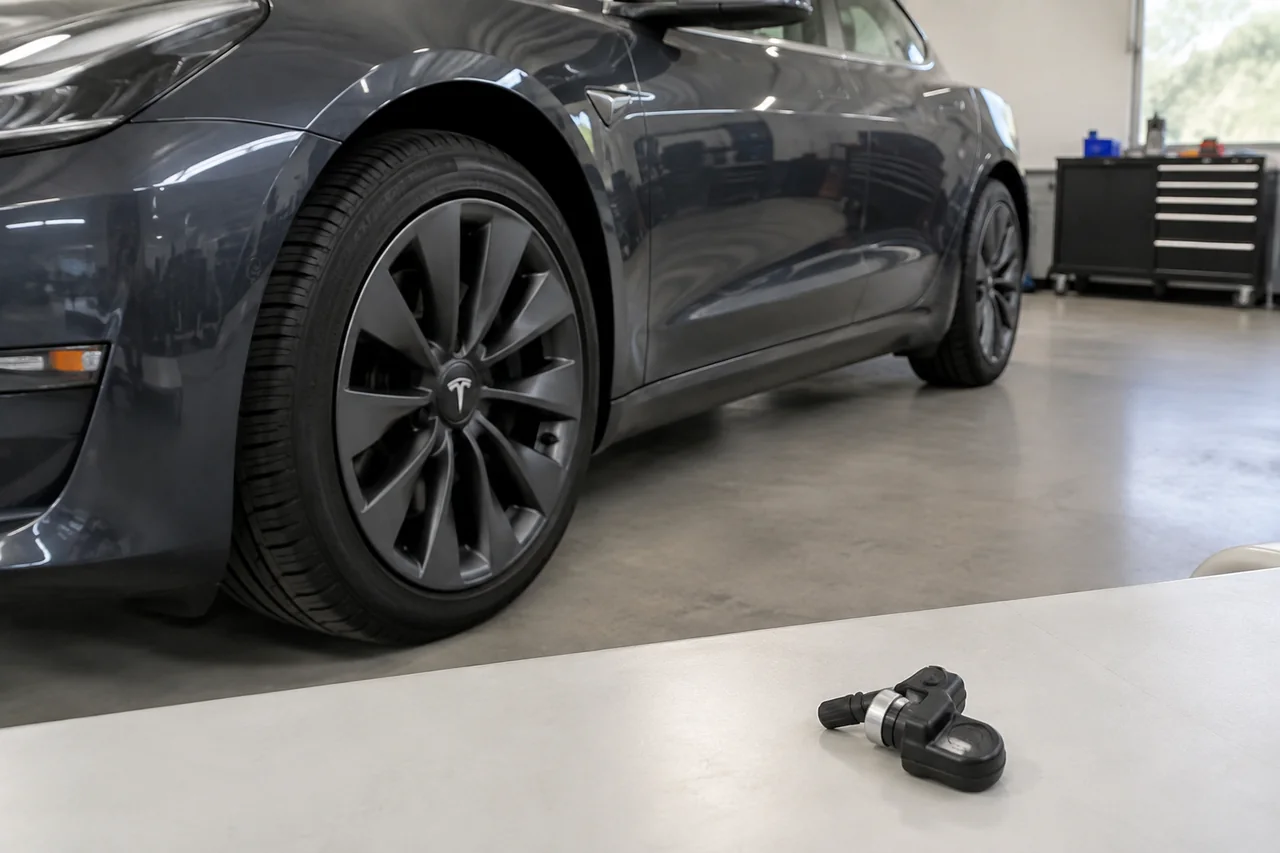
Tesla TPMS sensors sit inside or at the wheel and report air pressure to the tire pressure monitoring system. Drivers searching Tesla TPMS or TPMS Tesla usually want to know why a warning appeared, whether a Tesla TPMS sensor is compatible, and what Tesla TPMS sensor replacement involves. Accurate readings, the correct sensor type, and a shop that verifies fitment and recognition after service all matter before a wheel-mounted transmitter is replaced.
How Tesla TPMS Sensors Report Tire Pressure
A Tesla TPMS sensor is typically mounted at the wheel, often as part of the valve stem assembly or as a dedicated transmitter inside the tire cavity, and it sends pressure data to the vehicle so the tire pressure monitoring system can display status. Exact screen names, menu paths, and warning icons vary by model year and software, so the owner's manual is the place to confirm where live readings appear and how alerts are worded. Treat those figures as vehicle-reported information, not a substitute for understanding the placard values on the door jamb.
A low-pressure message means the system believes one or more tires are below its threshold; a missing reading, dash, or sensor fault message can instead point to communication, battery, or recognition issues. The warning itself is evidence to interpret, not proof that a particular Tesla TPMS sensor has failed. Electronic displays also do not replace a cold tire pressure check with a suitable gauge, because heat, recent driving, and display rounding can hide a slow leak or a modest underinflation that still matters for handling, wear, and range.
Confirming the Sensor Type Your Tesla Requires
Tesla applications have used more than one tire pressure monitoring approach, including Bluetooth TPMS and other radio-frequency TPMS designs. Those systems do not share a single protocol, so a Tesla TPMS sensor that works on one vehicle may not communicate with another even when the wheels look similar. Before buying or installing, confirm the vehicle identification details, build information, and the applicable sensor part number against reliable fitment data rather than assuming that any unit sold as Tesla TPMS will pair.
A Tesla logo on the box, a matching valve stem shape, or the vehicle's model name is not enough to establish compatibility. Protocol, vehicle application, and wheel-and-valve fitment still have to be checked, because a sensor can physically install and still fail sensor recognition if the radio method or coding is wrong. Ask a supplier or a qualified tire shop to confirm those three details for the specific car, including whether the intended wheels use the same valve and sensor interface as the original equipment set.
What Missing Readings and Pressure Warnings Can Tell You
When Tesla TPMS warnings appear, write down the exact message, which wheel positions are flagged, what pressures if any are shown, and whether the issue started after tire work, a wheel change, or a seasonal wheel set swap. Then check cold tire pressure at each wheel with a suitable gauge and compare the results to the vehicle placard, not to a remembered number. The owner's manual explains how that particular alert is described and whether it is framed as low pressure, a system fault, or missing data.
Missing or intermittent readings can come from a weak transmitter, a mismatched Tesla TPMS sensor, a recognition problem after service, or a communication drop, so the display alone does not prove a part has failed. A shop should test sensor condition, compatibility, and communication before recommending Tesla TPMS sensor replacement. If a tire is visibly damaged, pressure is dropping quickly, or the car feels unstable, stop in a safe place and arrange assistance rather than continuing to drive while trying to interpret the warning.
What Tesla TPMS Sensor Replacement Involves
Professional Tesla TPMS sensor replacement starts with confirming the fault, not with swapping parts on a warning alone. The shop should verify that the replacement sensor matches the vehicle's system and the wheel's valve interface, then service the tire and valve assembly with proper equipment so the transmitter is seated and sealed. Accessing an internal sensor requires tire service machinery and trained handling; it is not a roadside clip-on job. After the work, operation should be checked so the vehicle can receive pressure data from that wheel.
Once the tire is back in service, the provider should confirm sealing at the valve stem, set cold tire pressure to the placard, and check wheel balance when the tire was dismounted. Replacing one Tesla TPMS sensor versus several should follow testing and a condition assessment of the remaining units, not a guessed calendar interval. Some shops will discuss age or battery state of the other sensors, but that conversation belongs with measured results for your vehicle rather than a universal replacement schedule.
Sensor Recognition After Replacement or a Wheel Change
After Tesla TPMS sensor replacement or a wheel change, sensor recognition has to be confirmed for that vehicle and that TPMS design. Bluetooth TPMS and radio-frequency TPMS do not share one pairing method, and Tesla does not use a single reset sequence across every model year. Do not assume the car will automatically learn new IDs in a fixed number of miles, or that a generic scan-tool reset will finish the job. Ask the shop which configuration procedure applies to your software version and sensor type.
A seasonal wheel set or a replacement wheel package needs Tesla TPMS sensors that are confirmed for both the vehicle application and the wheel-and-valve fitment on those rims. Otherwise the car may show blanks, swapped positions, or persistent faults even when the tires hold air. Completion means readings appear at the expected positions, cold tire pressure matches the placard, and any remaining warning is diagnosed rather than ignored. If recognition does not complete, return the vehicle for professional testing instead of driving with an unresolved Tesla TPMS alert.
What to Confirm Before Approving Sensor Service
Before approving work on a Tesla TPMS sensor, give the shop the vehicle identification details, the exact warning text, any recent tire or wheel service, and whether one reading or several are missing. That history helps separate a single-wheel transmitter issue from a system-wide recognition or compatibility problem. Ask the provider to document the sensor part number and fitment they intend to use, and to explain what testing supports replacement rather than a guess based on the dash message.
A useful quote itemizes diagnosis, the Tesla TPMS sensors themselves, valve service parts, tire labor, balancing when a tire is dismounted, and the recognition checks needed after install. Prices vary by shop and application, so compare the scope of work instead of a single line total. Also ask what warranty coverage and follow-up support apply if a warning or a missing reading returns, including whether the shop will retest communication and cold tire pressure before concluding that another transmitter has failed.