Tesla Tire Balancing: What EV Owners Should Know
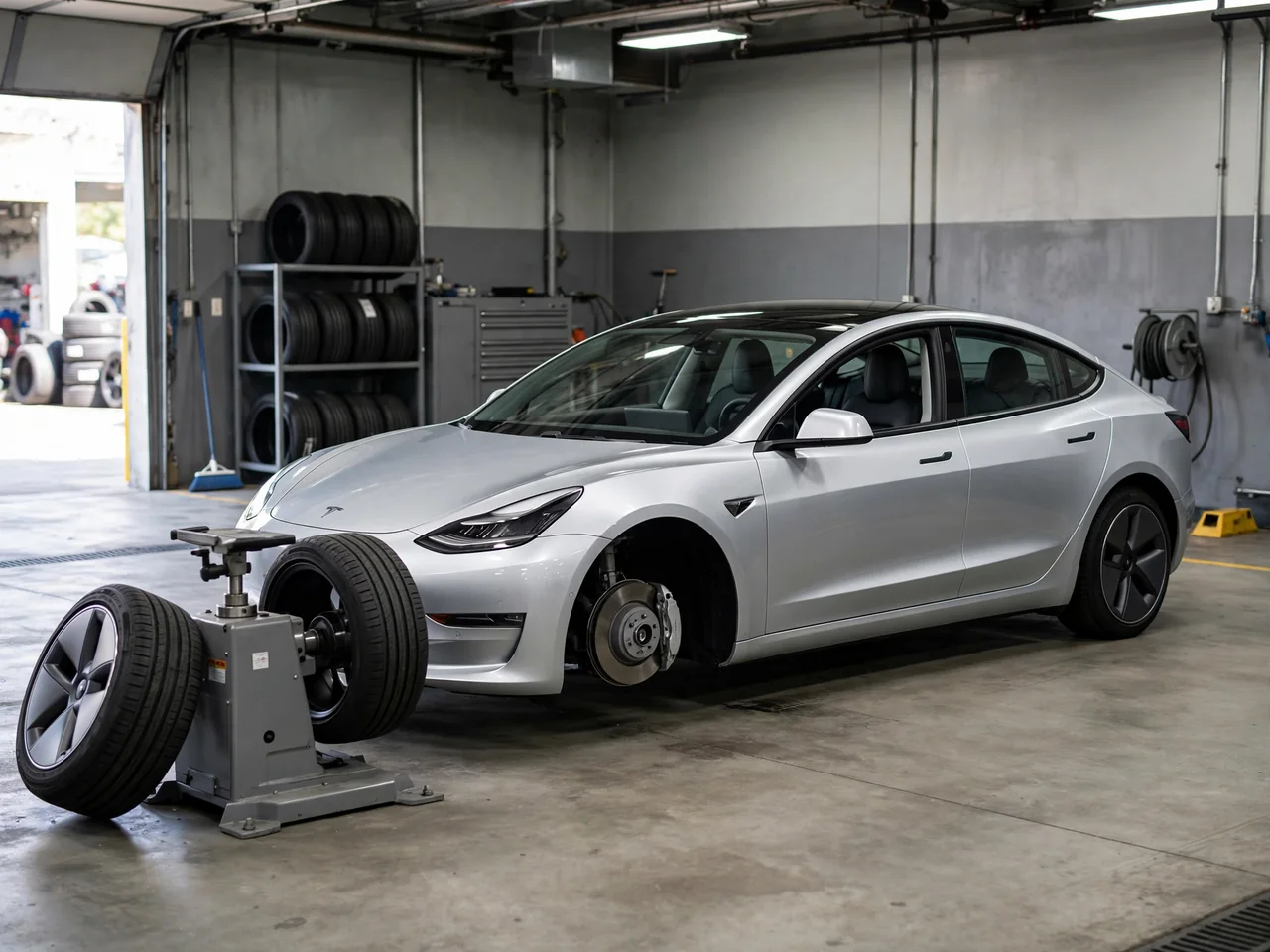
Tesla tire balancing deserves extra attention from EV owners because vehicle mass, instant torque, a quiet cabin, and how wheels are serviced all change how vibration should be evaluated. Tesla wheel vibration can relate to tire load, wear from torque delivery, acoustic tire foam, and the quality of Tesla tire service. Recording symptoms carefully, confirming wheel details with the shop, and knowing when balancing needs further diagnosis helps owners get useful work instead of a generic spin-balance.
Why Tesla Operating Characteristics Matter to Balancing Concerns
Tesla vehicles typically carry substantial mass on each corner, so EV tire load requirements and the correct tire specification matter when a driver reports Tesla wheel vibration. Inflation that does not match vehicle-specific guidance can change how the tire contacts the road and how load is shared around the circumference. That does not prove the assembly is out of balance, but it does mean a technician should confirm the installed size, load rating, and pressure before treating vibration as a balancing-only complaint.
Strong torque delivery can encourage rapid launches and repeated high-load acceleration, which may accelerate tire wear patterns even when the wheel itself is not out of balance. Uneven tread from those habits can later feel like vibration, especially at highway speeds. Limited powertrain sound also makes residual tire noise and small oscillations more noticeable in the cabin. Acoustic tire foam is sometimes used to quiet that path, yet cabin sound alone cannot establish imbalance and should not replace a structured inspection of the assembly.
What to Record When Vibration Appears
When Tesla wheel vibration appears, note the speed range where it starts, peaks, or fades, and whether it is stronger on coarse pavement, expansion joints, or smoother asphalt. Record whether the sensation is felt through the steering wheel, the seat, or the floor during ordinary driving rather than during a special test run. Those locations help a technician decide whether the concern is more consistent with a front assembly, a rear assembly, or something that is not wheel-related at all.
Vibration that is stronger during acceleration, while coasting, or under braking gives a technician useful context without proving a particular fault. That pattern can help distinguish a rotating-assembly issue from driveline, brake, or suspension behavior. Note whether symptoms began after tire installation, rotation, wheel work, or a pothole impact, because recent service or an impact changes what the shop should inspect first. Do not perform deliberate high-speed symptom testing; capture what occurs in normal driving and leave controlled evaluation to a qualified facility.
Tesla Wheel and Tire Details the Shop Should Verify
Before choosing a service procedure, the shop should confirm the Tesla model, model year, wheel size, and tire specification, along with any aftermarket wheel changes. Those details affect load capacity, sensor hardware, hub interface, and which balancing adapters are appropriate. An assembly that no longer matches the original wheel and tire configuration can still be serviceable, but the technician needs that information to avoid using equipment or methods that do not fit the installed hardware.
Some Tesla-fitted tires contain acoustic tire foam intended to reduce cavity noise. If vibration remains unexplained after conventional checks, internal foam condition may warrant professional inspection rather than another round of weight placement. Technicians should also follow applicable Tesla lifting guidance and use wheel mounting procedures suited to the balancing equipment, including correct centering and clamping. Improper lift points or poor mounting on the balancer can create false readings and leave the original Tesla wheel vibration unresolved.
Choosing a Service Provider and Defining the Appointment
Tesla tire service may be available through Tesla service centers or independent tire shops; owners should confirm local availability and the work each location can actually perform on the installed wheels. Not every shop stocks suitable adapters, road-force measurement equipment, or experience with the vehicle's wheel design. Asking what the facility can inspect, balance, and document before the appointment reduces the chance of a visit that only repeats a generic spin-balance without addressing EV-specific mounting and load concerns.
Experience with the installed wheel and tire configuration matters because Tesla hub interfaces and aftermarket wheels can require specific balancing adapters that a general-purpose cone setup may not match. Road-force measurement is worth requesting when a standard balance does not explain Tesla wheel vibration, because it can reveal a stiff spot or assembly variation that added weights will not correct. The appointment should include tire and wheel inspection, a written record of balancing findings, and follow-up evaluation if the reported vibration persists after ordinary driving resumes.
When Balancing Needs Further Diagnosis
Tesla tire balancing cannot resolve every source of vibration. Tire damage, wheel deformation, irregular wear, and suspension concerns may require separate testing even when the assembly was recently balanced. From a parked position, owners can look for visible cuts, bulges, or objects in the tread and can note dashboard tire-pressure alerts. Those checks should be done without lifting the vehicle or removing wheels. Visible damage or a pressure warning is evidence to interpret, not proof that a particular part has failed.
Stop driving and arrange professional assistance for severe vibration, visible bulges, rapid pressure loss, or a sudden handling change. Those conditions can indicate a tire or wheel problem that is not safe to diagnose on the road. If milder symptoms persist after Tesla tire service, ask for documented findings rather than assuming another balancing session will solve them. Further professional diagnosis may include road-force measurement, inspection of wear patterns, and evaluation of related components so the next step is based on evidence instead of repetition.