Tesla Brake Noise: Squeaks, Grinding and Parking Brake Sounds
Tesla brake noise can be unsettling because regenerative braking means the friction brakes may rarely be used. Light use allows surface rust to form on rotors, and quiet cabins make normal sounds more noticeable. Squeaks, grinding, pedal noises, and parking brake actuator sounds have different causes. This guide explains the typical sound families, when they are benign, and when they warrant service.
Why a Tesla Can Make Brake Noise Even Though Regen Does Most of the Slowing
Regenerative braking recovers energy and slows the car, so the brake pads and rotors are often used only lightly or during hard stops. Over time, this intermittent use changes the surface condition of the friction brakes. Without regular firm applications, the rotors may not be cleaned as they would be on a conventional car, allowing surface rust and pad material to build up unevenly.
Tesla owners may hear several distinct sound families. High-pitched squeals often relate to pad vibration or debris, while grinding or scraping usually points to rust or wear. Pedal noises can come from the brake-by-wire system, and parking brake sounds originate from an electric actuator. Brief sounds can be normal, but persistent or worsening noise means the sound alone cannot confirm a cause.
Surface Rust and Corrosion on Rotors from Infrequent Friction Braking
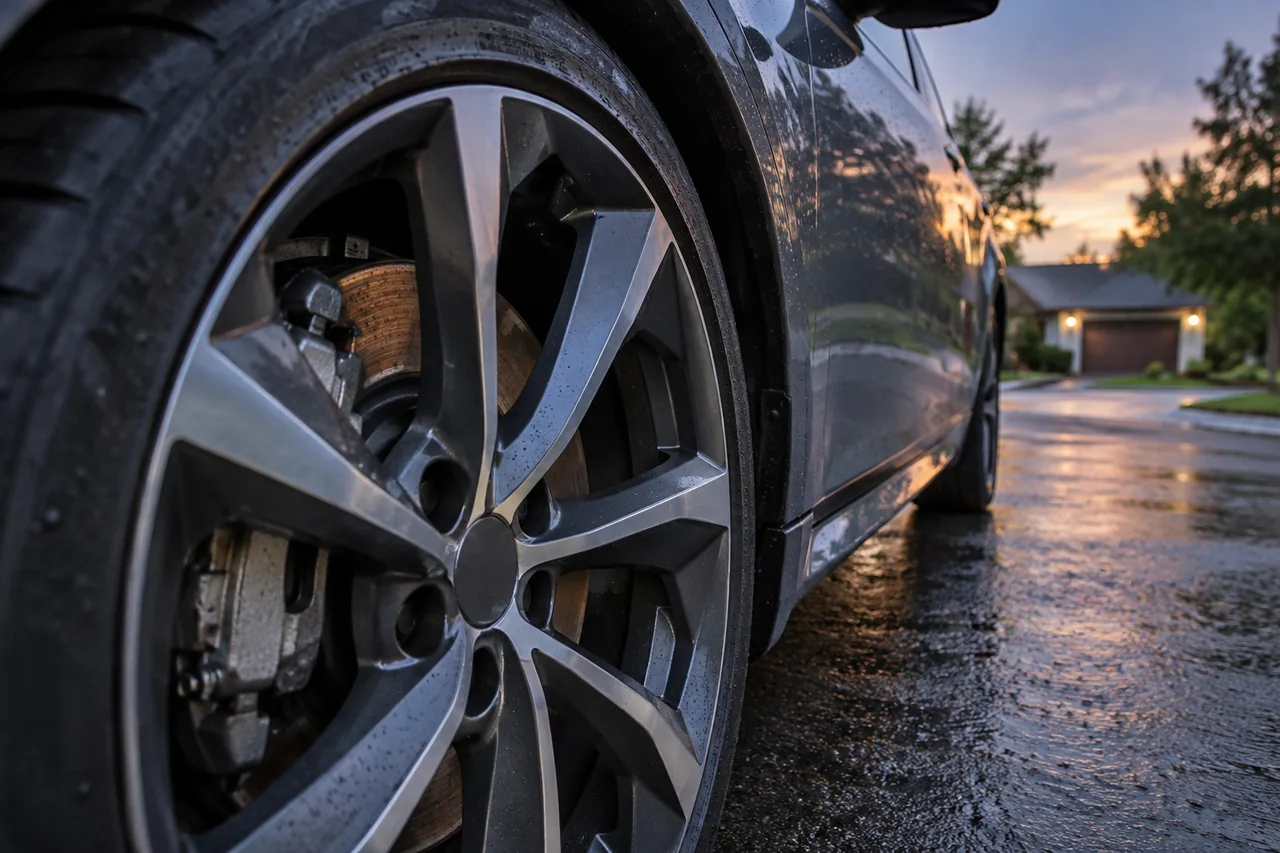
A light orange film forms on cast-iron rotors after rain, washing, humidity, or sitting parked. Because regenerative braking does most of the slowing, the brake pads may not sweep this film away as often as on a conventional vehicle. The result is a layer of surface rust that can build up more than expected, especially in humid climates or after overnight parking.
Typically, owners hear a scraping or grinding sound on the first few stops of a drive that fades as the pads clean the rotors. With the car parked and cool, you can look through the wheel spokes for uneven rotor surfaces, lipped edges, or patchy contact areas. Heavy pitting, deep grooves, or a pull while braking is beyond cosmetic and should be inspected by a technician.
Telling Squeaks, Squeals and Grinding Apart
High-pitched squeaks are usually caused by pad vibration at the caliper, glazing on the pad surface, or small debris. In an EV, these sounds seem louder because there is no engine noise to mask them. Squeals that occur only when lightly braking in wet weather are often harmless, but a constant high-pitched tone can indicate that the pad surface or hardware needs attention.
Metallic grinding is more urgent. It can mean the friction material is fully worn and the backing plate is contacting the rotor, or that a small stone is trapped between the pad and rotor. Heavy corrosion can also produce a metallic scrape. Note when the sound occurs—speed, first drive of the day, wet conditions, turning, or reversing. A safe recording of the noise helps a technician diagnose it.
Noises When You Press the Brake Pedal
Modern Teslas use an electronically assisted brake system, so brief clicks, whirs, or hums may be heard when pressing or releasing the pedal. These sounds often come from the electric brake booster or the hydraulic pump building pressure. The owner's manual for your model and year can confirm whether a particular sound is part of normal operation, since system designs vary between versions.
Pedal noise must be interpreted alongside pedal feel. If the pedal feels firm and the car stops smoothly, a brief motor-like sound is usually not a concern. However, if the noise accompanies a soft, sinking, hard, or inconsistent pedal, the brake system may have a hydraulic or electronic fault. Brake warning messages or alerts together with pedal noise mean the car should be inspected before further use.
Parking Brake Actuator Sounds When Parking or Pulling Away
An electronically controlled parking brake uses a small electric motor at each rear caliper. When you engage or release it, a short whir, buzz, or click is expected. This sound should last only a second or two and be consistent. On a Tesla, you may hear it when shifting into Park or when releasing the brake to pull away after the car has been stationary.
A problem may be developing if the parking brake sound becomes grinding, lasts much longer, or is noticeably louder on one side. Repeated cycling without driver input, or any actuator noise while driving, is abnormal. Also watch for parking brake warning messages, a dragging feel when starting from a stop, or hesitation. Because designs differ across model years, confirm operation in your owner's manual.
When Tesla Brake Noise Warrants Service and What to Tell the Technician
Seek professional inspection for persistent grinding, vibration when braking, a pulling sensation, or a brake pedal that feels different. Brake or parking brake alerts on the display, burning smells, or visible damage to wheels and suspension components also require prompt attention. These signs indicate that the brake system needs a physical check rather than more observation.
A hands-on inspection measures pad thickness, examines rotor surfaces, checks caliper movement, and tests the parking brake mechanism. When you visit a technician, describe when the noise occurs, how long it has been present, recent weather or storage, and any tire or brake work. Bring recordings if possible. Verify warranty and service coverage through official Tesla channels, and do not drive if braking performance seems reduced.