Tesla Air Suspension Valve Block Selection Guide
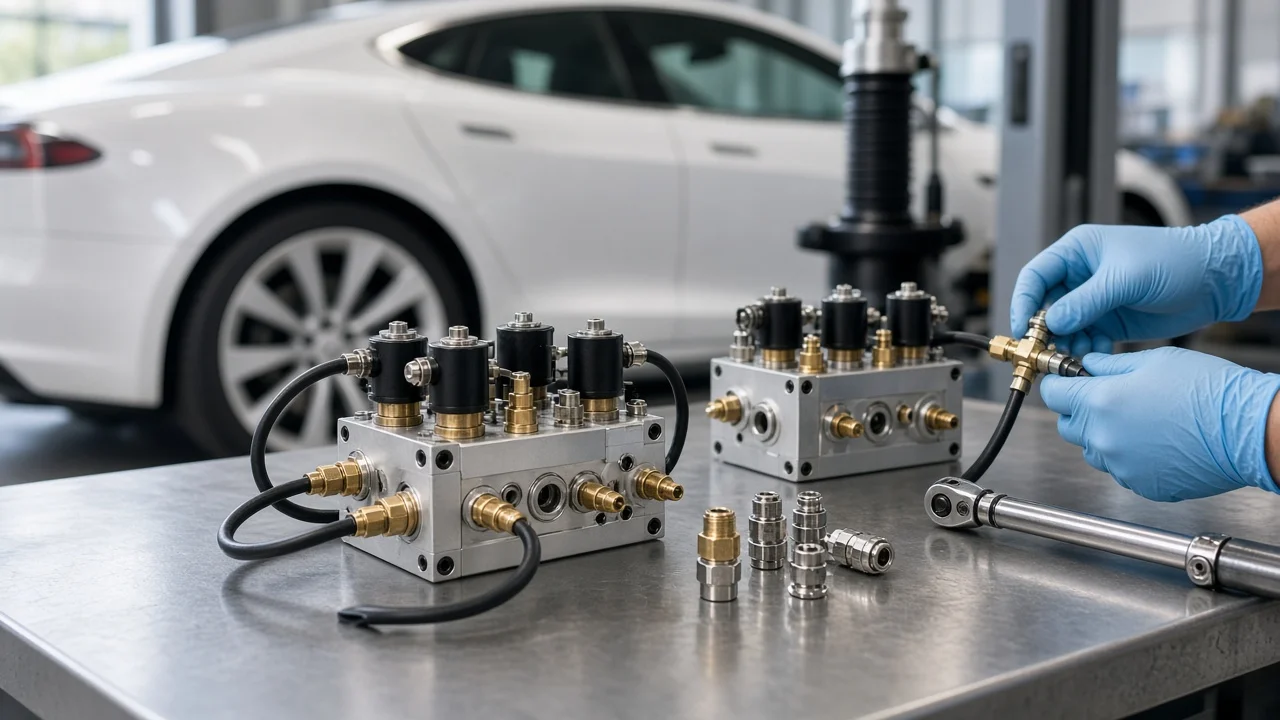
A Tesla air suspension valve block routes air from the compressor and reservoir to each air spring. It holds pressure while the car is parked and releases it when ride height needs to drop. When the block fails, the car may sag overnight or refuse to raise. This guide explains how to confirm the block is really the problem and how to match a replacement to your Model S or Model X. It also covers how to judge new, remanufactured and used options and how to budget for the work around the part.
Define the job the product must do
Start by confirming the job. On Tesla models with air suspension, the valve block is an electrically controlled manifold. Its solenoid valves open and close individual circuits so the suspension can raise, lower and level each corner. A replacement block is the right purchase when the fault is inside that manifold. Examples are a solenoid that no longer seals, a cracked housing, a corroded connector or an internal leak that lets air bleed between circuits. It is the wrong purchase when the air is escaping somewhere else.
Symptoms overlap heavily. A corner that drops overnight can just as easily be caused by a leaking air spring, a damaged line or a loose push-in fitting as by a valve. A compressor that runs often points to a leak, but not to a specific component. Before buying, note which corners lose height and how quickly, and read any suspension alerts the car displays. Then leak-test the spring, the line and the fittings at the block with soapy water while the system is pressurized. The block becomes the stronger suspect if several corners drop together, or if bubbles appear at the block body rather than at a fitting. Also consider how you use the car. A daily driver needs a dependable part quickly, while a project car can wait for a better-documented one.
Check compatibility
Fitment starts with the vehicle, not the listing title. Tesla Model 3 and Model Y use coil springs, so these blocks apply only to Model S and Model X equipped with air suspension. Within those models, valve blocks have changed across generations and production updates, so the model year alone is not a reliable match. The most dependable reference is the Tesla part number printed on the label of the block currently fitted. Confirm that number against your VIN through a parts catalog or a Tesla service center. Treat a seller's broad year-range claim as a starting point, not as proof.
Then check the physical and electrical interfaces. The number and position of air ports must match your lines. The fitting type and tube size must suit the existing push-in connections. The electrical connector must have the same shape and pin layout; if a listing suggests adapting the harness, treat that as a red flag. Confirm whether your block carries an integrated pressure sensor, because a unit without one may leave a sensor fault. Compare the bracket and mounting points as well. A block that bolts up differently can strain the lines or vibrate against the body.
Features that affect the choice
The main choice is between four types of part: new genuine Tesla parts, new aftermarket units, remanufactured blocks and used parts from salvaged vehicles. A genuine new block has the clearest fitment and supersession history. Aftermarket units vary widely. Some are engineered replacements, while others copy the housing without documenting materials or valve design. A remanufactured block can be good value when the rebuilder lists what was replaced, such as solenoids, seals and O-rings, and explains how each unit was leak-tested. A used block has unknown service life, moisture exposure and storage conditions. It carries the most risk, even if it powers up on a bench.
Separate evidence from labels. Terms such as heavy duty, upgraded or OEM quality mean little on their own. Useful evidence includes a stated part number cross-reference, a description of the test performed before shipping, a warranty with clear terms and a defined process for core returns. Check whether new O-rings, fittings or a connector seal come in the box, because reusing hardened seals can create a fresh leak at the block. If a seller claims improved durability, ask what was changed and why. A credible supplier can answer in concrete terms.
Limitations and ownership costs
The installation itself sets much of the cost. The air system holds significant pressure, so it must be depleted through the correct procedure before any line is disconnected. Before lifting, enable the car's jack mode or equivalent service setting so the suspension does not try to level while raised. Proper vehicle support means rated stands or a lift at the designated lift points, never the air springs or a jack alone. Follow the model-specific service procedure for access, line routing and fastener specification. This guide gives no torque figures; take them from Tesla service information for your exact vehicle. Replace any fastener that the procedure marks as single-use.
After installation, the car may need a suspension check or ride height calibration through Tesla diagnostic software before alerts clear. If you cannot run those routines yourself, plan for a service visit. Replacing the block does not change suspension geometry, so a wheel alignment is not automatically required. If height sensors or links were disturbed, or ride height reads incorrectly afterward, have the height verified first and then check the alignment against factory specification. A new block also cannot fix a leaking air spring, a worn compressor, a failed height sensor or worn bushings. If you hear clunks or feel looseness, inspect joint play in the control arms and links separately, because those faults are mechanical, not pneumatic. Finally, any remaining leak keeps the compressor working harder. Confirm that the car holds ride height overnight before calling the job done.
Build a practical shortlist
Narrow the options by asking the same questions of every candidate. Does the listing name a Tesla part number that matches the label on your current block, and is that number correct for your VIN? Are the port count, fitting type, connector and pressure sensor arrangement identical to your original? Is the unit new genuine, new aftermarket, remanufactured or used, and what documentation supports that description? For a rebuilt unit, which internal parts were replaced, and how was the block tested? Are seals and fittings included?
Then weigh the commercial terms. Look at warranty length and coverage, whether a core return is required and how its condition is judged, and realistic shipping time if the car is off the road. Add the labor or shop time for depressurizing, lifting, replacing and any calibration, rather than comparing part prices alone. A slightly more expensive block with a confirmed part number, documented testing and a usable warranty is often cheaper overall than a bargain unit that has to come out again. If two candidates are equal on paper, choose the supplier that gives the most specific answers to your fitment questions.