Tekonsha Trailer Brake Controllers: How They Work and How to Set Them Up
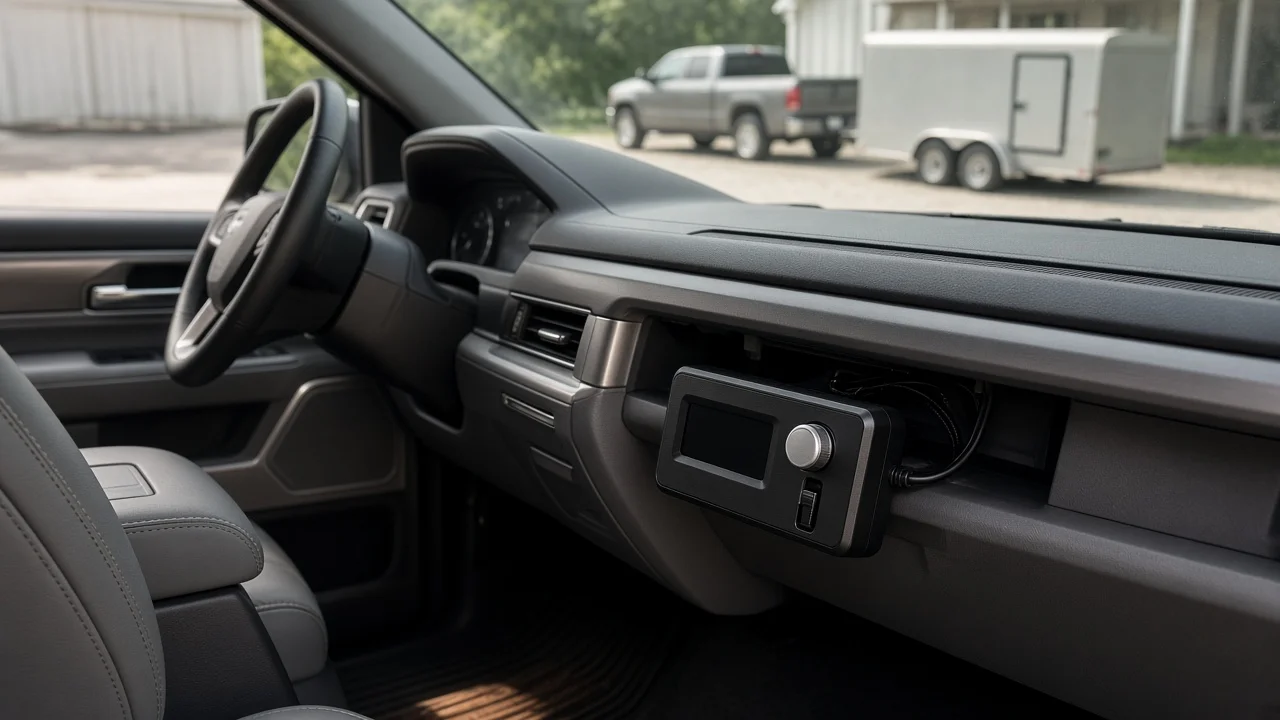
A Tekonsha trailer brake controller is the in-cab unit that tells a trailer's electric brakes how hard to apply. Tekonsha's best-known line is the Prodigy family, including the P2 and P3. These controllers use an inertia sensor to match trailer braking to how quickly the tow vehicle slows. This guide explains what the controllers do, what decides whether one suits your truck and trailer, and how to set one up so the trailer helps stop the load instead of pushing it.
Short answer: who a Tekonsha controller suits
If your trailer has electric drum brakes or an electric-over-hydraulic actuator, a proportional Tekonsha controller is a reasonable and widely used way to operate them. A proportional unit varies braking force with how hard the tow vehicle is slowing, so gentle stops stay smooth and hard stops get strong trailer braking. A controller only makes sense when three conditions are met. The trailer must have brakes the unit can drive. The tow vehicle must be able to supply a brake signal and power. And the vehicle should not already have a factory integrated controller that you would rather use. Trailers with hydraulic surge brakes work from their own coupler actuator and do not use an in-cab controller at all.
Prodigy P2 versus P3
The Prodigy P2 and P3 work the same basic way. Both have a proportional inertia sensor, an adjustable output gain, boost settings for heavier loads and a manual control for applying the trailer brakes alone. The P2 uses a compact digital readout that shows output level and basic status. The P3 adds a larger LCD screen that can show more detailed information, including diagnostic messages, which some owners find easier to read and troubleshoot. Both are intended for multi-axle trailers and, in the appropriate mode, for electric-over-hydraulic systems. Confirm axle capacity and brake-type compatibility in the instructions for the exact unit you buy.
Tekonsha has also sold other designs over the years, including simpler and wireless models, and the lineup changes. When comparing models, check four things before screen features: whether the unit is proportional, which brake type it supports, how many braked axles it can handle, and whether a plug-in harness exists for your vehicle.
How a proportional brake controller works
When you press the brake pedal, the controller receives a signal from the brake light circuit and activates. Its internal accelerometer measures how quickly the vehicle is decelerating. The controller then sends a matching voltage down the brake output wire, through the seven-way connector, to the trailer. In an electric drum brake, that current energizes an electromagnet. The magnet is pulled against the spinning face of the drum, and the resulting drag swings an actuating lever that spreads the brake shoes against the drum's friction surface. More voltage means a stronger magnet and harder shoe contact.
Gain sets the maximum output the controller will deliver. Boost raises the starting output so a heavy trailer begins braking sooner. Time-delayed controllers work differently: they ramp output up over a fixed period regardless of how hard you stop. On an electric-over-hydraulic trailer, the same signal runs a pump that pressurizes brake fluid. Each caliper then clamps brake pads against the brake rotors, much like a car's disc brakes.
What changes the setup and results
Vehicle fitment is the first variable. Many trucks and SUVs sold with a tow package have a factory connector under the dash, and Tekonsha offers vehicle-specific harnesses that plug into it. Vehicles without that connector need the brake signal, power, ground and output circuits wired in correctly, with proper circuit protection. Some vehicles come with an integrated controller. In that case an aftermarket unit may be unnecessary or may conflict with the factory wiring.
Mounting also matters. Because Prodigy units sense inertia, they must be mounted solidly and within the orientation range given in the instructions, not on a flexible trim panel. Trailer weight and load change the correct gain: an empty utility trailer needs far less output than the same trailer fully loaded. The number of braked axles affects current draw. The condition of the trailer's magnets, shoes and drums determines how much braking that current actually produces.
Setting gain and checking the system
Set the gain with the trailer loaded the way you normally tow it. Confirm the display shows the trailer is connected, then find a dry, level, empty paved area. Drive at the speed the instructions specify, typically around 20 to 25 mph, and apply the manual control fully without using the vehicle brakes. If the trailer wheels lock, reduce the gain. If braking feels weak, increase it. The target is firm trailer braking just short of lockup. Then test normal pedal stops: the combination should feel like one vehicle slowing, without the trailer pushing or tugging. Adjust boost only if the trailer still feels late to engage. Repeat the procedure whenever the load changes significantly.
Watch for fault indications. The display reports problems such as a lost connection or an output short or overload, and the manual explains each code. Also inspect the trailer brakes on the schedule in the trailer or axle manufacturer's service information. Check shoe adjustment, remaining friction material, magnet wear and drum condition against the stated wear limits. If the tow vehicle's own brake pads and rotors are wearing quickly, the trailer may not be doing its share of the stopping.
Limitations and when to get professional help
This overview cannot tell you which harness fits your vehicle, what gain your trailer needs or which wear limits apply to your drums and magnets. That information comes from the controller instructions and the vehicle and trailer service information. Towing ratings and state rules on when trailer brakes and breakaway systems are required also vary, so check them for your setup.
Stop towing and have the brakes and wiring professionally inspected if any of these occur: the controller shows no output or a persistent fault, the trailer pulls to one side, the brakes grab or chatter, one wheel runs noticeably hotter than the others, or stopping distance increases. These symptoms can point to damaged wiring, a failed magnet, contaminated friction material or worn drums. Do not keep towing a loaded trailer with any of them.