Finding Sway Bar Links at AutoZone
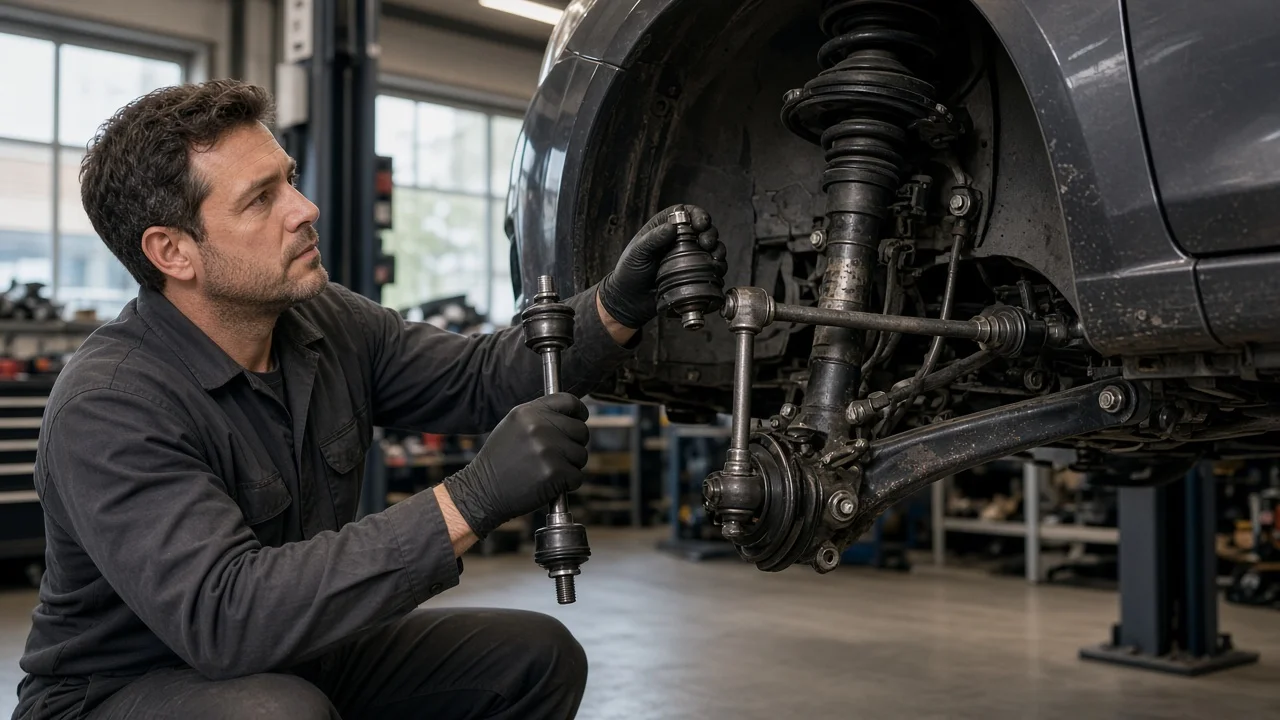
Sway bar links are among the more commonly replaced suspension parts, and AutoZone is one of the places many owners check first. Whether you leave with the right pair depends less on the store and more on how precisely you describe your vehicle. This guide explains how to find the correct links, what affects fitment, and when a catalog lookup is not enough.
Does AutoZone Carry Sway Bar Links?
In most cases, yes. AutoZone stocks front and rear sway bar links, also called stabilizer links or end links, for a wide range of passenger cars, SUVs and light trucks. What a particular store has on the shelf varies. A part that fits your vehicle may need to be transferred from another location or ordered. The parts catalog filters by year, make and model, and often asks for engine, drivetrain or submodel before it shows a result.
A catalog match is only as good as the information behind it. If your vehicle has a sport suspension, a lift, a different trim than you assumed, or a mid-year production change, the first result may not be correct. You can give the counter staff your VIN or have your exact vehicle configuration ready. Either one reduces the chance of leaving with links that look close but do not bolt in properly.
How Sway Bar Links Work
The sway bar, or anti-roll bar, is a steel bar that ties the left and right sides of the suspension together. When the vehicle leans in a turn, the bar twists and resists that body roll. Sway bar links are the short connectors between the ends of the bar and a suspension component. Depending on the design, that component is usually the lower control arm or the strut.
Most links use a ball stud at one or both ends, sealed by a rubber boot. Others use bushings and washers on a threaded rod. As the joints or bushings wear, the link develops play. Common results are a clunk or rattle over bumps, knocking on uneven pavement, or a vehicle that feels looser in corners. A badly worn or broken link stops the bar from doing its job on that side.
What Changes the Right Part
Fitment depends on more than the model name. Front and rear links are different parts, and on some vehicles the left and right sides differ too. Two-wheel and four-wheel drive versions of the same truck can use different suspension parts. Sport, heavy-duty or off-road packages may use a different bar diameter or link length. Lifted or lowered vehicles often need links of a different length than stock. A catalog lookup based on the original configuration will not account for that.
Link style matters as well. Ball-stud links and bushing-style links are not interchangeable unless the catalog lists both for your vehicle. Some aftermarket links have greaseable joints or adjustable length. These features can help on modified vehicles but are not required for a stock replacement. Operating conditions affect how quickly links wear: rough roads, potholes, towing, salted winter roads and off-road use tend to shorten their life. There is no single mileage at which every link needs replacing.
What the Owner Can Do
Start with an inspection. With the vehicle safely supported, grab each link and try to move it. Looseness at the joints, a torn boot, leaking grease, a cracked bushing or a bent link all point to replacement. On some vehicles the sway bar is preloaded when one wheel hangs and the other is supported, which can hide or exaggerate play. When possible, check with both sides at a similar height. Other parts can make similar noises, so confirm the link is actually worn before buying.
When shopping, enter the full vehicle details or give your VIN. Confirm whether you need front or rear links and whether they are sold individually or in pairs. If you have already removed the old link, bring it along to compare length, stud size and end style. Ask about current stock, warranty terms and whether loaner tools are available at that store, since programs and policies can change. Many owners replace both links on an axle together, because both have seen the same mileage and conditions.
During installation, the ball stud often spins while you loosen or tighten the nut. A second wrench or a hex or Torx bit holds it in place, and penetrating oil helps with rusted hardware. Tighten fasteners to the manufacturer specifications. Check the service information on whether the suspension should be loaded at ride height before final torque, which matters for many bushing-style links. Record the replacement in your service history so future noise diagnosis has a reference point.
Limitations and Next Steps
A parts lookup cannot confirm your exact configuration, previous repairs or modifications. Stop and verify fitment rather than forcing the part if the catalog shows several options, if your vehicle has been lifted or lowered, or if the new link does not line up with the mounting points. Your owner's manual maintenance schedule may list periodic suspension inspection, but it typically does not set a fixed replacement interval for sway bar links, so their condition decides.
If the clunk remains after new links are installed, the cause may be sway bar bushings, strut mounts, ball joints, tie rod ends or control arm bushings. Seized or broken fasteners, heavy corrosion, or any doubt about lifting the vehicle safely are good reasons to have a professional technician do the inspection and repair. Replacing sway bar links alone generally does not affect wheel alignment. If other steering or suspension parts are replaced at the same time, ask whether an alignment is needed.