Sway Bar Link Replacement Cost: Parts and Labor
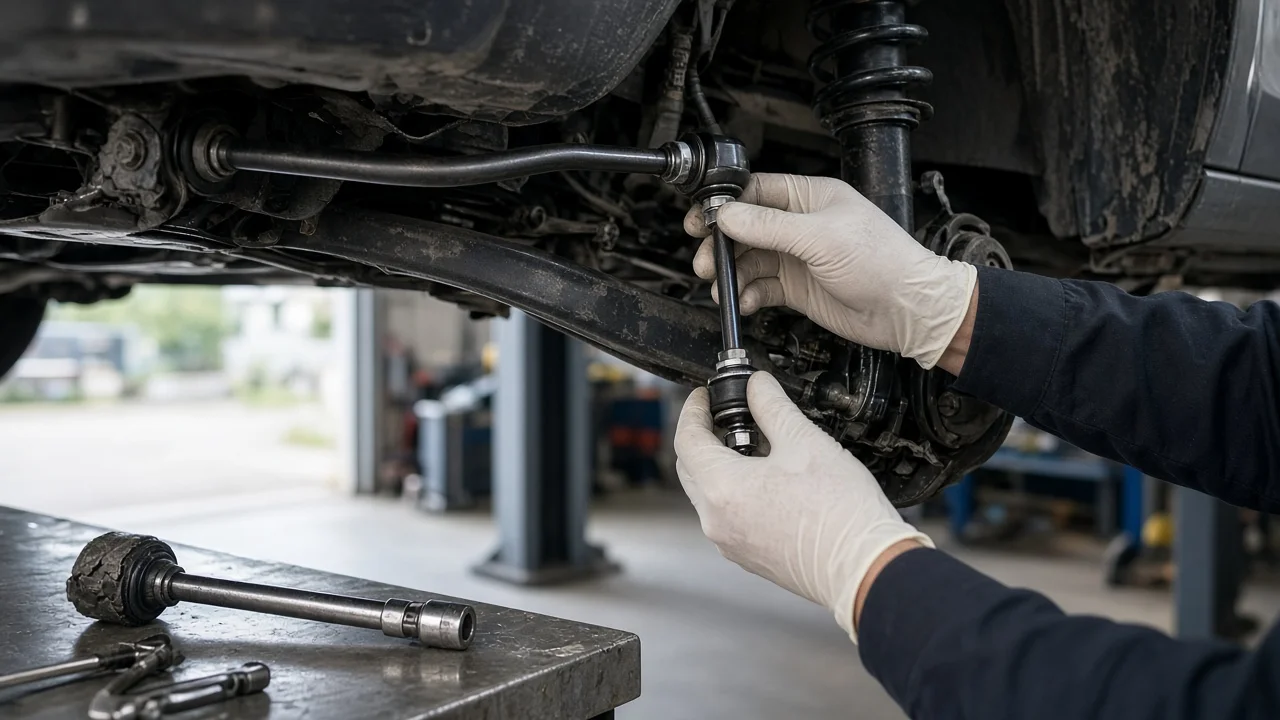
Sway bar links, also called stabilizer links or end links, connect the anti-roll bar to the suspension. Worn links often show up as a clunk or rattle over bumps, or as a vague, loose feeling in corners. What you pay to replace them depends on your vehicle configuration, the link design, the condition of the surrounding hardware and what the shop includes in the price. This guide explains how to read an estimate so you can compare quotes on equal terms.
What the estimate includes
A complete estimate for sway bar link replacement normally covers the links, any new nuts or mounting hardware, the labor to remove the old parts and install the new ones, tightening to manufacturer specifications, and a road test to confirm the noise is gone. Partial quotes are common. Some list parts only, some list labor only, and some give a per-link price that doubles once both sides of an axle are done. Before you compare numbers, confirm whether each figure is per link, per axle pair, or for front and rear together. A quote that looks low may cover only one side.
Diagnosis can be a separate line. A clunk over bumps can come from the links, but it can also come from sway bar bushings, strut mounts, control arm bushings or ball joints. A proper inspection checks the links for play and torn boots before anything is ordered. Ask whether a diagnostic fee applies and whether it is credited toward the repair if you approve the work. Many vehicles have links on both the front and rear stabilizer bars, so the estimate should name which axle needs attention and why.
What changes the cost
Part design and fitment come first. Many links use a ball stud at each end secured with a nut. Others use a long bolt with stacked rubber or polyurethane bushings, and trucks or lifted vehicles may use longer or adjustable links. The correct part can vary by trim, drivetrain and suspension package, so a parts lookup by VIN is more reliable than a lookup by model alone. Brand tier also matters. Original equipment, OE-equivalent and economy parts differ in price, materials and warranty, and some aftermarket links are greaseable.
Labor depends on access and hardware condition. On some vehicles the links are easy to reach once the wheel is off. On others, nearby components slow the job down. Rust is a major variable. In regions that use road salt, or on vehicles driven in harsh operating conditions, nuts can seize and ball studs can spin as the nut is turned. The technician then has to hold the stud with a hex or Torx bit, apply penetrating oil or heat, or cut the link off. That added time can change the final bill. The shop's labor rate, which varies by location and shop type, and whether it bills book time or actual time also affect the total.
Scope makes the biggest difference. Front sway bar links and rear sway bar links are separate parts with separate labor, and neither end is universally cheaper. It depends on how each axle is built on your vehicle. Replacing one link, a pair on one axle, or all four will produce very different totals. Bundling related work, such as worn sway bar bushings found during the same inspection, adds parts cost but may save labor compared with a second visit.
Compare like-for-like options
A cheaper quote is only cheaper if it covers the same work. Compare part brand and quality level, quantity, and warranty terms for parts and labor separately, since a long parts warranty may not cover the labor to install a replacement. Dealer service departments, independent shops and mobile mechanics may all quote the job, and each can be reasonable if the scope matches. Doing it yourself saves labor but requires safe lifting with jack stands, a torque wrench, and sometimes tools to hold a spinning stud or deal with seized nuts.
Searching for a sway bar link repair cost usually leads to a replacement quote. Worn ball joints or bushings in the link are generally not serviced individually, so the link is replaced. Many technicians recommend replacing links in pairs on the same axle for even wear and feel, but confirm that the second side actually needs it or is a preventive choice. Replacing end links does not normally change alignment angles, so an alignment is not usually part of this job on its own. If a quote adds an alignment, ask whether other steering or suspension parts are being replaced at the same visit.
Read an itemized quote
An itemized quote should list the part brand and part number, quantity and per-unit price, labor hours and the hourly rate, and any hardware such as new nuts. It should also show shop supplies or environmental fees, the diagnostic fee and whether it is credited, taxes, and the warranty terms in writing. If one shop gives a single total and another gives line items, ask the first shop for a breakdown. Without it you cannot tell whether the difference is in parts quality, labor time or scope.
Look for exclusions and conditional charges. Ask what happens if hardware is seized: some shops add time or a cutting charge, while others build that risk into the original price. Ask the shop to contact you before doing any extra work. If additional repairs are recommended, ask what the inspection found, such as measurable play, a torn boot or cracked bushings, and ask to see the old parts. A clear quote states the axle, the number of links and the tightening procedure the shop will follow.
Decide the next step
Before you approve the job, work through these steps. Get the noise confirmed by inspection rather than by guesswork. Make sure parts are matched to your exact vehicle configuration by VIN. Get at least two quotes with the same scope, part tier and number of links. Ask in advance how seized hardware will be handled and billed. Get parts and labor warranties in writing. Check your service history and maintenance schedule to see whether the links or bushings were replaced recently, since that may point to a different source of the noise.
Avoid shortcuts that make a cheap job more expensive later. These include reusing nuts that service information says to replace, running an air tool on a stud that is spinning, and installing links without following the specified torque. Some designs call for final tightening with the suspension loaded at ride height to avoid preloading the bushings. Worn links reduce how well the stabilizer bar controls body roll, so have a confirmed problem fixed rather than waiting for the clunk to get worse.