Suzuki XL7 Rear Axle Shafts: Check Fitment for 2003–2006
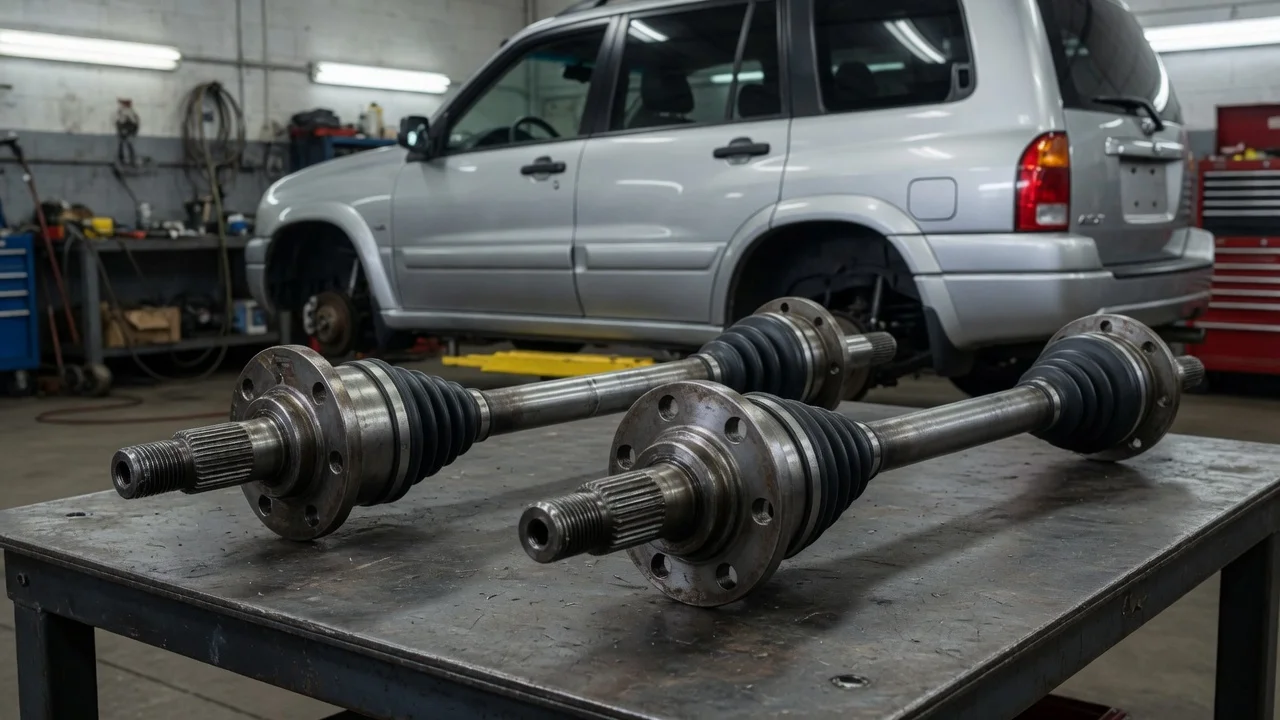
Shopping for a rear axle shaft for a 2003, 2004, 2005 or 2006 Suzuki XL7 starts with two questions. Is the shaft really the failed part, and will the replacement match your exact vehicle configuration? Noise, leaks and vibration at the rear can come from several components, and an axle shaft is not always the cause. This guide covers symptoms, competing causes, checks and fitment details, so the part you order fixes the actual problem.
Establish the symptoms
Before looking at parts, write down exactly what the vehicle is doing and when it happens. Note whether the noise is a hum, growl, click or clunk. Also note whether it starts at a certain speed, grows louder with speed, or changes when you turn left versus right. A sound that changes with road speed but not with engine speed points toward the rear axle, wheels or tires rather than the engine or transmission. Record whether it appears only when accelerating, coasting or braking, and whether it gets worse with a load or passengers in the back.
Look for associated signs as well. Gear oil on the inside of a rear tire, the brake backing plate or the drum is a common clue at the axle end. Other useful notes include a clunk when shifting into drive or reverse, a vibration felt through the seat, uneven rear tire wear, a pull under braking, or an ABS warning light. Finally, list recent changes: new tires, brake work, differential service, a lift or larger tires, towing, or a hard hit on a curb or pothole. Recent work in the same area is often the quickest lead.
Distinguish plausible causes
A worn rear wheel bearing is one of the most common reasons owners end up shopping for an axle shaft. On many solid rear axles the bearing is pressed onto the shaft. A failing bearing usually produces a hum or growl that rises with speed. The sound may change when cornering shifts weight onto or off the affected side. A failed axle seal shows up as gear oil at the wheel end. The seal alone can sometimes be replaced, but a worn sealing surface or bearing may mean the shaft assembly needs attention too.
A bent, cracked or broken shaft is less common. It usually follows an impact, a severe overload, or a bearing failure that was left too long. Typical signs are wobble, a knock once per wheel revolution, or a sudden loss of drive on one side. Damaged splines can clunk when power is applied or released.
Several other faults mimic these symptoms. Cupped or unevenly worn tires make a rhythmic hum that is easy to mistake for a bearing. Worn differential gears or bearings usually make noise that changes between acceleration and coasting, not with cornering. A worn driveshaft universal joint can clunk when the transmission is put in gear. Dragging or oil-contaminated rear brakes can cause noise, heat and pulling. Noise that changes with steering load supports a wheel-end cause. Noise tied to throttle changes weakens that case and points toward the differential or driveline.
Checks in a useful order
Start with checks any owner can safely do with the vehicle parked on level ground. Inspect the rear tire tread for cupping or irregular wear, and check tire pressures. Look behind each rear wheel for wet gear oil, streaks or crusted grime around the backing plate, and compare both sides. Then take a short test drive on a quiet road. Note whether the noise changes during gentle weaving, which helps separate wheel-end noise from differential noise.
The next steps need proper lifting equipment and basic tools. Raise the rear and support it on jack stands, never on a jack alone. Rotate each wheel by hand and feel for roughness or grinding, then rock the tire at the top and bottom to check for play. Check the differential fluid level at the fill plug and note the fluid's condition. Inspect the driveshaft joints for play and the brake parts for oil contamination. Use the fluid type and torque values from the manufacturer specifications for your exact vehicle rather than general figures.
Some steps belong with a qualified technician or an experienced DIYer who has a hydraulic press and the factory service information. These include pulling the axle shaft, pressing a bearing on or off, replacing a retaining collar and setting ABS sensor clearance. A badly pressed bearing or retainer can fail in a way that is hard to spot until it becomes serious.
Interpret the findings
Roughness or play at one wheel, together with noise that changes during cornering, strongly suggests a wheel bearing problem at that corner. That alone does not show whether the shaft itself is damaged. You can only confirm that once the shaft is out and its bearing seat, seal surface and splines can be inspected. Oil at the backing plate confirms a leak path but not its cause. A failed seal, a worn bearing that lets the shaft move, or an overfilled or poorly vented differential can all contribute.
If the wheel spins smoothly, has no play, and the noise follows throttle input, a new axle shaft is unlikely to fix it. In that case the differential or driveline deserves a closer look. Tire noise often changes after moving the tires front to rear, which is a cheap test before buying parts. If the brake linings are soaked in gear oil, replace them along with fixing the leak, because cleaning rarely restores them. Keep notes and photos of each inspection; they help a shop or parts supplier confirm the diagnosis.
Confirm fitment before ordering
These model years were badged XL-7, so listings may use either spelling. Do not assume a shaft fits just because the year range matches. Confirm the drivetrain (two-wheel or four-wheel drive) and the side of the vehicle. Check whether the listing includes the bearing, seal and retainer or is a bare shaft, and whether the ABS tone ring or sensor arrangement must match. Left and right shafts can differ, and parts catalogs sometimes split a model year by production date.
The most reliable way to check fitment is by the 17-character VIN, through a parts supplier or a dealer parts department. Before installing, compare the old shaft with the new one: length, spline count, flange and stud pattern, and bearing seat. A used shaft from a salvage vehicle should come from the same configuration. Inspect it for straightness, spline wear and scoring on the seal surface.
Urgency and next action
Stop driving and arrange a tow if you notice any of these signs: a wobbling rear wheel, grinding that has suddenly gotten worse, smoke or a burning smell from a rear wheel, a loud clunk followed by loss of drive, or a wheel that seems to be moving outward from the vehicle. A bearing or shaft that fails completely can let the wheel lock or separate, and oil-soaked brakes reduce stopping ability. A mild hum without play is less urgent, but have it inspected promptly rather than driving on it indefinitely. There is no reliable way to predict how many miles a noisy bearing has left.
Before you contact a shop or order parts, gather the VIN, model year, drivetrain, affected side and your symptom notes. Add the service history for the rear axle, brakes and differential, including whether the differential fluid was changed according to the maintenance schedule. Mention operating conditions such as towing or rough roads. With that information, a technician can confirm the failed part, and a supplier can match the correct rear axle shaft, bearing and seal for your XL7 rather than a part that only looks similar.