Finding the Correct Suzuki Samurai Brake Proportioning Valve
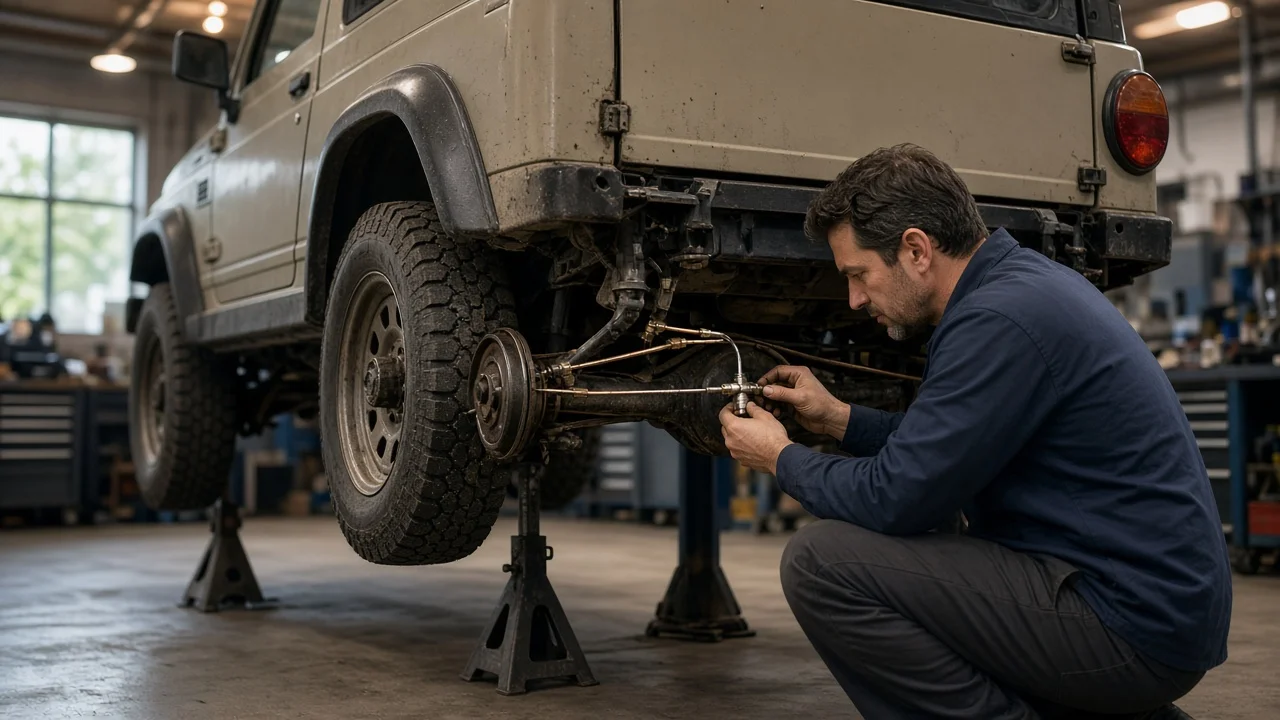
The brake proportioning valve on a Suzuki Samurai limits rear hydraulic pressure so the rear brakes do not lock before the front brakes during hard stops. Finding the correct replacement depends less on the model name than on the exact year, market and any changes made to the suspension or brakes. This guide explains what the valve does, what affects fitment and how to confirm the right part before you install it.
The Short Answer
The correct valve is the one that matches your Samurai's original hydraulic layout. Confirm it with the model year, the vehicle identification number and the part number or markings on the valve already installed. The Samurai was built over many years and for several markets, so a valve listed generically as fitting a Samurai is not automatically right for yours. Depending on the version, the vehicle may use a fixed proportioning valve or a load-sensing type connected to the rear axle by a linkage. These are not interchangeable without changing how the rear brakes behave.
Before buying, confirm the valve type, the number and position of the line ports, the thread size and flare style of the fittings, and the mounting arrangement. The valve directly controls front-to-rear brake balance, so a mismatched or improvised part is a safety problem, not a cosmetic one. If you cannot confirm fitment from the old part and the factory service information, have a parts specialist or brake shop verify it before installation.
How the Valve Balances Front and Rear Braking
When you press the pedal, the master cylinder sends fluid pressure to the front calipers and the rear wheel cylinders. During a stop, weight shifts forward. The front tires can then handle more braking force, while the lightly loaded rear tires lock up more easily. On a short-wheelbase vehicle like the Samurai, this weight transfer is significant. The proportioning valve lets rear pressure rise normally at light pedal effort. Above a set point, it slows the rate at which rear pressure increases, so the rear brakes do not overpower the available grip.
A load-sensing valve adds a variable. A spring linkage attached to the axle changes the split point as body height changes with load. More cargo lowers the body and allows more rear pressure, while an empty vehicle gets less. A fixed valve uses one preset curve regardless of load. Either type acts only on brake fluid pressure and has little effect on pedal feel in normal driving. That is why a faulty unit often goes unnoticed until a panic stop or a slippery road.
What Changes the Correct Choice
Model year and market are the first variables. Specifications and hydraulic parts were revised during production, and vehicles built for different regions did not always share the same brake components. Where the original part number is legible, it is a more reliable guide than the year range shown in a catalog listing.
Modifications matter just as much. Suspension lifts, spring-over conversions, axle swaps, larger tires and upgraded front calipers or rotors all change either the weight distribution or the braking torque at each end. If the vehicle has a load-sensing valve, raising the body without readjusting or relocating its linkage tells the valve the vehicle is heavily loaded. The valve can then send more pressure to the rear than intended. Some owners fit an adjustable aftermarket valve after major changes. That can work, but the balance then has to be set and tested rather than assumed.
The condition of the rest of the system also affects the result. Worn brake pads, glazed friction material, rear shoes out of adjustment or contaminated drums can make a good valve seem faulty. Check those parts against their wear limits before blaming the valve.
What the Owner Can Do
Start by locating the existing valve. Note its type, where the lines enter and exit, and any tag, stamping or casting number. Photograph it in place before disconnecting anything, and record the line routing. Check whether a linkage runs to the rear axle. If one is present, inspect it for bent arms, seized pivots or a missing spring, because a damaged linkage can mimic a failed valve.
Watch for symptoms that point to a valve or balance problem. These include rear wheels locking early on dry pavement and the rear stepping out under hard braking. The opposite also counts: front brakes doing nearly all the work while the rear shoes barely wear. A fluid leak at the valve body or its fittings is a clear reason for replacement. Before ordering parts, compare any suspected fault with the condition of the pads, rotors, drums and wheel cylinders.
When ordering, match the part to your vehicle fitment data and to the old valve, not to a photo alone. Confirm the fitting threads and flare type so you never force mismatched lines together. After installation, bleed the system correctly with fresh brake fluid of the type specified for the vehicle. Then test the brakes at low speed in a safe area before normal use. A load-sensing valve usually also needs its linkage set to the factory specification.
Limitations and Next Step
Valve identification and setup figures are specific to each vehicle version, and this guide does not replace the factory service manual for your Samurai. Take load-sensing adjustment values, the bleeding sequence and torque specifications from that manual, or from a qualified technician who has access to it. Used or reconditioned valves can have internal wear that is invisible from the outside, so their history matters.
Stop driving the vehicle and have the braking system inspected if any of these happen: it pulls hard, the rear locks unexpectedly, the pedal sinks, the brake warning light comes on or fluid is leaking. Brake balance faults may not show up in gentle driving and can appear suddenly in an emergency stop. A brake shop can confirm the correct valve, check pressures if needed and road-test the result. That is the safest next step after any lift, axle swap or brake upgrade.