SUVs With the Most Cargo Space: Overall and Midsize Comparisons
Define the alternatives
If you are comparing SUVs with the most cargo space, start by narrowing the field. The query midsize suv largest cargo space usually means a buyer who wants a family vehicle, road-trip luggage capacity, or space for bulky sports and hobby equipment without moving into a full-size model. The supporting query best suv for cargo space is broader: it can include three-row family haulers, two-row midsize models, and large SUVs built on truck-style platforms.
Treat the two search questions as related but not identical. A midsize SUV comparison should stay within vehicles commonly classed as midsize, while an overall cargo comparison can include full-size and extended-length models. In either case, the intended use matters more than the largest number on a specification sheet. A buyer who needs maximum enclosed volume behind the front seats may choose differently from someone who needs usable space behind an upright third row.
Cargo volume is typically published in cubic feet or liters. Automakers may list space behind the first row, behind the second row, and behind the third row where applicable. When comparing models, check that you are looking at the same seat configuration. The largest advertised figure is usually the volume with the rear seats folded, not the everyday capacity with all seats in place.
Compare meaningful differences
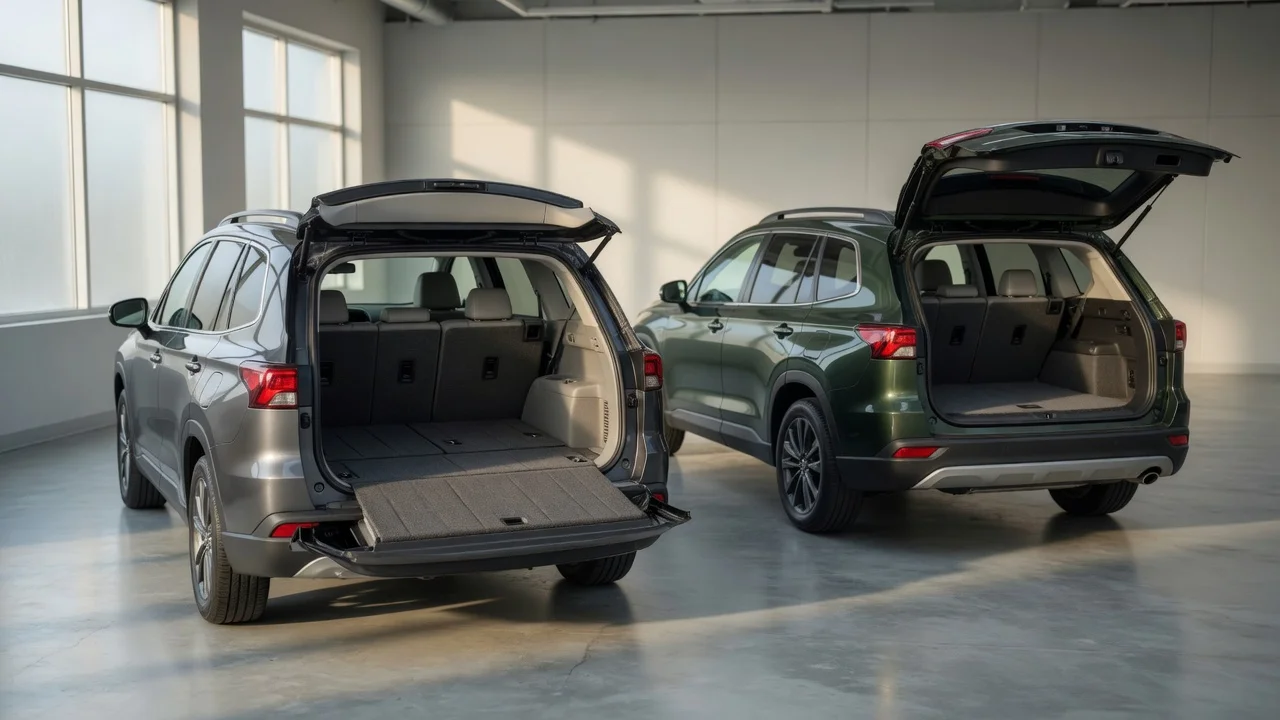
Overall and midsize SUVs can offer similar-looking cargo numbers while behaving differently when loaded. A vehicle with a tall, boxy rear body may accept bulky items that a sleeker model with the same published volume cannot. Pay attention to the rear opening shape, liftover height, load floor depth, and whether the roofline drops sharply toward the hatch. These factors affect real-world use even when the cubic-foot rating is close.
Seat-folding design also changes cargo usefulness. Some models offer a flat load floor with second-row seats folded, while others leave a step or uneven surface. A flat floor makes it easier to slide long, heavy, or boxed items forward. Check whether the third row folds flat into the floor or leaves a raised platform that reduces clean load height.
Published figures do not describe every packaging difference because cargo measurement methods and available model configurations vary. Specifications are useful for narrowing the list, but a tight shape, narrow hatch, or intrusive wheel-well area may still affect what fits. If possible, test the actual opening with the equipment you carry rather than relying on the maximum volume alone.
Practical trade-offs
A large cargo area can come at the cost of maneuverability, fuel consumption, and ease of parking. Longer or wider models often provide more space behind the seats but are harder to place in compact garages or narrow city parking spots. For a buyer who rarely fills the rear cargo area, a smaller midsize model may be easier to live with every day.
Consider how often passengers and cargo compete for space. A model with a large behind-first-row figure may be impressive on paper but may lose practical capacity when the second or third row is occupied. If you routinely carry four or five people with luggage, compare volume behind the second row and, for three-row models, behind the third row rather than the maximum folded figure.
Another trade-off is interior flexibility. Seats that fold completely flat can reduce maximum passenger comfort or seat thickness compared with a more heavily padded bench. Cargo-oriented utility often means thinner seatbacks, simpler folding mechanisms, or less elaborate rear-seat adjustment. That may be acceptable for gear hauling but less appealing for long trips with adult passengers.
Choose for the use case
Start with the load you actually carry. For frequent trips with bicycles, strollers, large pet crates, or mixed boxes, look for a wide rear opening, a flat load floor, and enough height to stand items upright. For occasional bulky loads plus regular family use, a midsize model with flexible second-row folding may be the better daily choice.
If you need space with three rows occupied, prioritize the behind-third-row number over the total folded volume. If you rarely use the third row, compare the vehicle as a two-row cargo area and check whether the folded third row creates a flat or stepped surface. This distinction often matters more than a few cubic feet of difference in the headline rating.
Use the largest published figure only as a screening tool. Shortlist vehicles that fit your passenger count, everyday parking situation, and typical cargo, then verify the shape and opening with your own larger items. The best choice for a compact daily driver may be different from the best choice for long road trips, even when both appear on a list of SUVs with the most cargo space.