Suspension and Wheel Alignment: How They Relate and When to Check
Wheel alignment and suspension are often discussed as separate services, but they depend on each other. The suspension and steering parts hold each wheel at the angles the alignment sets, so worn or bent components can undermine even a careful adjustment. Understanding how car suspension alignment works, what the main angles mean, and which signs deserve attention helps you decide when an inspection makes sense.
How Suspension Condition Affects Wheel Alignment
Wheel alignment describes the angles at which each wheel sits relative to the vehicle's body and to the road surface. The manufacturer specifies target values and acceptable ranges for these angles, chosen to balance tire life, straight-line stability, and steering response for that particular design. Suspension and steering components, including control arms, ball joints, bushings, tie rods, and struts or knuckles, are what physically locate each wheel. When those parts are in good condition, they hold the wheels at their intended angles as the vehicle moves over bumps, turns, and brakes.
Because the wheels are only as stable as the parts holding them, wear and damage directly affect alignment. A worn bushing or loose ball joint lets a wheel shift under load, so its angles change while driving even if they measured correctly on the rack. A bent arm or tie rod can move a wheel permanently out of range, and sagging springs or altered ride height change suspension geometry. An alignment adjustment cannot repair any of this; it only repositions adjustable points, and settings may not hold while worn parts remain.
What Camber, Caster, and Toe Mean
Camber is the inward or outward tilt of a wheel when viewed from the front. When the top of the tire leans toward the body, camber is described as negative; leaning outward is positive. Camber influences how the tread contacts the road, particularly in corners, and excessive tilt can concentrate wear on one shoulder. Caster is the forward or rearward tilt of the steering axis when viewed from the side. It contributes to straight-line stability and helps the steering wheel return toward center after a turn, giving the steering its self-centering feel.
Toe describes the direction the wheels point when viewed from above, whether the fronts of a pair angle slightly toward each other or away. Because toe determines whether tires roll straight or drag slightly sideways, even a small error can cause tread scrub and rapid wear across the tire face. Specifications for all three angles depend on the vehicle, and zero is not automatically correct; many designs call for small deliberate values. Not every angle is adjustable on every car, either, and some corrections require specific parts or procedures.
Symptoms That Make an Inspection Worthwhile
A car that consistently drifts to one side, a steering wheel that sits off center when driving straight, or tires wearing unevenly across the tread are all reasonable grounds for an alignment inspection. None of them proves the alignment is wrong, however. Pulling can also come from a road's crown or slope, unequal tire pressures, a tire with internal belt problems, or a brake that drags on one side. A good inspection considers these possibilities before blaming the wheel angles, which avoids paying for an adjustment that leaves the actual problem unresolved.
Some symptoms point beyond alignment altogether. Vibration may stem from tire balance, a damaged wheel, or driveline issues, while clunks over bumps and vague or loose steering often indicate worn suspension or steering components. These deserve a broader evaluation, since an alignment alone will not quiet a knocking joint or tighten excessive play. Tire wear patterns are useful clues but have limits. Feathered edges or shoulder wear suggest geometry or load problems, yet a wear pattern by itself cannot reliably identify which specific part has failed without a hands-on inspection.
When Impacts and Suspension Repairs Call for an Alignment Check
A hard pothole strike or curb impact can bend steering or suspension parts, shift a wheel, or damage a tire or rim, sometimes without obvious visible signs. Inspection is especially worthwhile if the vehicle behaves differently afterward, such as a new pull, a crooked steering wheel, a wheel that looks out of position, or a tire with a bulge or cut. Repairs that replace or disturb wheel-location parts, such as tie rods, control arms, or struts, can also change alignment angles, so an alignment check commonly follows that work.
Ride height changes deserve the same attention. Lowering springs, lift kits, heavier permanent loads, or aging springs that sag all move suspension components through a different part of their travel, which can alter camber and toe. The appropriate evaluation depends on the vehicle, so manufacturer guidance and applicable repair procedures should shape the process. For routine timing, the owner's manual is a better reference than a universal mileage rule, since recommendations vary by vehicle and driving conditions. Checking alignment when symptoms or relevant events occur is often more meaningful than following a fixed schedule.
Safe Observations Before Booking Service
A few safe observations can make a service visit more productive. With the vehicle parked on level ground and out of traffic, check tire pressures while the tires are cold and compare them with the placard, often found on the driver's door jamb, rather than the maximum printed on the sidewall. Look over the accessible tread and sidewalls for uneven wear, bulges, cuts, or embedded objects. During ordinary driving, note when any pulling, vibration, or noise appears, such as at certain speeds, over bumps, or while braking, without performing deliberate tests or abrupt maneuvers.
Share that record with the shop along with any recent impacts, tire replacements or rotations, and suspension or steering repairs. This history helps a technician connect symptoms to likely causes and decide what to inspect first. Some situations should not wait for an appointment. Sudden steering instability, visible tire damage such as a bulge or exposed cords, or a wheel that looks displaced or tilted calls for stopping in a safe location and arranging professional assistance or towing rather than continuing to drive the vehicle.
What a Professional Alignment Visit Should Establish
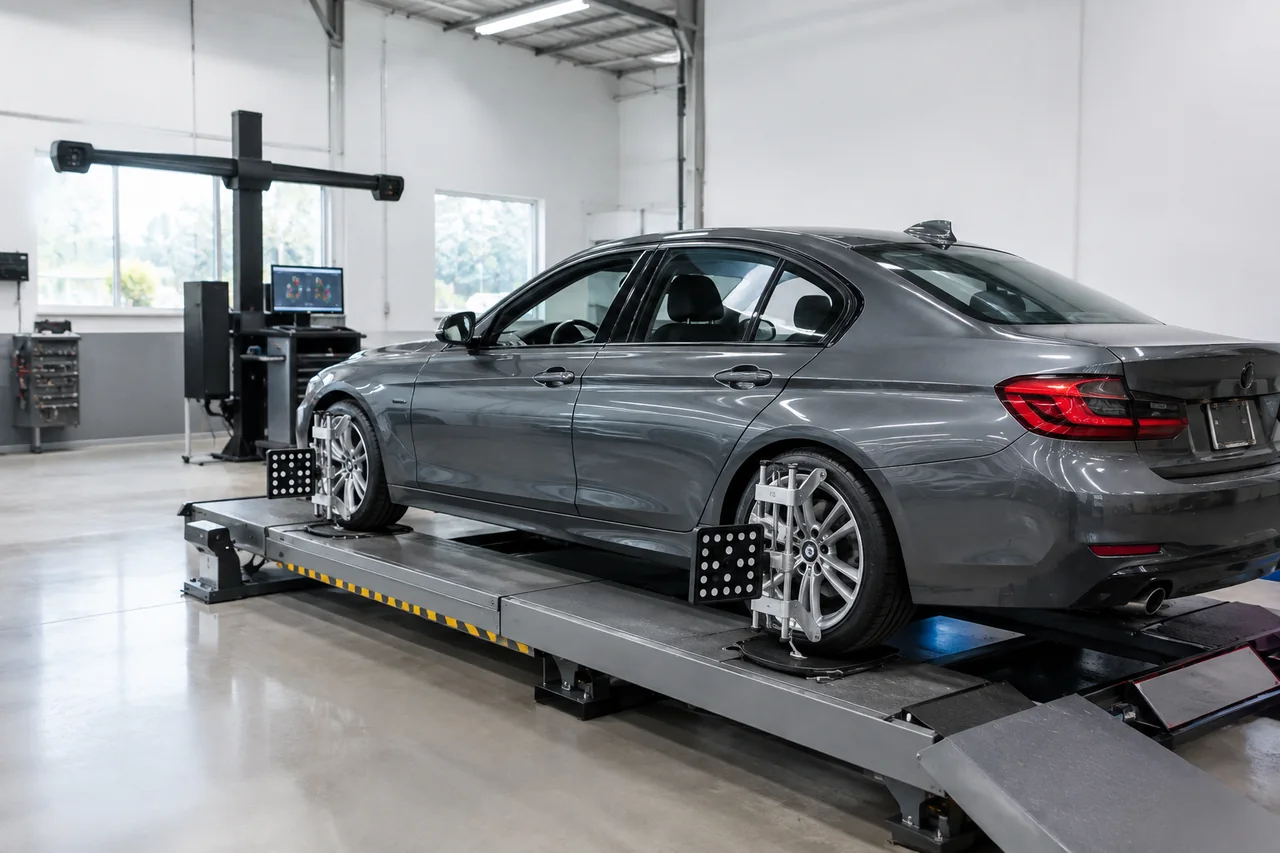
A careful alignment begins before any adjustment is made. Tires should be checked for condition and correct pressure, the suspension and steering inspected for looseness or damage, and ride height confirmed as appropriate for the vehicle. These steps matter because an alignment set on a car with a loose joint or sagging spring may look correct on the rack yet change once the vehicle is driven. The technician then measures wheel angles against vehicle-specific specifications and should address any defect that prevents a reliable, lasting result before making adjustments.
Many shops provide a before-and-after report showing each measured angle alongside the specified range. It documents what changed, but readings within specification do not establish that every suspension component is healthy, since some wear only appears under load or while driving. Before leaving, it is reasonable to ask which angles were adjustable on your vehicle, whether any faults were found but not repaired, and what follow-up evaluation is recommended if the pull, vibration, or wear continues. Persistent symptoms after a correct alignment suggest that tires, brakes, or other components need further diagnosis.