Surround View Camera Systems for Cars: How They Work and What to Check
Direct answer
A surround view camera system for a car is a driver assistance feature that combines feeds from multiple outward-facing cameras to create a simulated top-down or bird's-eye view of the vehicle and its immediate surroundings. The system is intended to help with low-speed maneuvering, parking, and avoiding nearby obstacles that may not be visible from the driver's seat. The exact name, number of cameras, image quality, and available views vary by automaker, model, model year, generation, and trim. Common marketing names include Surround View, Around View Monitor, Bird's Eye View, 360-degree camera, Top View, and similar terms. The feature is typically offered on higher trims or as part of an option package rather than as standard equipment on every vehicle.
How the system is built
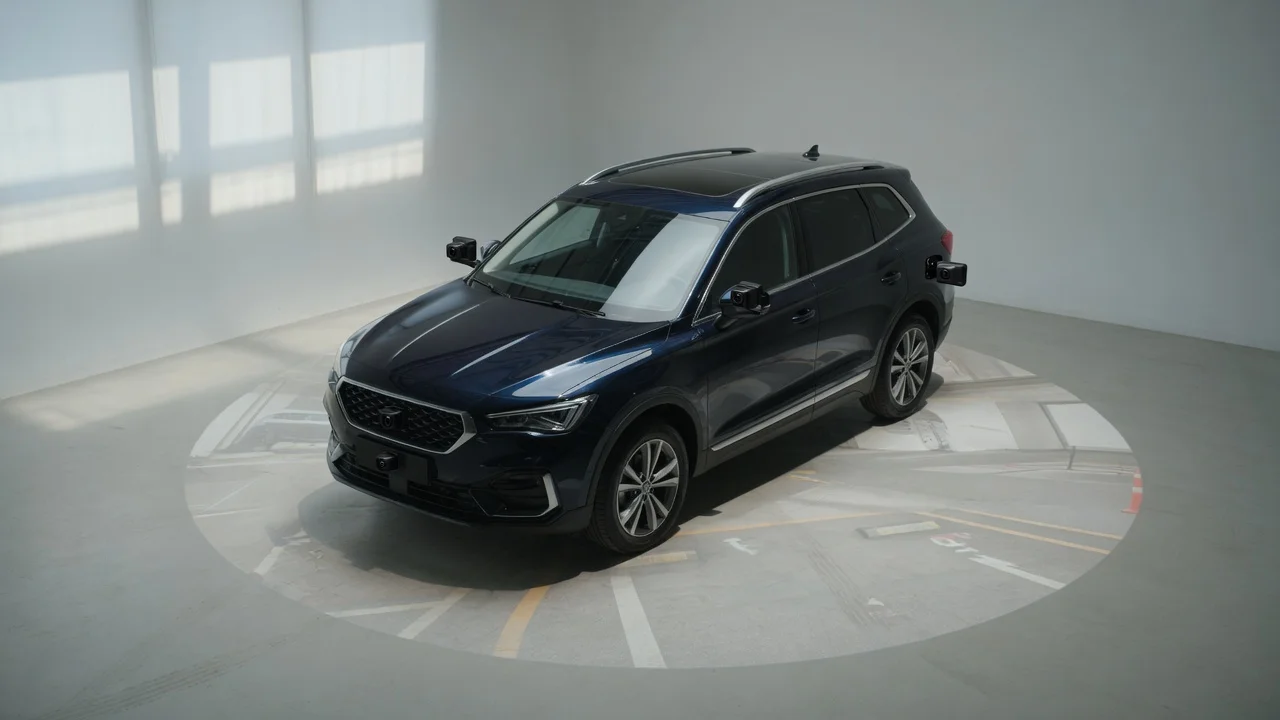
Most production surround view systems use four wide-angle cameras. One camera is usually mounted in the front grille or front emblem area, one in the rear near the tailgate or rear badge, and one under each exterior side mirror. Some systems add more cameras or use higher-resolution sensors, but four is the common baseline. Because each camera captures a fisheye-style image with significant lens distortion, the onboard control module digitally corrects and stitches the feeds together. The processing software blends overlapping edges and aligns the images to produce a single composite view that makes the car appear as if it is being viewed from above.
What the driver sees
The central infotainment or instrument-cluster screen typically shows a virtual vehicle graphic surrounded by a live stitched image of the ground and nearby objects. On many systems, the driver can switch between the combined top-down view and individual camera feeds, such as a front curb view, rear view, or a side view for checking wheel position next to a curb. The surround view is active mainly at low speeds and often engages automatically when reverse gear is selected or when the parking sensors detect proximity to an obstacle. Some implementations include moving guide lines, obstacle highlighting, or a transparent-hood style view that shows the area directly ahead of the front wheels.
Practical benefits
The main benefit is improved low-speed spatial awareness. The top-down projection can make it easier to center a vehicle in a parking bay, judge clearance from curbs or pillars, and detect low objects such as posts, shopping carts, or small children that may be hidden from direct sight. The system does not replace mirrors or direct visual checks, but it reduces the need to estimate distances solely from a single rear camera or parking sensors. In vehicles with high beltlines, long hoods, or restricted rear visibility, the surround view can be especially useful when maneuvering in tight spaces.
Limitations and caveats
A surround view system is not a substitute for attentive driving. The image is digitally stitched, so objects near the seams between camera fields may appear distorted, duplicated, or briefly disappear. Camera lenses can be affected by rain, snow, mud, direct sunlight, or condensation, and dirty lenses reduce image quality. The system may not clearly show thin or low-contrast objects, and nighttime performance depends on the surrounding light and the camera sensors. Drivers should also be aware that the top-down view is a synthetic representation rather than a true physical image from above. The system does not guarantee obstacle detection and may not warn about objects outside the coverage area of the cameras.
Model and trim differences
Availability, camera resolution, screen integration, and additional functions differ by manufacturer and market. A base model may offer only a rear camera, while a higher trim or technology package adds the front and side cameras required for the surround view. Some systems operate only with the vehicle in reverse or below a certain speed, while others allow the driver to activate the view manually at low speed. Because feature names are not standardized, a surround view system on one brand may be labeled as a 360-degree camera on another. The exact behavior and image quality should be checked for the specific model year, generation, powertrain, trim, and regional specification under consideration.
What to check when researching a vehicle
Confirm that the specific trim includes the surround view system rather than only a rear camera. Check whether the feature is standard, optional, or part of a package, and how it appears in the vehicle configurator. Look at the screen controls for switching between top-down and individual camera views. If possible, view the system in operation on the exact model year and trim, because image quality and stitching behavior vary. Ask about low-speed activation, manual activation, and whether front or side views are available on demand.
Bottom line
A surround view camera system is a useful parking and low-speed aid that can improve confidence in tight situations by showing a simulated top-down view of the car and its surroundings. Its value depends on the implementation, image quality, and whether the specific vehicle includes the necessary cameras and processing. The feature is best understood as a supplement to mirrors, direct observation, and other parking aids rather than as a replacement for careful driving.