Subaru Tire Replacement: Matching Tires on an AWD Vehicle
Direct Answer
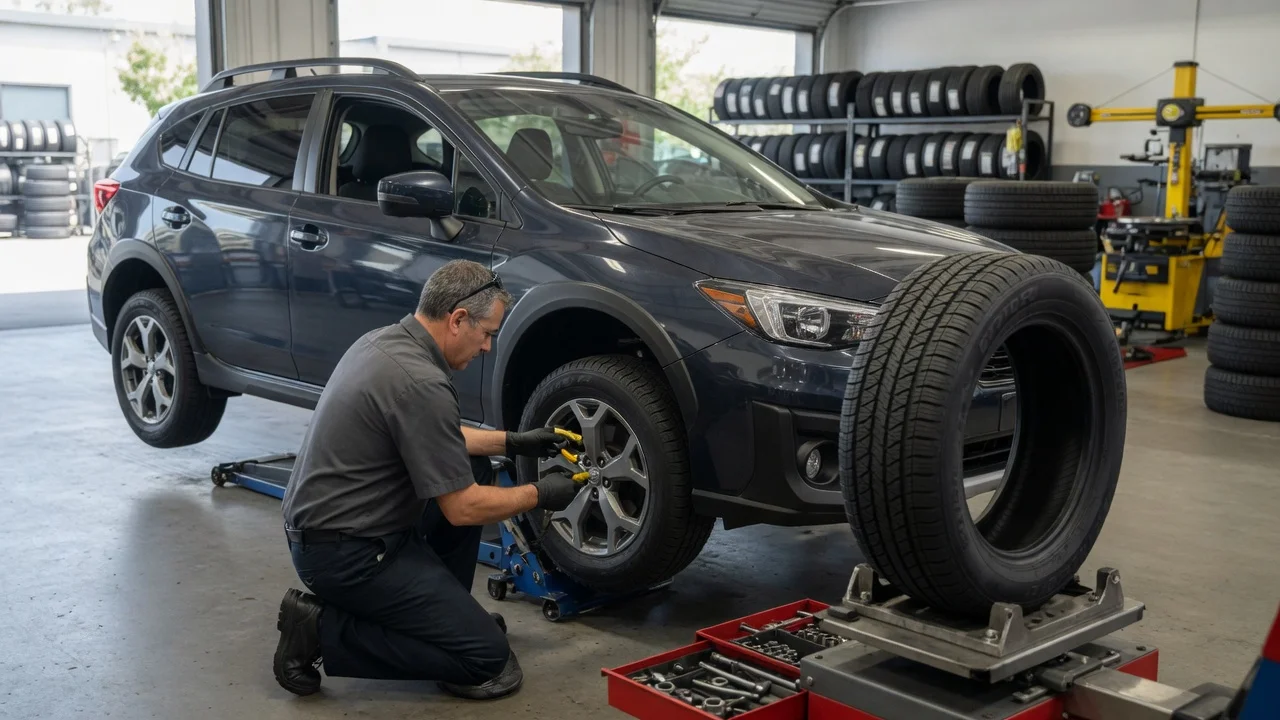
For most Subaru all-wheel-drive vehicles, the essential guidance is to replace tires as a matched set of four whenever possible. If a full set is not being installed, replacement choices should preserve the same tire size, type, construction, and, where practical, similar tread depth. This is especially important on models with symmetrical or performance-oriented all-wheel drive, where differences in tire circumference can put added stress on drivetrain components.
The scope of this guidance includes everyday Subaru AWD vehicles, but the exact recommendation can vary by model year, generation, trim, and whether the vehicle uses a particular AWD system. The safest general rule is to confirm the tire requirements in the owner's manual for the specific Subaru before making a partial replacement decision.
Why Matching Tires Matters
On an all-wheel-drive vehicle, the drivetrain can distribute power and braking force among all four wheels. Tires that differ in diameter, tread depth, construction, or tread pattern can rotate at slightly different speeds. Subaru has traditionally advised that uneven tire circumference can cause unnecessary wear or heat in AWD components, so matching tires reduces that risk.
Tread depth is a useful way to assess whether an existing tire is close enough to a new one. A new tire starts with more tread than a worn tire, so its effective rolling radius can be slightly larger. Small differences are normal in everyday driving, but a large difference between a new tire and heavily worn tires may be more significant.
Full-Set Replacement
Replacing all four tires at the same time is the most straightforward approach for a Subaru AWD vehicle. It gives the vehicle four tires with the same size, model, tread pattern, and starting tread depth. This approach also simplifies future rotation schedules and makes tire wear easier to track.
When choosing a full set, the replacement tires should meet the load and speed rating appropriate to the vehicle and match the size listed for that Subaru model. Winter, summer, and all-season tires are all acceptable as long as all four corners use the same tire type for the intended conditions.
Partial Replacement and Mixed Tires
A partial replacement may be considered when only one or two tires require attention, but it carries more caveats. In many cases, tire professionals and automaker guidance favor installing a matching replacement that is as close as possible to the remaining tires in brand, model, size, and wear. Mixing tire families or greatly different tread depths is generally less desirable than keeping all four tires closely matched.
Specific tolerances are not stated here because they can depend on the Subaru model and its AWD configuration. The material qualification is that owner's-manual guidance for the exact vehicle should take priority over a general recommendation.
Tire Size and Load Rating
Replacement tires should carry the size designated for the vehicle, including width, aspect ratio, and wheel diameter. The load index and speed rating should also be appropriate for the vehicle's requirements. Installing a size or rating that does not meet the vehicle's specifications can affect handling, clearance, tire durability, and potentially the accuracy of speed-related systems.
The tire information placard, typically located in the driver's door area, and the owner's manual are the primary references for the vehicle's recommended tire size and inflation pressure.
Assessing Existing Tread
Before deciding between a full and partial replacement, measure the tread depth on all four tires with a tread depth gauge. Comparing the measured depth helps show how much life the remaining tires have and whether a new tire would be noticeably different in circumference.
Tires should also be checked for other conditions that may make replacement necessary, such as uneven wear, sidewall damage, cuts, bulges, or age-related cracking. These conditions matter independently of tread depth and may require replacement even if the tread has not reached the wear indicators.
Tire Rotation and Wear Management
Regular rotation helps keep wear more uniform across the set. Subaru owners should follow the rotation interval and pattern shown in the owner's manual. Some all-wheel-drive vehicles may show slightly different front and rear wear rates depending on driving style and the AWD system's default torque split.
Keeping a record of rotation dates and tire positions can make future replacement decisions easier. If a tire is replaced under a road-hazard or treadwear warranty, the same matching principles still apply to the new tire.
Seasonal Tire Changes
Owners who switch between summer and winter setups should keep each set as a matched group of four. This means using four winter tires of the same type and four summer or all-season tires of the same type, rather than mixing winter tires with three-season tires.
Dedicated seasonal sets should also be checked for tread depth and age when they are installed. A seasonal tire with sufficient tread for one season may not have enough useful tread for the next.
Spare Tire Considerations
A temporary spare is intended for short-term emergency use and may have a different size or reduced speed limitation than the standard tires. The owner's manual provides the applicable distance and speed restrictions. After using a temporary spare, the normal tire should be repaired or replaced and returned to service as soon as practical so the vehicle continues to run on matching tires.
Next Steps
Check the tire size, inflation pressure, and rotation guidance for the specific Subaru model. Measure all four tires and inspect them for damage or uneven wear. If the tires are heavily worn or the set is not closely matched, a full-set replacement is the most conservative choice; if only one tire is damaged, compare its replacement against the remaining tires in size, type, and tread depth.
Gaps: exact allowable tread-depth differences and the precise replacement policy can vary by Subaru model, model year, and AWD system. The owner's manual or a qualified Subaru service professional should be consulted for the vehicle-specific limit.