Subaru Tire Replacement: How to Match Tires on an AWD Vehicle
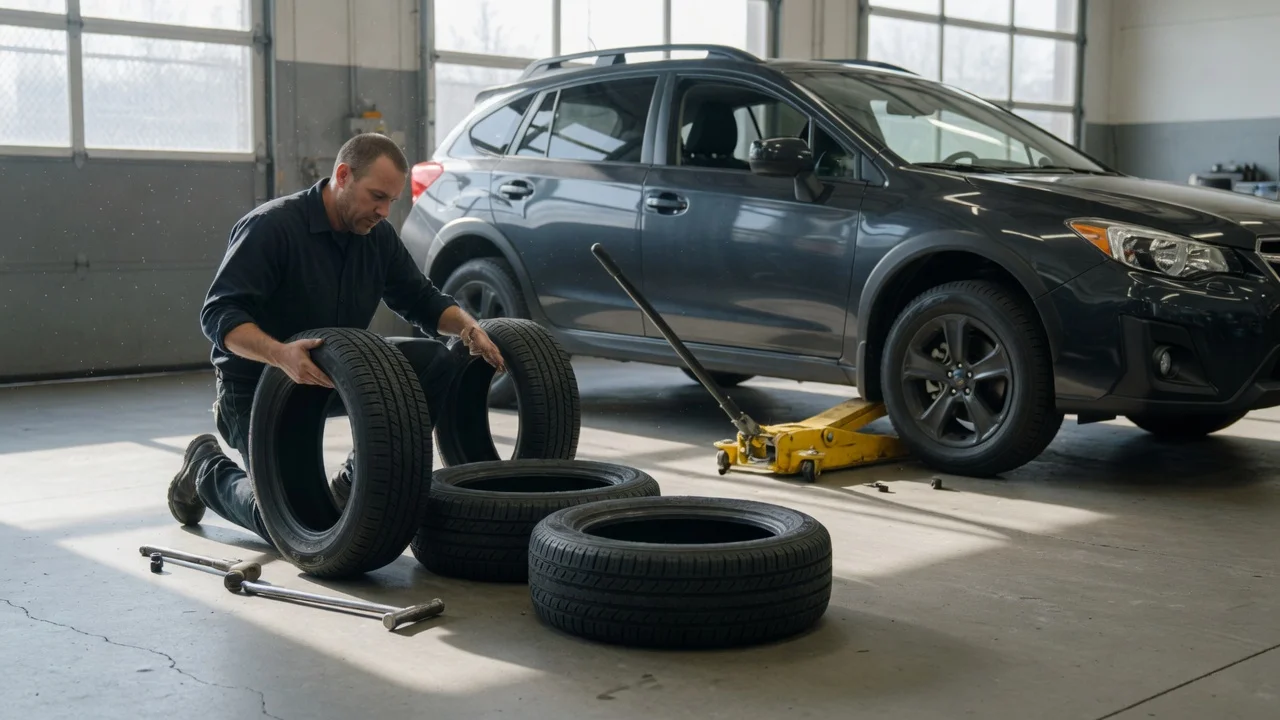
The Short Answer
On an all-wheel-drive (AWD) Subaru, all four tires should match: the same size, brand, model, construction, load index and speed rating, with closely matched tread depth. Tread depth is the height of the remaining tread, usually measured in 32nds of an inch or in millimetres. Matching matters because Subaru AWD sends power to all four wheels through a center coupling or differential. Uneven tire diameters make the wheels turn at different speeds, which forces that coupling to slip constantly and can cause heat and wear in the drivetrain.
In practice, this usually means replacing all four tires at once. If only one tire is damaged and the others are nearly new, a single replacement may be acceptable, but only if the new tire matches the others closely enough. A tire shop can bring a new tire into range by shaving its tread down to match the worn tires. The allowable difference varies by model and year, so check the owner's manual for your vehicle or ask a Subaru dealer before replacing fewer than four tires.
These rules have important exceptions. The Subaru BRZ is rear-wheel drive, so the AWD matching rules do not apply in the same way. Electric models such as the Solterra use a different drive system than conventional Subaru AWD. On those models, follow the tire guidance in the specific owner's manual rather than general advice for gasoline Subarus.
What Matching Means
Size: Width, aspect ratio and rim diameter should match the specification on the tire placard. The placard is a label usually found on the driver's door jamb. Brand and model: Different tire models with the same size can differ slightly in overall diameter. Construction and type: Do not mix tire constructions or categories, such as all-season tires with winter tires, on the same vehicle. Load index and speed rating: These should meet or exceed the original specification shown on the placard or in the owner's manual. Tread depth: All four tires should be within the tolerance specified for your vehicle. A tire with less tread has a smaller rolling circumference, meaning it travels a shorter distance per revolution.
About the tolerance figures: retail and service guidance often cites a maximum tread-depth difference of about 2/32 inch (roughly 1.6 mm) across all four tires. Some Subaru owner's manuals express the limit as a difference in tire circumference instead. No authoritative figure was supplied for this guide, and the limit may differ by model year and market. Treat any number you see as a starting point and confirm it against the documentation for your vehicle.
Steps to Replace Tires Correctly
Before You Start
Owner's manual for your model year, for tire specifications, matching guidance and lug nut torque. Tire placard information from the driver's door jamb. A tread depth gauge that reads in 32nds of an inch or millimetres. A tire pressure gauge. If you remove wheels yourself: wheel chocks, the correct jack or a floor jack, jack stands, a lug wrench and a torque wrench.
Step 1: Measure Tread Depth on All Four Tires
Measure each tire in its main grooves at the inner edge, center and outer edge, and record the lowest reading for each tire. Uneven readings across a single tire can point to alignment or inflation problems, which should be corrected when the new tires are installed. Also inspect each tire for sidewall cuts, bulges or exposed cords. Any of these means the tire must be replaced, and the vehicle should not be driven at speed on it.
Step 2: Decide How Many Tires to Replace
Compare the tread depth of a new tire, typically listed in the manufacturer's specifications, with your measurements. If the difference falls within your vehicle's allowed tolerance, replacing one tire with an identical model may be acceptable. If it does not, you have two options: replace all four tires, or have the new tire shaved to match. Tire shaving must be done by a tire shop with the proper equipment and is not a do-it-yourself task. If the existing tire model is no longer available, replace all four so the brand and model stay matched.
Step 3: Choose the Correct Tire Specification
Select tires that match the size, load index and speed rating listed on the placard or in the owner's manual. Some trims of the same model use different wheel sizes, so check your specific vehicle rather than another trim or year. If you are considering a different size, such as for winter wheels, confirm with a dealer or the manual that the overall diameter and fitment are approved for your vehicle.
Step 4: Have the Tires Mounted and Balanced
Mounting, balancing and servicing the tire pressure monitoring system (TPMS) sensors should be done by a qualified tire shop. The TPMS uses sensors inside the wheels to warn of low pressure. If you remove and refit wheels yourself, follow the safety precautions in Step 5.
Step 5: Lift and Refit Wheels Safely (Only If Doing It Yourself)
Park on firm, level ground, engage the parking brake and chock a wheel on the opposite axle. Lift only at the jack points shown in the owner's manual. Never work under or reach under a vehicle supported only by a jack; use rated jack stands. When refitting wheels, snug the lug nuts in a star pattern, lower the vehicle, then tighten to the torque value specified in the owner's manual with a torque wrench. If you are unsure about the jack points or the torque specification, stop and have a shop do the work.
Step 6: Set Pressures and Check the Alignment
Inflate all tires to the cold pressures on the door placard, not the maximum pressure printed on the tire sidewall. Have a qualified shop check wheel alignment if the old tires showed uneven wear or if the vehicle pulls to one side.
Step 7: Plan Regular Rotations
Rotate the tires at the interval in your Subaru maintenance schedule. Regular rotation keeps wear even across all four tires, which preserves the tread-depth match and reduces the chance of needing to replace an entire set because one tire wore faster.
How to Confirm the Job Is Done Correctly
All four tires are the same size, brand, model and type, and they meet the placard load and speed ratings. Tread depths are recorded and fall within your vehicle's specified tolerance. Cold pressures match the door placard, and the TPMS warning light is off after driving. Lug nuts have been torqued to the manual's specification. Many shops recommend rechecking the torque after a short distance; follow your installer's guidance. A test drive shows no vibration, pulling, or binding or hopping sensation in tight, slow turns. Such a sensation can indicate a tire mismatch or a drivetrain problem and should be inspected by a qualified technician.
Temporary Spare Tires
A compact temporary spare differs in size from the regular tires, so it is meant only for short-distance, reduced-speed use. Follow the speed and distance limits in your owner's manual. Some Subaru models have additional instructions for running on a temporary spare. Check the manual for your specific model year, and replace or repair the full-size tire as soon as possible.