Choosing a Subaru Shift Interlock Solenoid by Model and Year
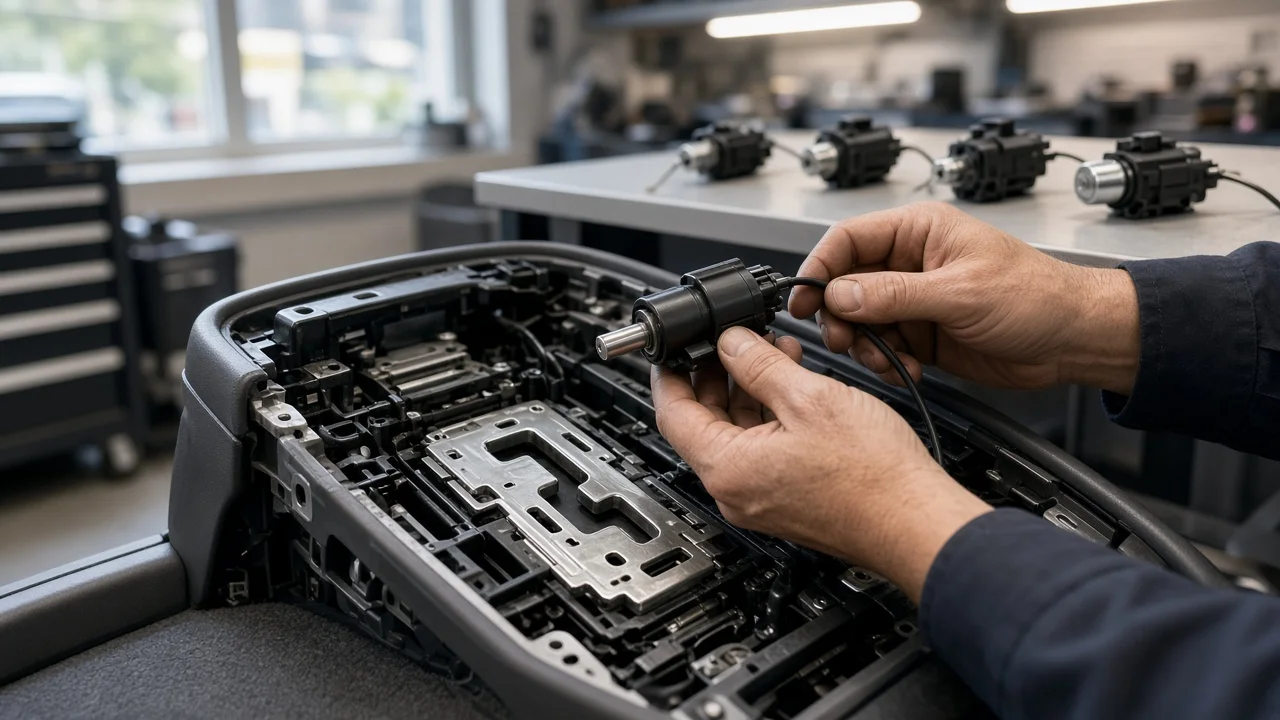
When a Subaru automatic refuses to leave Park even with the brake pressed, the shift interlock solenoid is one of the first suspects, but it is not the only one. The right replacement depends on the model, year, transmission type and how the shifter is built. This guide explains how to confirm the need, match fitment, weigh part options and avoid paying for a solenoid that will not solve the problem.
Define the job the solenoid must do
The shift interlock solenoid, often called the shift lock solenoid, holds the automatic transmission selector in Park until the system sees the brake pedal applied. On most Subaru models it sits inside the shifter assembly under the center console and is powered through the stop lamp switch circuit. Pressing the brake energizes the solenoid and frees the lever. On many keyed vehicles, a related interlock also prevents the ignition key from being removed unless the selector is in Park. The replacement part therefore has one narrow job: release the lever reliably when commanded and lock it again when not. It plays no role in changing gears inside the transmission and does not interact with transmission fluid, so the fluid specification for your 4EAT, 5EAT or Lineartronic CVT has no bearing on this purchase.
Before ordering anything, confirm that the solenoid is actually the cause. A selector stuck in Park is a symptom, not proof of a failed part. Check that the brake lights come on when the pedal is pressed. If they do not, a failed stop lamp switch, a blown fuse or a wiring fault is more likely, and a new solenoid will not help. With the ignition on and the brake pressed, you can often hear or feel a faint click at the shifter when the solenoid pulls in. Most Subarus also have a shift lock release slot near the selector for moving out of Park manually. If the lever moves freely with the release but not with the brake, the electrical side of the interlock deserves attention. If the lever stays stiff even with the release, look at the shifter mechanism, cable or linkage instead.
Check compatibility by model, year and transmission
Fitment starts with the exact vehicle: model, model year, trim and transmission type. Subaru has used conventional four- and five-speed automatics and, on many later Legacy, Outback, Forester, Impreza, Crosstrek and other models, the Lineartronic CVT. The shifter hardware differs between these platforms and between generations of the same model. Manual-transmission vehicles do not use this solenoid. Push-button start and keyed ignition versions may use different interlock arrangements. Parts can also change within a model year, so the VIN is a more reliable reference than the year alone.
The most dependable way to match a part is to read the number printed on the existing solenoid or shifter assembly and cross-reference it, or to have a parts counter look it up by VIN. Then compare the physical interfaces: connector shape and pin count, wire length, mounting points, plunger length and the orientation of the solenoid in the shifter housing. On some models, the dealer supplies the solenoid only as part of a complete select lever assembly, while aftermarket suppliers may sell the solenoid separately. Knowing which applies to your vehicle shapes both the cost and the amount of disassembly involved.
Features that affect the choice
The main decision is usually between an original-equipment part, an aftermarket solenoid and a complete shifter assembly. An OEM part matched by part number removes most fitment doubt, but it can cost more and may only be sold as an assembly. An aftermarket solenoid can be far cheaper, yet quality and dimensional accuracy vary. Look for a listing that shows the connector clearly, states the exact vehicle range and transmission type, and offers a usable return policy. A complete assembly makes sense when the lever, detent or housing is also worn, or when the solenoid cannot be separated from the shifter on your model.
Treat marketing labels with caution. Phrases such as plug-and-play, direct fit or heavy duty mean little unless the seller backs them with a specific part number cross-reference and clear photos of the connector and mounting. A used or salvage shifter can be a reasonable repair option on an older vehicle. Confirm it came from the same model, year range and transmission type, and inspect the connector and plunger for damage before installing it. Warranty length and the ease of returning a part that does not fit are more useful evidence than claims about durability.
Limitations and ownership costs
Replacing the solenoid generally means removing center console trim and parts of the shifter surround, and sometimes separating the shifter assembly from the console. Plastic clips and trim tabs can break, so keep spares on hand to avoid rattles later. Follow the service manual for your vehicle on battery disconnection and the order of trim removal. After installation, check the repair properly. With the brake released, the lever should stay locked in Park. With the brake pressed, it should release smoothly. The key interlock or push-button start behavior should work as before.
A new solenoid cannot fix a faulty stop lamp switch, a blown fuse, damaged wiring, a misadjusted shift cable, a worn shifter detent or any internal transmission problem. Shift lock faults often leave no diagnostic codes in the transmission controller. On some vehicles, though, a failing stop lamp switch can affect other systems such as cruise control, so a scan can still add useful context. The service history also helps: recent console work, spilled drinks near the shifter or earlier electrical repairs can explain an intermittent fault better than a worn solenoid. If shift behavior is also abnormal once the vehicle is out of Park, such as harsh engagement or slipping, that is a separate transmission concern that needs its own diagnosis.
Build a practical shortlist
Start the shortlist only after the brake light check, the fuse check and the shift lock release test all point toward the solenoid. Record the VIN, model year, trim, transmission type and ignition style. Before removing anything, photograph the existing part number, connector and mounting. Then compare candidates on the same terms: a confirmed part number match or documented cross-reference, an identical connector and mounting, whether the part is a solenoid alone or a complete assembly, included hardware, and warranty and return conditions.
Narrow the list to two or three options that meet every fitment point. Then weigh cost against the disassembly each one requires and the condition of the rest of the shifter. If the vehicle is still under an applicable warranty or covered by a manufacturer campaign, check eligibility before buying a part yourself. If the diagnosis is still uncertain, paying a technician to test the circuit with a meter is a better investment than buying a series of parts that may not address the real cause.