Subaru Outback Transmission Valve Body Replacement Cost
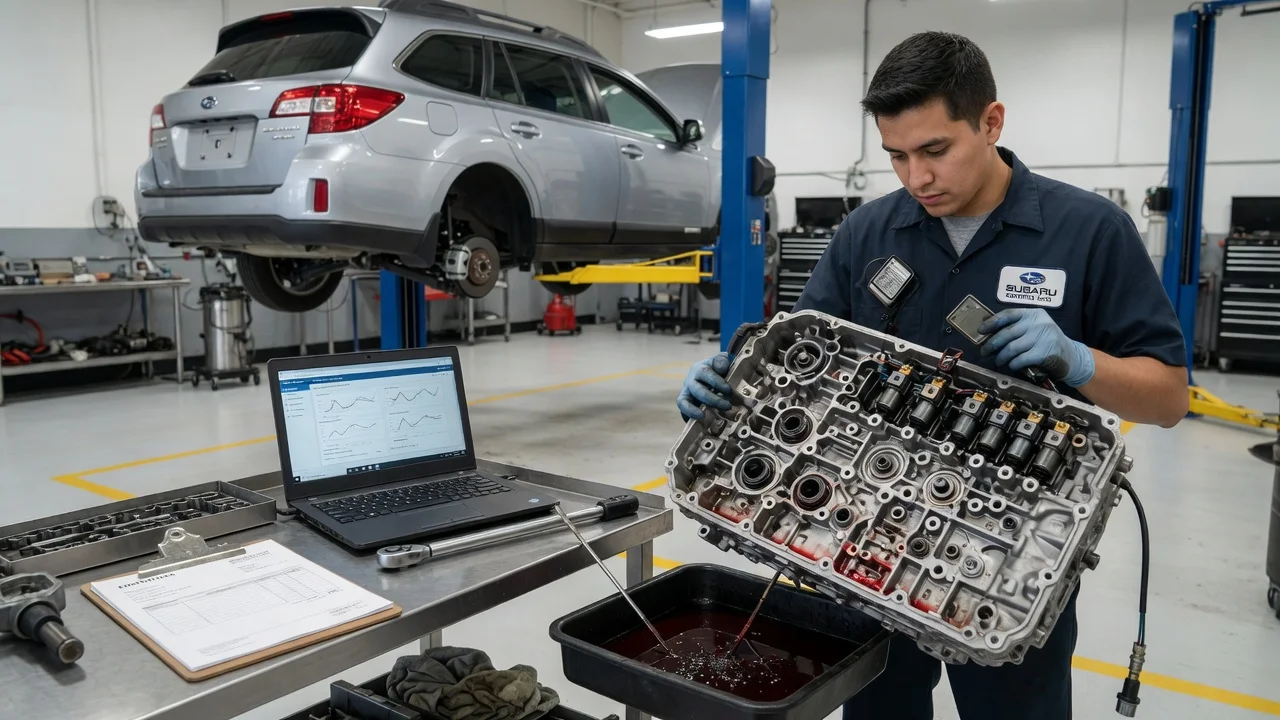
Replacing the valve body on a Subaru Outback is a hydraulic-control repair inside the transmission. The price you are quoted depends on which transmission the vehicle has and on what the shop plans to do. Most Outbacks from the 2010 model year onward use a Lineartronic CVT. Earlier automatic models, and six-cylinder versions for several later years, use a conventional geared automatic. This guide covers what a fair estimate includes, what moves the total, and how to compare offers.
What the estimate includes
The valve body is the assembly of fluid passages, valves and solenoids that directs pressurized fluid inside the transmission. In a geared automatic it controls clutch and band application. In a CVT it controls pulley pressures and torque converter lockup. A complete replacement estimate usually covers several steps: draining the fluid, removing the pan, swapping the valve body, and refilling with the specified fluid. The technician then checks the fluid level at the temperature the procedure calls for, performs any required programming or learning procedure with a capable scan tool, and road tests the vehicle. The total should include the part, labor, fluid, the pan gasket or seals, a filter where the design uses a serviceable one, and the programming time.
Many figures you see are partial. A catalog price for the part alone leaves out labor and fluid. A labor-only number leaves out the part, and a "starting at" price may exclude diagnosis and software work. Diagnostic fees are often billed separately, and shops differ on whether they credit that fee toward the repair. Also keep valve body quotes separate from quotes for a transmission rebuild or full replacement, which are different jobs. Harsh engagement, shudder, slipping or delayed engagement can come from the valve body. The same symptoms can also come from fluid condition, sensors, the control module, the torque converter or internal wear. So a valve body price only applies once diagnosis points to that part.
What changes the cost
Transmission type and configuration come first. A CVT valve body and a valve body for a conventional automatic are different parts, with different fluid specifications and procedures. Engine choice matters too: the 2.5-liter four-cylinder, the 3.6-liter six-cylinder and the 2.4-liter turbo used since the 2020 model year can pair with different transmission versions. Model year and production changes affect fitment, so the correct part is identified by VIN and part number, not by model name. Depending on the transmission, the valve body may come as a complete assembly with solenoids. Some designs require the replacement unit to be programmed or matched to the vehicle.
The parts source shifts the price considerably. A new genuine Subaru assembly, a remanufactured unit and a used part from a salvage vehicle carry different costs and different warranty terms. Fluid is also a real line item. A CVT needs the Subaru-specified CVT fluid, and some shops do more than one drain and fill to bring the overall fluid condition up. Labor depends on the shop's book time and hourly rate, which vary by region and between dealers and independent shops. Access problems such as seized or corroded pan bolts can add time.
The scope can grow once the pan is off. Debris in the pan or on the magnets, or burnt fluid, can point to internal damage that a valve body will not fix. In that case the recommendation may change to a rebuild or replacement. Software updates, control module faults or wiring repairs are separate charges if they turn up. A documented service history with regular fluid changes helps the shop judge whether a targeted repair is reasonable.
Compare like-for-like options
The usual repair options are a dealer installing a new genuine valve body, or an independent transmission shop using a new or remanufactured unit. Other options are a used valve body, a transmission rebuild, or a new or remanufactured transmission. To compare them fairly, line up the same scope. Check the part type and source, the fluid type and quantity, whether programming is included, and the length of the warranty. Also check whether the warranty covers parts and labor, whether it is honored only at the installing shop or nationwide, and whether it transfers to a new owner.
A targeted valve body repair makes the most sense when testing isolates a valve or solenoid fault, the fluid is in acceptable condition and there is no sign of mechanical damage. If the inspection finds metal debris, belt or chain wear, or a failing torque converter, a valve body alone is likely to be money spent without a lasting fix. A used valve body costs less up front. But its history is unknown, fitment errors are possible, and it usually comes with little or no warranty, so weigh that risk against the savings.
Before paying out of pocket, ask a Subaru dealer to check the VIN for any open recall, service campaign or extended coverage on the transmission. Also check whether a remaining powertrain warranty or a purchased service contract applies. Coverage terms differ by vehicle, mileage and date, so confirm them for your specific car rather than relying on general reports.
Read an itemized quote
A useful written estimate lists the VIN and the identified transmission, along with the diagnostic findings: stored diagnostic codes, relevant live data, fluid condition and road test notes. It should show the part number and whether the part is new, remanufactured or used. It should also break out the part price, labor hours and hourly rate, fluid type and quantity, gaskets and other consumables, and programming or relearn charges. Shop supplies, disposal fees and taxes should appear as separate lines, so you can see exactly where two offers differ.
Look for exclusions and conditional charges. Watch for open-ended phrases such as "additional repairs as needed", and for diagnostic fees that are not credited. Remanufactured parts may carry a core charge, which is refunded only when the old unit is returned. Some quotes leave out towing or extra fluid exchanges. Ask what happens if the symptom remains after the repair, and whether any of the cost would be applied toward further transmission work. Read the warranty conditions as well, such as requirements to use specified fluid or return to the same shop.
Decide the next step
Start by confirming the exact transmission from the VIN. Then get a diagnosis that records codes, shift behavior or CVT operation, and fluid condition, and request a written, itemized estimate. Gather at least two quotes with the same scope, part source and warranty terms. Ask a dealer to check for recalls, campaigns or remaining coverage. Keep copies of your service history ready, because they help both the diagnosis and any warranty claim.
Avoid shortcuts that tend to cost more later. Do not order a valve body by model name alone without matching the part number to the vehicle. Do not use a generic fluid in place of the specified one, and do not skip required programming or the level check at the correct temperature. Do not approve the work before the shop has inspected the fluid and pan for signs of internal damage. If the vehicle's overall condition and mileage make a larger transmission repair likely, compare the valve body estimate against those repair options before you commit.