Subaru Outback Head Gasket Issues: Which Models Are Affected and What It Means
The Short Answer
Head gasket trouble on the Subaru Outback is mainly associated with older, non-turbocharged 2.5-litre four-cylinder engines from Subaru's EJ25 family. These engines were used in Outbacks from the late 1990s through roughly the end of the 2000s. Later Outbacks, and the six-cylinder and turbocharged versions, are not generally associated with the same widespread pattern. So whether this is a real concern depends on the model year and engine of the specific car.
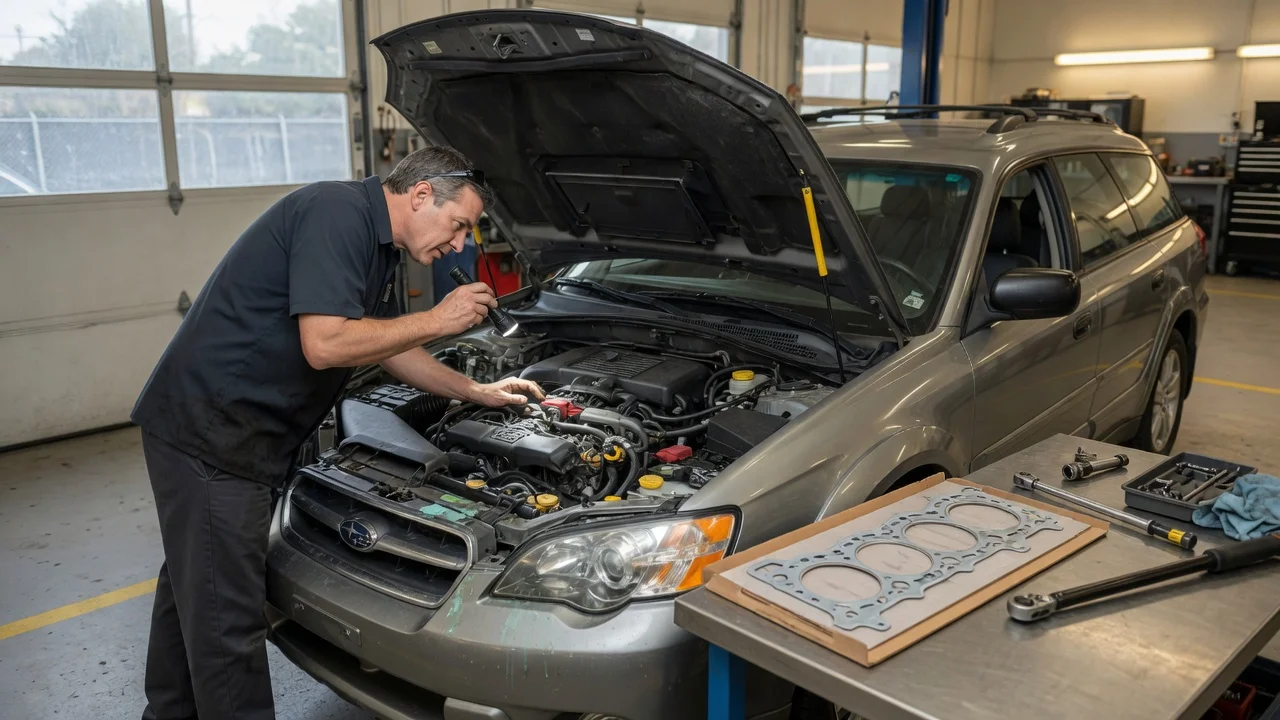
A head gasket is the seal between the engine block and the cylinder head. It keeps combustion pressure, coolant and oil in their own passages. Subaru's flat, horizontally opposed boxer engine has two cylinder heads, one on each side, so it has two head gaskets.
Note on sources: no source documents or measurements were supplied for this article. The points below reflect widely reported patterns for these engines. Exact model-year cut-offs, market differences and the details of any manufacturer service actions should be confirmed with a Subaru dealer using the vehicle's VIN.
Which Outbacks Are Most Associated With the Problem
Period (approximate, North American market) | Engine | Commonly reported failure type; Late 1990s (about 1996–1999) | 2.5-litre DOHC four-cylinder (EJ25D) | Internal leaks, with combustion gases entering the cooling system, leading to overheating; About 2000 to late 2000s | 2.5-litre SOHC four-cylinder (EJ251/EJ253) | External seepage of oil and/or coolant at the head gasket seam; About 2010–2012 | 2.5-litre SOHC four-cylinder (EJ253, revised) | Reported less often than in earlier years; 2013 onward (2.5i) | FB25 four-cylinder | Not known for the earlier head gasket pattern; Various years | Turbocharged XT (EJ255) and six-cylinder (EZ30/EZ36) | Not generally associated with the same widespread pattern
Treat these year ranges as approximate. Engine assignments and model-year changeovers can vary by market. Individual cars in any group may also have had their gaskets replaced already, often with updated multi-layer steel gaskets.
Internal Versus External Failures
The two main failure types carry different levels of risk:
Internal failure: combustion gases are forced into the coolant passages. This can lead to overheating, coolant being pushed out of the overflow tank, and possible damage to the cylinder heads if driving continues. This was the pattern more often linked to the late-1990s DOHC engine. External failure: oil or coolant slowly weeps from the joint between the head and the block. It is usually visible at the lower edge of the cylinder heads. This was the pattern more often linked to the 2000s SOHC engine. It tends to develop gradually, but ongoing coolant loss can still lead to overheating if it is ignored.
Warning Signs to Watch For
Coolant level that keeps dropping with no obvious leak elsewhere; Temperature gauge rising, especially under load or on long climbs; Bubbles in the coolant reservoir while the engine is running; A sweet coolant smell, or a burning-oil smell from fluid landing on the exhaust; Oil or crusty coolant residue along the lower seams of the cylinder heads; White exhaust smoke that persists after warm-up
None of these signs confirms a head gasket failure on its own. A cooling-system pressure test or a combustion-gas (block) test is the usual way to tell a gasket problem apart from a leaking radiator, hose or water pump.
What This Means for Owners and Buyers
If you are buying an Outback with an affected EJ25 engine, ask whether the head gaskets have been replaced and what type of gaskets was used. Ask for repair records, and have the car inspected for seepage and checked with a cooling-system test before purchase.
For current owners, Subaru reportedly issued service guidance on some affected engines that included adding a coolant conditioner to the cooling system. Which vehicles this applied to, and whether any coverage is still available, should be checked with a dealer.
Head gasket replacement on a boxer engine is a labour-intensive job, and some shops remove the engine to do it. No repair cost figures were supplied for this article, so get written quotes from more than one qualified shop.
In practical terms, a 2013 or later Outback with the FB25 engine, or a turbocharged or six-cylinder model, is not the group usually discussed when Outback head gasket issues come up. An older non-turbo 2.5-litre car can still be a sound purchase if its gasket history and current condition check out.