Subaru Forester Spark Plug Replacement Guide
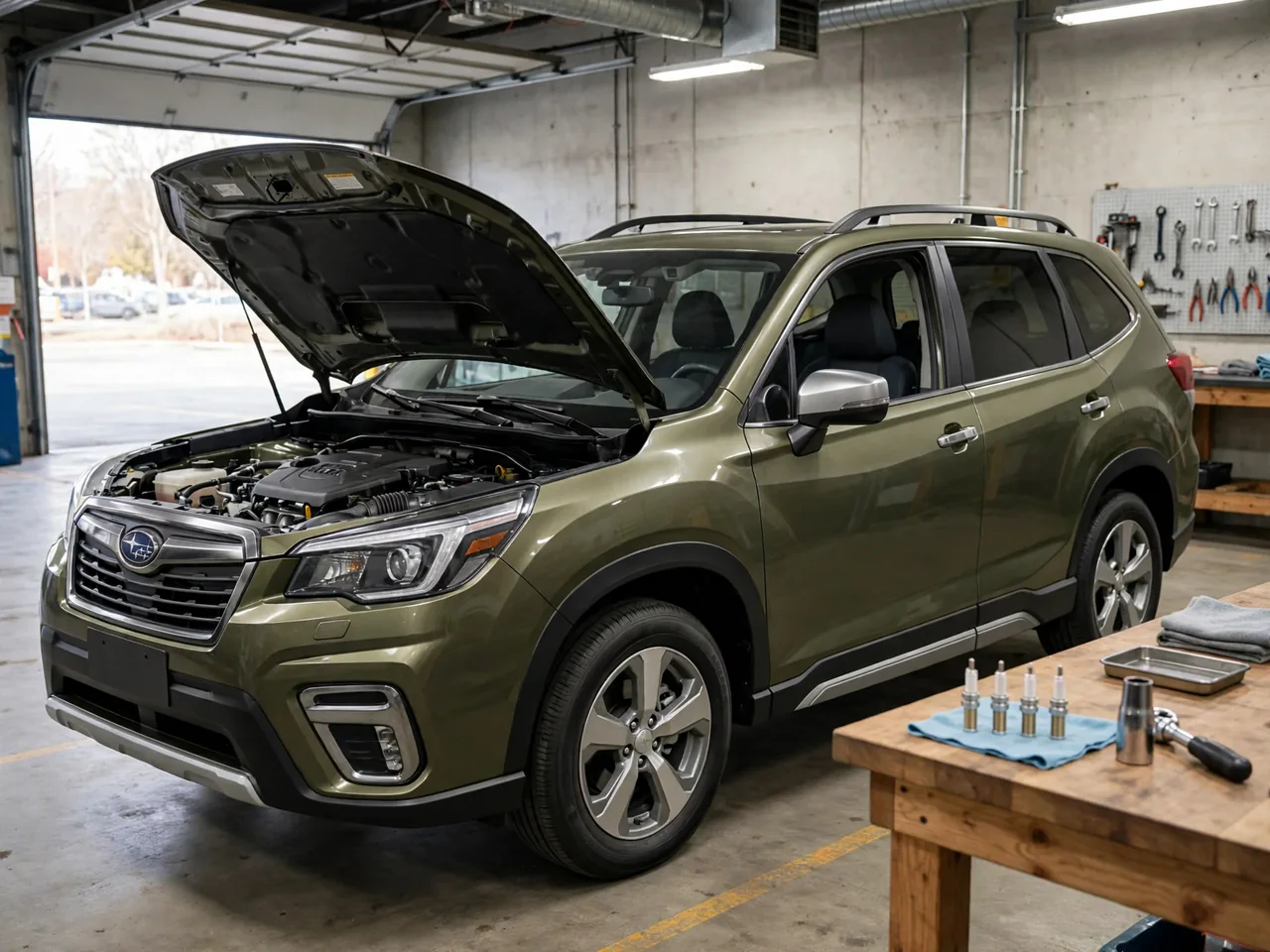
Selecting spark plugs for a Subaru Forester starts with the vehicle, not a generic shelf choice. The boxer engine, ignition coils, and maintenance schedule affect spark plug specification and replacement timing. Model year, engine designation, and service history decide the correct plugs and access path. Fitment, symptoms such as a cylinder misfire, and service planning still treat a warning light as evidence to interpret, not as proof a plug has failed.
Identify the Forester’s Engine and Required Spark Plugs
Subaru Forester spark plugs are not interchangeable across every generation. Model year, engine designation, and the market where the vehicle was sold determine thread size, reach, heat range, and electrode material. One boxer engine can require a different spark plug specification than another even when both sit in a Forester. When catalog listings conflict, the VIN is the practical way to lock the vehicle to its original engine and equipment so spark plugs Subaru Forester searches do not pull the wrong family of parts.
Confirm the plug part number in the applicable Subaru maintenance and service information rather than relying on a store tag or a claimed cross-reference. Electrode material, heat range, reach, and spark plug gap must match that engine's requirements; a hotter or cooler plug, a different reach, or an unapproved gap can disturb combustion even if the threads start. A replacement number is only correct after verified fitment for that exact Forester. Treat aftermarket equivalents as candidates until the service information agrees.
Determine When Spark Plug Replacement Is Due
Replacement timing for spark plugs for Subaru Forester engines belongs on the maintenance schedule for that model year, engine, and market, not on a single shared interval. Dated invoices and recorded mileage show whether the last service already covered plugs or whether the current odometer has reached the scheduled point. Compare those records to the schedule rather than guessing from age alone. If the applicable schedule mentions severe or special operating conditions, use that language only as written; do not invent extra-short intervals from driving style.
Missing service history does not prove the plugs are original, overdue, or still within range. A previous owner may have replaced them without paperwork, or factory plugs may remain with no way to confirm either case from appearance alone. Treat unknown history as a reason to inspect records and consult the schedule, not as automatic justification to replace. Scheduled replacement differs from symptom-driven diagnosis: a misfire warning calls for testing, not a calendar assumption that the plugs must be the cause.
Understand the Forester’s Boxer Engine Access Challenges
The Forester's boxer engine places the cylinders horizontally, so spark plug access is typically at the sides of the engine rather than on top. That layout changes how ignition coils come off and how the plugs themselves are reached. Surrounding components, shields, and intake or exhaust hardware can shrink working clearance; the exact obstacles depend on the engine in that vehicle and should be verified in the service information for that designation. Assuming a conventional inline-engine path will mislead anyone planning the job from general automotive habits.
Limited visibility and restricted tool movement make coil handling and correct plug installation more demanding than the parts list suggests. Crooked thread start or debris in a well is harder to notice when you cannot see the seat clearly. Assess whether you have the service information, the right sockets and extensions, and experience working in tight side access before starting. If clearance prevents controlled work, professional service is the safer choice; forcing access around the boxer layout risks damaged threads, coils, or connectors.
Recognize Symptoms Without Assuming the Plugs Are at Fault
Rough idle, difficult starting, hesitation, and a cylinder misfire warning can all involve the ignition system, yet none of those symptoms prove the spark plugs have failed. An ignition coil, a fueling fault, a vacuum leak, or a mechanical problem can produce the same complaints. Note whether the issue appears on a cold engine at startup, after warm-up, or under load, without trying to recreate unsafe conditions on the road. Those observations help a technician narrow tests; they do not by themselves justify a plug swap.
A stored fault code is evidence to interpret, not proof a part has failed. Manufacturer-dependent codes still need vehicle-specific confirmation, and a worn-looking electrode or sooty insulator does not reliably separate plug trouble from coil, fueling, or mechanical causes. If the check-engine light flashes or the Forester shakes severely, stop safely and seek assistance rather than continuing to drive. Professional diagnostic testing is needed when codes, misfire counters, and coil or fuel-system data must be compared; replacing plugs first can hide the original problem and waste parts.
Plan the Service and Confirm the Results
A useful estimate for Subaru Forester spark plug work should name the verified plug specification, describe labor to reach the boxer-engine wells, and separate diagnostic time that is not part of routine replacement. Ask that the quote follow the maintenance schedule and the service information for that VIN rather than a one-size kit. Cold-engine work, clean plug wells, correct thread engagement, and vehicle-specific tightening specifications matter because debris, cross-threading, or the wrong torque can damage a cylinder head. Those are reasons to insist on controlled service, not a substitute for the official procedure.
Check the applicable guidance before assuming a spark plug gap should be adjusted, a thread treatment applied, or an ignition coil reused or replaced as a set. Practices that are correct on one Forester engine can be prohibited on another. After the job, record the installed part numbers, the date, and the mileage so the next maintenance schedule review is based on facts. If a misfire warning, rough idle, or check-engine light remains, the plugs were not the whole story and further diagnosis is required rather than repeating the same replacement.