Subaru Electronic Parking Brake Service Mode: Entry and Exit With or Without a Scanner
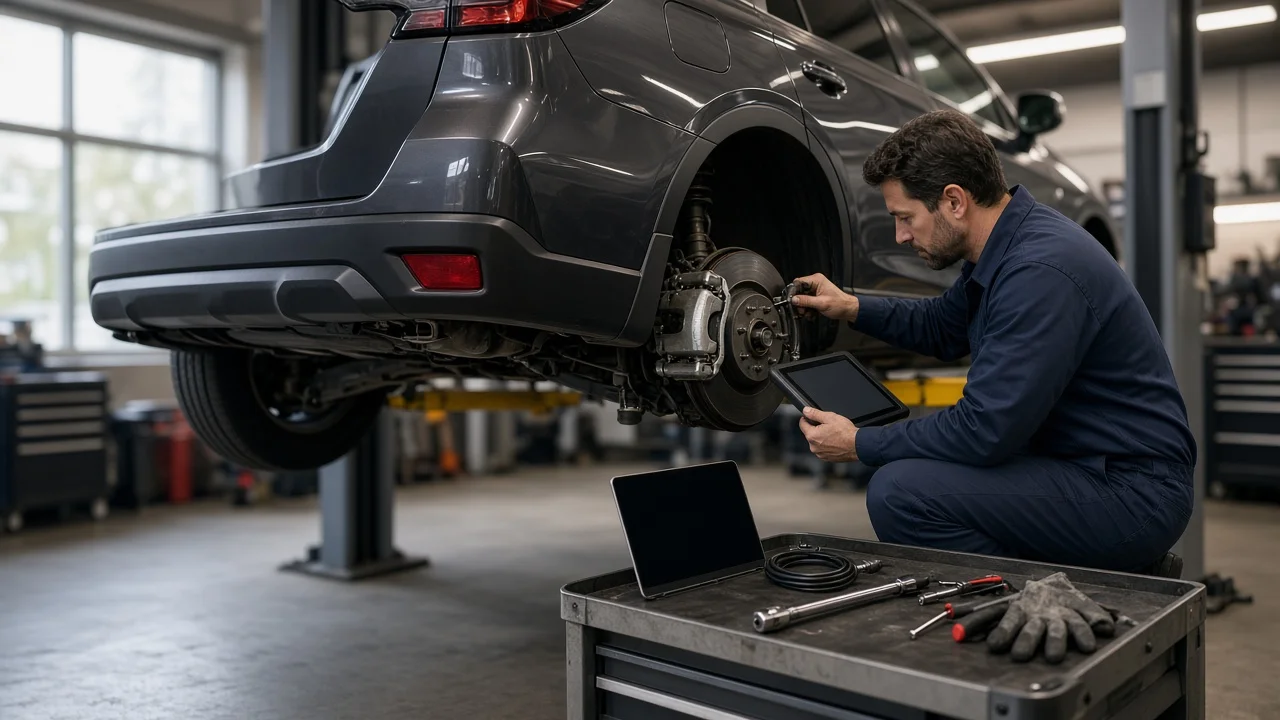
Rear brake work on a Subaru with an electronic parking brake begins with a step that is easy to miss: putting the parking brake in service mode, which Subaru service information typically calls maintenance mode. Service mode backs off the parking brake mechanism so the brake pads, brake rotors or caliper can be removed without damage. This guide explains how to enter and exit that mode with a scan tool or, where your model supports it, without one. It also covers how to choose the right approach for your car.
What service mode has to do for your job
Subaru has used more than one electronic parking brake design. Depending on model and year, an electric actuator either pulls cables to small parking brake shoes inside the rear rotor hats, or a motor mounted on each rear caliper drives the piston directly. In both layouts, service mode tells the mechanism to release fully and stay released, so the system does not try to apply while parts are off the car. When the job is finished, exiting the mode returns the actuator to normal operation and lets the system confirm its released and applied positions.
Common reasons to enter service mode are rear pad and rotor replacement, rear caliper removal and parking brake shoe service. Work on level ground, chock the front wheels and leave the transmission in Park, because the parking brake will not hold the car while the mode is active. Keep battery voltage stable, ideally with a battery maintainer connected, since a voltage drop during a release or apply command can set fault codes. Some symptoms point to a fault, not a routine service: the parking brake warning light is already on, the brake will not release, or the brake does not hold. Diagnose the fault instead of forcing service mode, and stop using the vehicle until it is repaired.
Check compatibility before you start
Start by confirming which system your car has, using the VIN and the service information for that exact model, year and trim. Parking brake hardware can differ between generations of the same nameplate, so a procedure written for one platform may not apply to another. The same service information gives you the rear pad and rotor wear limits, torque values and the correct piston retraction method. The retraction method matters most on caliper-mounted motor designs, where the piston must not be forced back while the motor is still holding it.
Scan tool compatibility is a separate question. A basic OBD-II code reader handles emissions-related data and cannot command the parking brake module. You need a tool that lists Subaru coverage for the parking brake system for your model year. It must specifically offer the maintenance mode or brake release function, along with the matching exit or calibration command. Replacement parts need the same care. Confirm vehicle fitment for pads, rotors and any caliper, because motor-equipped rear calipers are specific to the system they were designed for.
Scanner or switch sequence: features that matter
A capable scan tool is the most predictable route. It sends a direct command to enter maintenance mode and shows whether the module accepted it. It can also read and clear parking brake trouble codes and, on many platforms, run the exit and check routine after reassembly. The dealer reference is the Subaru Select Monitor diagnostic system. Aftermarket bidirectional tools can perform the same functions when their Subaru coverage actually includes your vehicle.
Some Subaru models also have a documented switch-and-ignition sequence that enters and exits maintenance mode without any tool. These sequences use the parking brake switch, brake pedal and ignition in a set order and timing. They differ between models and generations, so there is no single universal procedure to memorize. Use only the sequence published in the service information for your car. Steps copied from a different model often fail without any warning or leave a stored code. If your car has no documented manual method, a scan tool is required.
When comparing tools, read the function list rather than the box. Labels such as all systems, EPB reset or service functions do not prove Subaru support, and a reset may only clear codes. Look for named functions for your make and year, and rely on the coverage list published by the tool maker.
Limitations, ownership costs and exiting correctly
Service mode only moves the parking brake mechanism. It does not retract the hydraulic piston, free a sticking caliper, repair a failed actuator or motor, or tell you whether parts are worn. Measure pad friction material and rotor thickness against the wear limits in the service information, and look for uneven wear and contamination. Check the brake fluid reservoir as well, because pushing pistons back raises the fluid level and a full reservoir can overflow. Clean spilled brake fluid off paint immediately. Replace pads contaminated with fluid or grease.
After reassembly, pump the brake pedal until it is firm, then exit service mode using the same method you used to enter it. Follow the order in your service information if it differs. Apply and release the parking brake several times, confirm the warning light goes out, and test the brakes at low speed before normal driving. Do not drive the car if the light stays on, the brake does not apply or release fully, or the pedal feels low. It needs diagnosis, which may mean professional service.
Ownership costs depend on the route. A manual sequence costs nothing but works only on supported models. Aftermarket scan tools vary widely in price, and many charge for software updates or extended vehicle coverage after an initial period, so check renewal terms before buying. A battery maintainer is a worthwhile one-time purchase for any electronic brake work.
Build a practical shortlist
Before buying a tool or starting the job, run through a short checklist. Confirm your model, year and parking brake design from the VIN and service information. Find out whether a documented maintenance mode sequence without a scanner exists for your car. If it does not, shortlist only scan tools that name Subaru parking brake maintenance mode, release and exit functions for your exact model year. Compare update and subscription costs, and check whether each tool also reads parking brake trouble codes.
Then confirm the parts side. You need pads and rotors with correct vehicle fitment and the right piston retraction tool for your caliper type. Add fresh brake fluid of the specified type for topping up, plus a battery maintainer. Once the list is complete, choose between the manual method and a scan tool based on what your car actually supports rather than on general marketing claims.