Identifying a Subaru CVT Valve Body: Transmission, Fitment and Symptoms
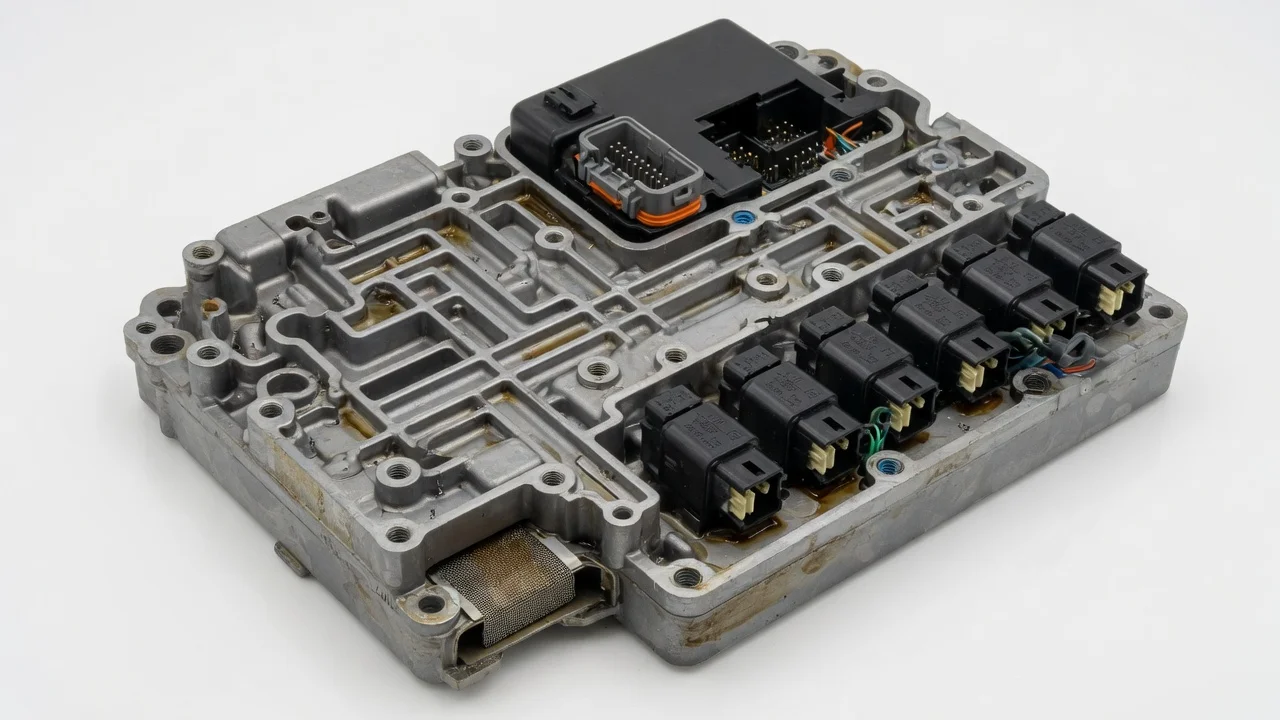
The valve body in a Subaru Lineartronic CVT is the hydraulic control center that directs fluid pressure to the pulleys, the torque converter lockup clutch and, on many all-wheel-drive models, the transfer clutch. Identifying the right one starts with knowing exactly which transmission your vehicle has, because Subaru has used more than one CVT family and several internal revisions. This guide explains how to pin down that identity, what the valve body does, and why a shifting complaint does not automatically mean the valve body has failed.
The short answer
A Subaru CVT valve body is identified by the transmission it belongs to, not by how it looks. Two control valve assemblies can appear nearly identical on a bench yet differ in solenoids, internal valving or the calibration data the transmission control module expects. The reliable path runs from the vehicle identification number, to the transmission type and model code, to the specific part number for that unit. Subaru's Lineartronic transmissions fall into broad families, most commonly the TR580 used with four-cylinder engines and the TR690 used with higher-torque engines, and valve bodies are not interchangeable between those families.
In practice, that means ordering or verifying parts by VIN through a Subaru parts counter or a parts catalog that decodes the VIN, then confirming against the transmission identification label on the case. A used valve body taken from a different model year or engine pairing may not bolt up correctly, or may bolt up and still not work properly with your control module.
How the valve body works in a Lineartronic CVT
Inside the transmission, an oil pump creates hydraulic pressure, and the valve body divides and regulates that pressure. It contains spool valves moving in precisely machined bores, plus electrically controlled solenoids. The transmission control module, a separate electronic unit, reads inputs such as vehicle speed, pulley speeds, throttle position and fluid temperature, then commands the solenoids. The resulting pressures squeeze the primary and secondary pulleys to set the ratio and hold the steel chain without slipping, engage the forward and reverse clutches, apply the torque converter lockup clutch and, on many all-wheel-drive versions, control the clutch that sends torque to the rear axle.
Because so many functions pass through one assembly, a problem in the valve body can affect engagement, ratio changes, lockup and all-wheel-drive behavior at once. The same outward shift behavior can also come from an electrical fault in a solenoid circuit or harness, degraded or incorrect fluid, a worn torque converter, or wear in the chain and pulleys. The valve body is a common suspect, but it is one part of a larger hydraulic and electronic system.
What changes the answer
Transmission family and engine pairing matter first: the TR580 and TR690 use different hardware, and a part for one will not serve the other. Within a family, Subaru has revised internal components across model years, and parts can be superseded by newer numbers. A replacement listed for your VIN may therefore differ from the part originally installed, which is normal when a supersession exists. Drivetrain layout also matters, since all-wheel-drive and front-wheel-drive versions do not always share control hardware.
Calibration is the other major variable. On many modern CVTs, including some Subaru units, replacing the valve body or control module requires registering characteristic data or running a learning procedure with factory-level diagnostic software. Skipping that step can leave a new part producing harsh engagement or poor shift quality, which then looks like a failed repair. Fluid specification belongs in the same category: Subaru specifies particular CVT fluids for particular transmissions, and the wrong fluid or an overdue change can create symptoms that mimic a control problem. Finally, warranty status changes the decision, because Subaru has extended coverage on certain CVT model years, and eligibility depends on the specific vehicle.
Symptoms that point toward hydraulic control
Owners usually start looking at the valve body after noticing shudder or judder under light acceleration, delayed or harsh engagement into drive or reverse, engine speed flaring without matching acceleration, or the transmission entering a reduced-power fail-safe mode. Warning lights may include the check engine light and, depending on model, a transmission or all-wheel-drive indicator. Stored diagnostic codes may name a pressure control solenoid, a pressure sensor reading outside its expected range, or a ratio error.
These clues narrow the search but do not confirm the part. A code naming a solenoid circuit points to that circuit, which includes wiring and connectors, not only the valve body. Pressure or ratio errors can result from low fluid, contamination, or mechanical wear that the valve body cannot correct. Treat symptoms and codes as the starting point for a diagnostic path rather than a parts order.
What the owner can do
Gather the basics before any repair decision: the VIN, current mileage and the service history, especially when the CVT fluid was last changed and which fluid was used. Record when the symptom appears, whether cold or fully warm, at what speed, under light or heavy throttle, and whether it is consistent or intermittent. These details help a technician reproduce the problem and separate a control fault from mechanical wear.
Have the transmission module scanned with a tool that can read Subaru transmission data, not just generic engine codes, since many basic readers cannot see transmission-specific faults or live pressure values. Ask a dealer whether service bulletins, software updates or warranty extensions apply to your VIN, because a reflash or covered repair may change the plan entirely. Checking CVT fluid level on these units requires a specific temperature and procedure, and some versions have no conventional dipstick, so this is best left to someone with the service information.
Repair options typically include replacing the control valve assembly, addressing a wiring or connector fault, a software update, or replacing the transmission with a new, remanufactured or used unit when internal wear is present. If you are considering a used valve body, match the part number to your VIN-decoded listing and confirm whether calibration registration is required before installing it.
Limitations and next step
A valve body failure cannot be confirmed from symptoms alone. Confirmation usually depends on scan data showing commanded versus actual pressures, circuit testing of solenoids and wiring, and sometimes inspection of the fluid and pan for debris. Significant metal debris generally indicates wear elsewhere in the transmission, in which case a valve body alone is unlikely to solve the problem. Procedures, fluid requirements and calibration steps also vary by transmission type and model year, so general guidance cannot replace vehicle-specific service information.
The sensible next step is a VIN-based parts and coverage check combined with a diagnosis by a Subaru dealer or a transmission specialist equipped with factory-level software. That approach confirms fitment, captures any warranty extension, and makes sure the replacement is calibrated correctly if it turns out to be needed.