Subaru Check Engine Light With Flashing Cruise Control Light
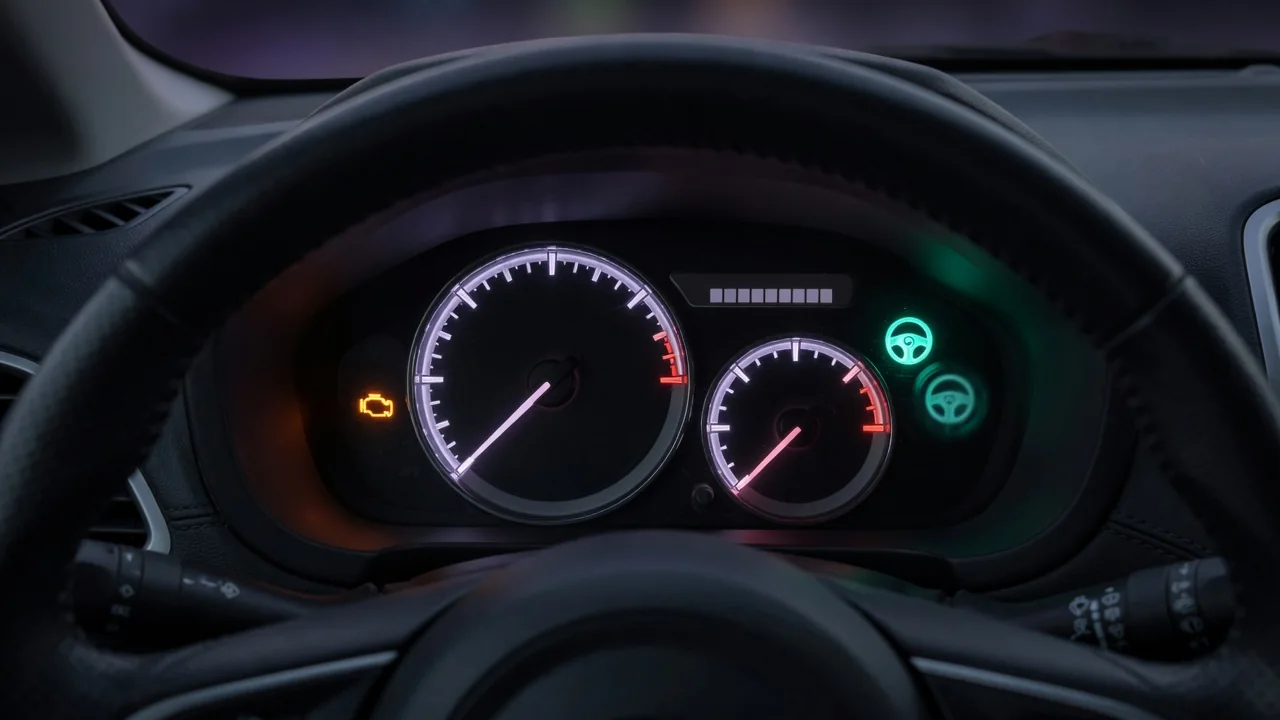
When a Subaru check engine light and flashing cruise control appear together, the combination often points to an engine-management issue rather than a dedicated cruise-control failure. Many models disable cruise while the malfunction indicator lamp is on, so the cruise lamp may blink as a result. The pattern does not name a failed part or a repair cost. Confirm indicator meaning in the owner's manual for the model and year, then gather symptoms and diagnostic trouble codes.
Why the Cruise Light Can Blink When the Check Engine Light Appears
On many Subaru vehicles, cruise control is treated as a convenience function that depends on a healthy engine-management system. When the powertrain control module detects a fault that turns on the check engine light, it can inhibit cruise so the driver cannot hold a set speed while the engine is operating outside intended conditions. That inhibit strategy often shows up as a blinking cruise indicator. A Subaru check engine light with flashing cruise control can reflect one underlying engine or emissions fault, not two unrelated failures.
The cruise lamp itself does not establish that a cruise-control switch, actuator, or related module has failed. Cruise control disabled status is a common response to a stored or pending engine fault, and the blinking indicator is a status cue rather than a parts list. Indicator logic still varies by model and year, so the owner's manual is the place to confirm what a flashing cruise light means on that vehicle. The warning combination also does not identify a failed component or establish repair cost; those conclusions require diagnosis.
Warning Signs That Require Stopping Safely
Start by identifying which lamp is actually flashing. A blinking cruise indicator does not tell you whether the check engine light is steady or flashing, and those two states carry different urgency. A flashing malfunction indicator lamp can indicate an active engine misfire that may overheat and damage a catalytic converter if driving continues. In that situation, reduce load, pull over when it is safe, and arrange assistance rather than continuing at highway speed. Seeing both lights still requires that distinction before you decide whether to continue.
Stop as soon as it is safe if the vehicle shakes severely, loses substantial power, produces smoke, overheats, or shows an oil-pressure warning. Those conditions can escalate damage even when the cruise lamp is the more noticeable blinker. When the check engine light is steady and the car still starts, idles, and accelerates in a familiar way, the owner's manual still calls for prompt diagnosis rather than a guarantee that continued driving is safe. Treat a Subaru check engine light and cruise control flashing together as a reason to assess drivability, not as proof that a cruise unit failed.
Safe Observations to Record Before Diagnosis
Before an OBD-II scan, write down the model, year, current mileage, and every other warning light that is on. Note whether the check engine light is steady or flashing, because that distinction changes how urgently the vehicle should be moved. Record whether cruise stays unavailable after a restart and whether the cruise indicator keeps blinking. Those notes help a technician compare present conditions with freeze-frame data later. Include when the lights first appeared and under what driving conditions.
Also note drivability clues: rough idle, hesitation, hard starting, unusual exhaust or fuel smells, and whether the problem began after refueling or recent service. With the vehicle parked and the engine off, check that an applicable fuel cap is seated as the owner's manual describes and look for obvious fuel cap seal damage or a missing gasket. A loose cap can contribute to an evaporative emissions system fault, but a cap check cannot rule out other causes. Warning lights also may not go out immediately after a cap is tightened, because the module still needs to retest the system.
Read and Preserve Fault Codes Before Clearing Anything
Retrieve stored and pending diagnostic trouble codes with an appropriate scan tool or at a repair facility before clearing anything. Write down the exact code numbers and any freeze-frame data that shows engine speed, load, coolant temperature, and fuel-system status when the fault set. That snapshot is often more useful than the lights alone, because several monitored systems can produce the same warnings. Do not reset the module first; a reset can erase pending codes and freeze-frame information that would have pointed diagnosis in the right direction.
Verify each code's published meaning for that Subaru model, year, and powertrain before treating it as a diagnosis. Generic OBD-II codes describe a detected condition, while manufacturer-specific codes can refer to Subaru-only monitors and require vehicle-specific confirmation. A code identifies a circuit, system, or operating condition that fell outside programmed limits; it does not by itself prove which part needs replacement. Wiring, connectors, mechanical problems, and related components can all set the same code. Do not treat a stored code as proof that cruise hardware failed; the code still needs interpretation against that vehicle's data.
Possible Causes That Need Supporting Evidence
If retrieved codes point to the evaporative emissions system, an improperly seated fuel cap or a damaged fuel cap seal is one possible explanation, not an automatic conclusion. Other evaporative paths include hoses, purge and vent control, and leak detection hardware, and those still require testing rather than parts swapping. When codes instead point toward misfire, diagnosis should examine ignition, fuel delivery, and mechanical contributors without assuming a coil, plug, or injector has failed. Either family of faults can inhibit cruise, so the codes and symptoms have to agree before a repair direction is chosen.
Air-metering and other emissions-control faults are also conditional possibilities when the stored data support them. Mass airflow, manifold pressure, oxygen-sensor, and catalyst-efficiency monitors can all illuminate the malfunction indicator lamp and leave cruise control disabled, but not every Subaru shares the same typical cause. Distinguishing a false sensor reading from wiring damage, a vacuum leak, or an underlying engine condition requires professional testing with live data and targeted checks. Skip hazardous procedures such as unmetered fuel spraying or bypassing safety devices. A check engine light with flashing cruise control on a Subaru is evidence to interpret, not a parts order.
Confirm the Repair and Cruise Control Recovery
Normal warning-light and cruise-control behavior usually returns only after the underlying engine-management fault is resolved and the module can complete its monitors. Clearing codes or disconnecting the battery solely to hide the lights can erase freeze-frame data and reset readiness monitors, which can remove clues if the fault returns. If a Subaru check engine light and flashing cruise control come back after a reset, the original condition was never confirmed as repaired. Ask the repair facility to verify the fault is gone, review remaining codes, and check whether any warning indicators are still commanded on.
Do not expect a fixed number of drive cycles before the malfunction indicator lamp or cruise indicator returns to normal, because monitor completion depends on driving conditions and which systems were involved. After a confirmed repair, cruise should become available again once inhibit conditions are gone, but that recovery is not instantaneous on every model. If the engine warning clears yet cruise remains unavailable or its indicator keeps blinking, pursue vehicle-specific follow-up diagnosis instead of repeating resets. Separate body-control, brake-switch, or cruise-input faults can exist, and they still need evidence rather than another code-clear attempt.