Subaru Brake Warning Light: Meaning and Checks
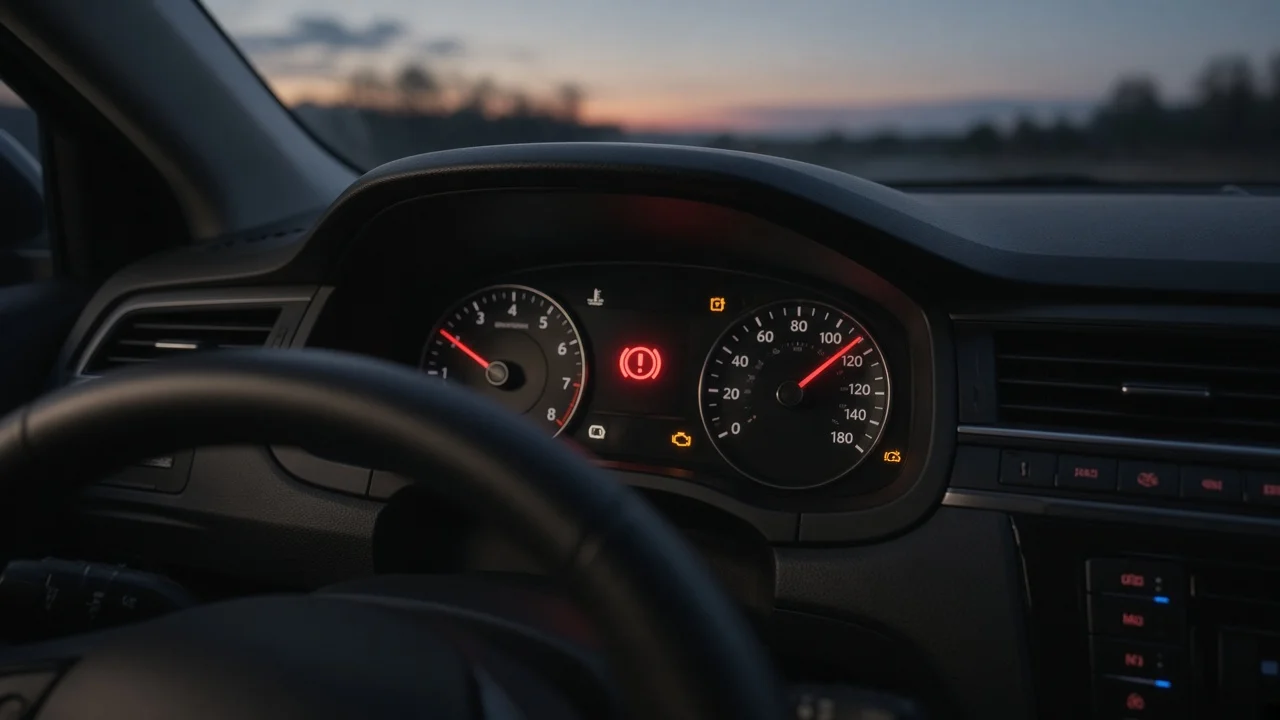
When the red brake warning light stays on in a Subaru, the car is reporting something about the parking brake, the brake fluid level or the brake control system. Some causes are harmless, such as a parking brake that is not fully released. Others mean the hydraulic system can no longer be trusted. This guide explains what the light can mean, how to narrow down the cause with safe observations, and when to stop driving and have the vehicle inspected.
Establish the symptoms
Start by noting exactly when the light appears. A brief glow at startup is a normal bulb check and goes out within a few seconds. A light that stays on after starting, comes on while driving, or flickers during cornering, hard braking or on hills tells a different story. Also confirm which symbol you are seeing. The red BRAKE text or circled exclamation mark is the general brake warning. The amber ABS light, the parking brake indicator on models with an electronic parking brake, and driver-assistance messages are separate warnings. The owner's manual for your model and year shows the exact symbols and their meanings.
Next, record any associated signs. Pay attention to pedal feel: soft, spongy, sinking, or travelling further than usual. Listen for noises such as squealing or grinding. Note any pulling to one side, a burning smell, wet residue near a wheel or under the car, and other warning lights that came on at the same time. Recent changes matter too. New brake pads, a fluid service, battery replacement or disconnection, a parking brake used in freezing weather, and recent tire or suspension work can all point toward a cause. Write these details down before anything is adjusted, because they help a technician later.
Distinguish plausible causes
The simplest cause is the parking brake. On cars with a lever or pedal, a brake that is not fully released, or a switch that is out of adjustment, keeps the light on. On models with an electronic parking brake, the warning may stay lit or flash if the system has not released or has logged a fault. If the light goes out once the parking brake is fully released, that cause is supported. If the light stays on with the brake confirmed off, the parking brake becomes less likely.
The second common cause is low brake fluid. As brake pads wear, the caliper pistons move outward and more fluid sits in the calipers, so the reservoir level drops gradually. A level near minimum combined with worn pads and no visible leakage fits normal wear. A sudden drop, wet areas around a caliper, hose, line or the master cylinder, or a soft pedal point to a leak instead. A light that flickers mainly in turns or under braking usually means fluid near the minimum mark is sloshing past the level sensor. If the reservoir is full but the light is on, a stuck float or a faulty level switch becomes a candidate.
The third group is electronic. When the red brake light and the ABS light come on together, the brake control system may have disabled electronic brake-force distribution. This function helps balance braking between the front and rear axles. Possible triggers include a wheel speed sensor fault, a control module problem or low voltage after battery work. Confirming this requires a scan tool. Worn friction material by itself usually does not trigger this light directly. Many Subaru models use mechanical wear tabs that squeal against the rotor rather than a dashboard sensor, so pad wear typically affects the light only through the falling fluid level.
Checks in a useful order
Begin with checks that need no tools. Park on level ground and confirm the parking brake is fully released, following the procedure in the owner's manual. With the engine off, look at the translucent brake fluid reservoir and note where the level sits relative to the MIN and MAX marks, without opening the cap. Look behind each wheel and under the front of the engine bay for wet spots, drips or residue. If the wheel design allows it, look at how much pad material remains against the rotor. Finally, with the car stationary and the engine running, press the pedal firmly and note whether it holds steady or slowly sinks.
Some checks require tools, vehicle-specific specifications or a qualified technician. These include measuring pad thickness against the manufacturer's wear limits, and measuring rotor thickness and runout against the specifications for your vehicle fitment. They also include inspecting caliper slide pins and piston seals, pressure-testing for leaks, testing the fluid level switch and wiring, reading ABS and stability control fault codes, and bleeding the system. These steps involve lifting the car safely and following torque values and procedures for the exact model, engine and year.
Do not treat topping off the reservoir as a repair. If fluid must be added to reach a technician, use only the type marked on the reservoir cap or in the manual. Keep the reservoir clean, and avoid spilling fluid, because it absorbs moisture and damages paint.
Interpret the findings
If the light goes out once the parking brake is released, the brake hydraulics are not implicated. However, a light that keeps returning with the brake off suggests a switch or adjustment problem that still needs attention. A low reservoir level combined with pads close to their wear limit and no sign of leakage is consistent with normal wear. Replacing the pads pushes the pistons back and restores the level, which is also why topping off beforehand can cause overflow later. A low level combined with wet residue, or a level that drops again after being corrected, indicates a leak. Find the source before replacing any parts.
If the fluid is at the proper level and the parking brake is released but the light stays on, the likely causes are the level switch, wiring or the brake control system. Read the stored codes before buying parts. A red brake light shown together with the ABS light needs diagnosis, because braking may still work hydraulically while front-to-rear balance control is reduced. Also keep in mind what these checks cannot show. The reservoir level does not reveal moisture content or fluid condition. A glance through the wheel does not show the inner pad. New pads installed without measuring the rotors and checking caliper movement can leave the original fault in place.
Urgency and next action
Stop driving and arrange a tow in any of these situations: the pedal feels soft, sinks or travels close to the floor; fluid is visibly leaking; the red brake light comes on together with the ABS light while braking feels different; there is metal-on-metal grinding; the car pulls hard to one side; or there is a burning smell after normal driving. No reliable distance can be promised for a car showing these signs, because hydraulic failure can worsen without warning. If the only finding is a parking brake that was not fully released and the light now stays off, normal use can resume. Have any recurring warning checked promptly.
Give the repair shop the information it needs to diagnose the problem efficiently. That includes the model, year, engine and VIN for correct parts fitment, and when the light appears and whether it is steady or flickering. Also mention any other warning lights, the fluid level you observed, and any leaks, noises or pedal changes. List recent work, such as pad replacement, fluid service or battery replacement. Ask for pad and rotor measurements compared against the specified wear limits, a leak inspection, and a fault code scan where the ABS light was involved. With these details, the cause can be confirmed before parts are replaced.