Strut Mount Replacement Cost
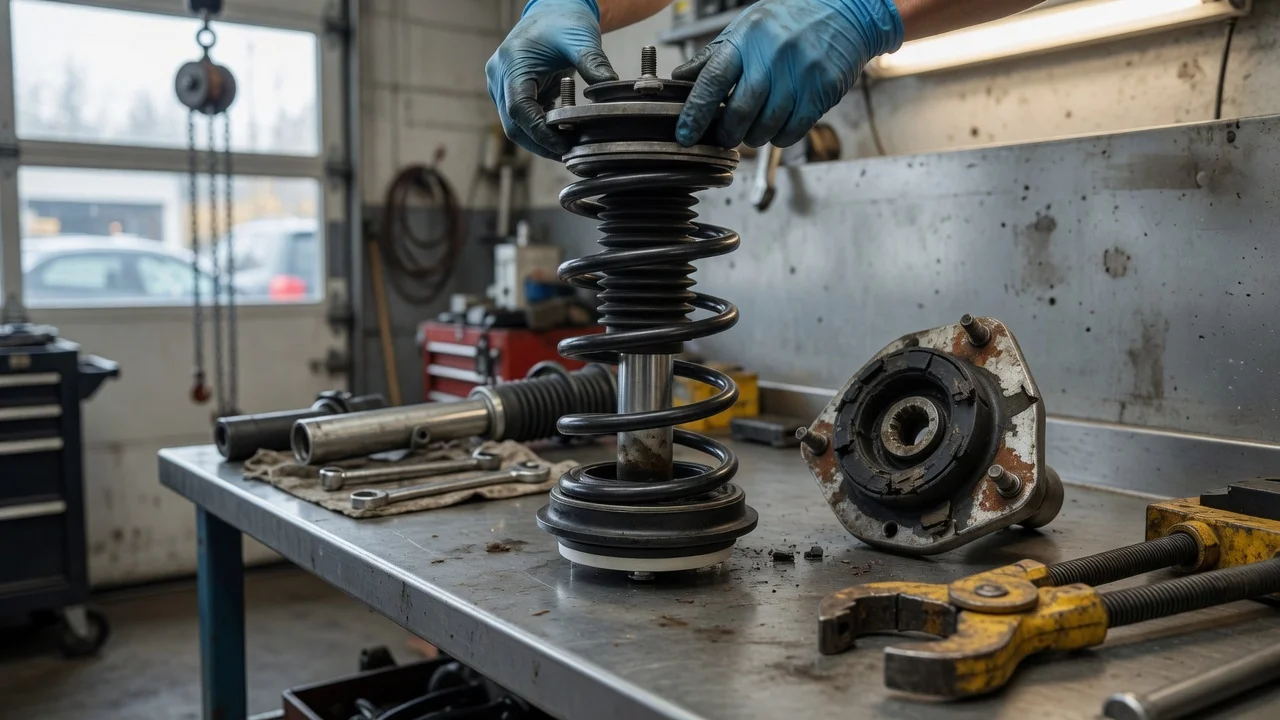
What strut mount replacement typically costs
There is no single strut mount replacement price. The bill depends on the vehicle, whether you replace one corner or a pair, whether the strut and related hardware come off at the same time, local labor rates, and whether an alignment is included. This article does not include a verified parts or labor dollar range, so treat any number you hear as a quote for a specific car, not a universal rate.
What a strut mount is
A strut mount sits at the top of a MacPherson strut, where the assembly bolts to the inner fender or strut tower. It isolates road noise and vibration and, on many front struts, includes a bearing so the strut can turn with the steering. When the rubber fails, the bearing seizes, or the mount tears, you may hear a clunk over bumps, feel looseness or a popping noise when turning, or notice uneven tire wear. Confirm the diagnosis on the specific model year, market, trim, and suspension type before you price the job; some vehicles use a coil-over strut, others a separate shock and spring, and those layouts do not share the same mount.
Conditions that change the price
Vehicle: make, model year, market, trim, and powertrain change both the part and the labor time. Unresolved differences include electronic dampers, air suspension, all-wheel drive packaging, and performance or heavy-duty struts. Scope: replacing only the mount versus the mount, bearing, strut, spring isolators, and fasteners. Shops often recommend pairing left and right because both sides share mileage and the labor to compress the spring is similar. Parts choice: original-equipment, original-equipment-supplier, or aftermarket mounts. Complete strut assemblies can raise the parts line and reduce some labor compared with rebuilding a strut on the car. Labor: spring compression, torque of tower nuts, and access around cowl, battery trays, or inner fenders vary by vehicle. Independent shops, dealerships, and mobile technicians bill labor differently. Follow-on work: a four-wheel alignment is commonly needed after strut or mount work because camber and caster can shift when the assembly is unbolted.
How to get a usable quote
Ask for a written estimate that lists the part brand, whether one side or both sides are included, whether the strut itself is being replaced, and whether alignment is in the total. Give the shop the VIN so the quote matches the correct mount for that model year, market, trim, and powertrain. If a quote bundles a complete strut assembly, compare that line to a mount-only job plus the condition of the existing strut; a leaking or weak strut can make a mount-only repair a short-lived fix. If you are comparing shops, keep the same parts list and the same alignment line so the totals are actually comparable.
What this article cannot pin down
No parts catalog price, labor-hour book time, shop hourly rate, or regional average was supplied for this article. Those figures change by vehicle and by shop, so the next practical step is a VIN-specific estimate rather than a generic national number. If noise, handling, or tire wear is already present, have the mounts and struts inspected together so you are not paying twice for the same spring-compression labor.