Steering Angle Sensor Voltage Supply Faults
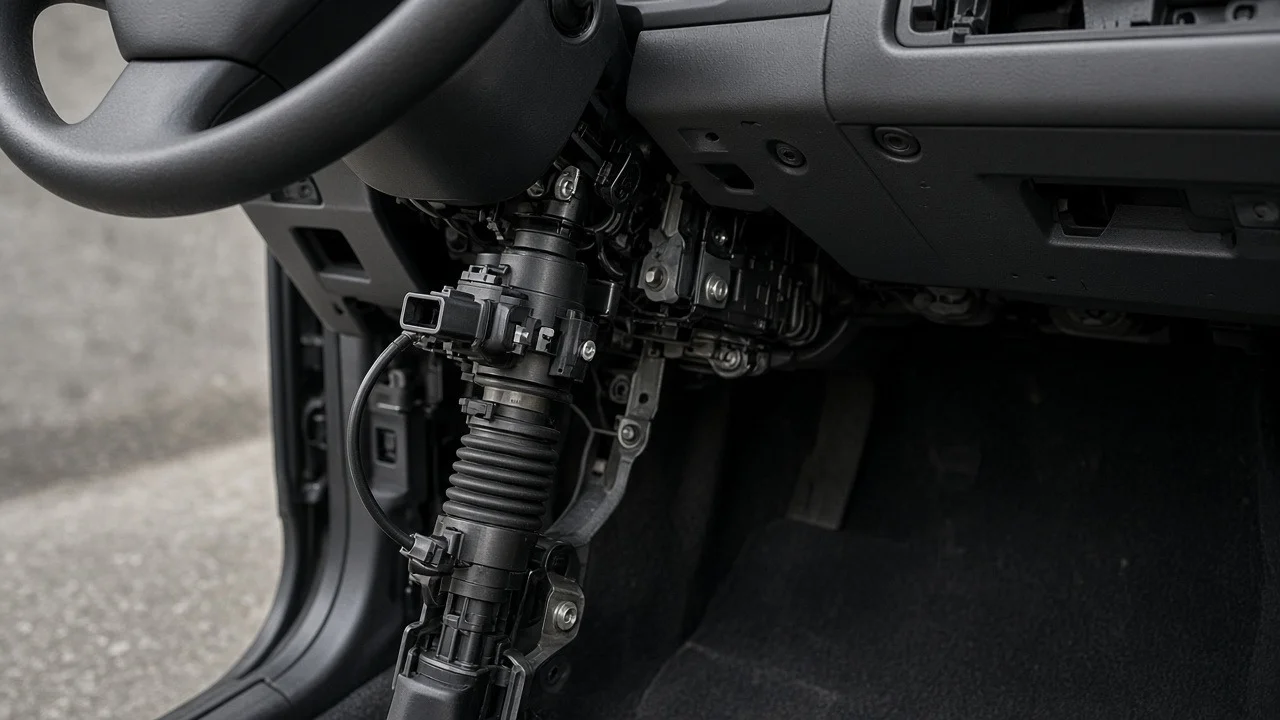
A steering angle sensor voltage supply fault appears when the module reports that its power feed is outside the expected range or missing on a particular circuit, often labeled terminal 30. The warning can illuminate stability-control, traction-control, or power-steering lamps because the steering-angle value is used for vehicle dynamics calculations. The underlying problem may be a wiring issue, poor connection, failing sensor electronics, or a broader system-voltage concern. Interpreting the exact fault description and the conditions when it sets helps narrow the inspection before parts are replaced.
Direct answer
A terminal 30 reference generally points to a battery-fed supply circuit rather than an ignition-switched feed. In many vehicles, the steering angle sensor receives a stable voltage source that remains available for memory and wake-up functions. When the control unit detects that this supply is absent or below a calibrated threshold, it stores a low-voltage fault. The code alone does not prove the sensor is defective; it indicates the module observed a power condition outside its acceptance window.
A steering angle sensor voltage too low condition may occur only during cranking or under high electrical load, which is useful diagnostic information. If the fault sets when the starter motor pulls battery voltage down, the problem may be a weak battery, undersized power lead, or resistance in a shared connection. If it sets while driving with accessories active, the charging system output and sensor ground path deserve attention before condemning the angle sensor.
Interpreting symptoms and test results
Begin by distinguishing a supply-side observation from a sensor-internal failure. A voltage reading taken at the sensor connector with the circuit loaded can reveal excessive resistance in wiring, terminals, or fuses. A reading that is normal at the connector but still produces a low-supply code may point to an internal sensor circuit issue. Because the fault code is an observed symptom rather than a component verdict, the connector condition is often a more probable cause than the sensor module itself.
Suspension-related work can also influence steering-angle diagnostics. After wheel alignment, ride-height changes, or repairs near the steering column, the sensor position and harness routing may shift. Disconnected connectors, pinched wires, or disturbed mounting points can create an intermittent supply interruption. Inspecting for joint play or a loose fastener near the sensor housing is therefore sensible when the voltage fault appears shortly after chassis or steering service.