What is a steering angle sensor and how it works
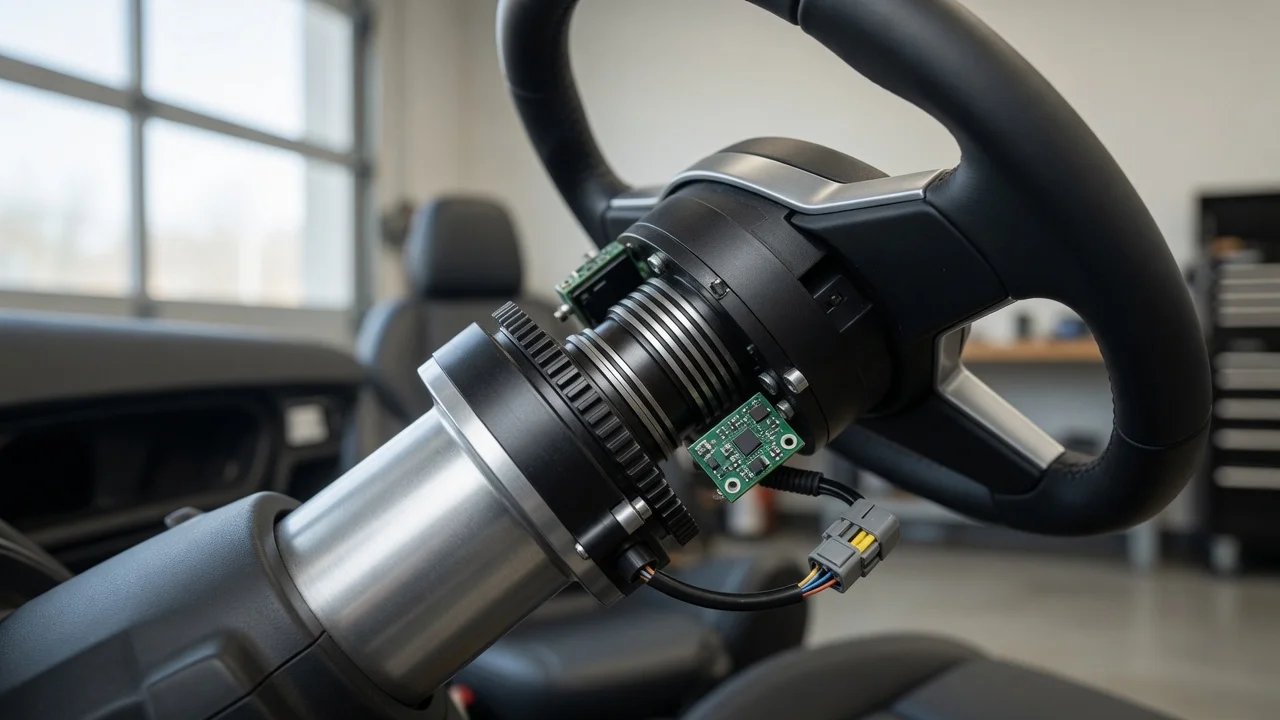
Direct definition
In an automotive context, a steering angle sensor is an electronic component that measures the rotation angle of the steering wheel and the rate at which that angle changes. The vehicle uses this data to understand where the driver intends to go. It is a supporting input for systems that react to steering movement, rather than a part that physically connects the steering wheel to the steering rack.
How it works
The sensor reads the position of the steering column or a related rotating component and converts that position into an electrical signal. The signal represents both the current steering wheel angle and the speed of steering input. A control module receives this information many times per second and combines it with data such as wheel speed, yaw rate, and lateral acceleration. This allows the vehicle to compare the driver's intended direction with the vehicle's actual movement.
The practical effect is that active safety and stability features can intervene more accurately. For example, an electronic stability control system can use the steering angle to recognize when the vehicle is not following the path the driver is requesting. An electric power steering system can also use the angle signal to adjust assist force based on steering position and movement.
Steering angle sensor and clock spring: the difference
A clock spring and a steering angle sensor are not the same part. The clock spring is a spiral-wound electrical connector housed behind the steering wheel. It maintains a continuous electrical link between the rotating steering wheel and the stationary steering column, allowing components such as the horn, airbag, and steering wheel controls to work while the wheel turns.
A steering angle sensor measures rotation. The clock spring carries electrical circuits. They are often discussed together because some vehicles combine the steering angle sensor into the clock spring assembly, or mount the sensor nearby on the steering column. On vehicles with an integrated assembly, replacing one part may involve removing or replacing the other. On vehicles with a separate sensor, the clock spring can be serviced independently without disturbing the angle sensor.
Possible problems and useful checks
Symptoms that may point to a steering angle sensor problem include a traction control or stability warning light, a steering-related warning message, unusual power steering behavior, or stability control that activates unexpectedly. These symptoms can also be caused by other issues, such as a failing clock spring, a low battery, wiring damage, or a wheel alignment problem.
A useful first check is whether warning lights appear with other electrical faults. If the horn or steering wheel buttons have also stopped working, the clock spring may be involved rather than the angle sensor alone. If the problem follows a wheel alignment, the sensor may only need calibration. Warning lights related to stability or steering assist should be diagnosed promptly because they can indicate reduced electronic stability or steering assistance.