Starting an EV Charging Station Business: Models, Costs and Profitability
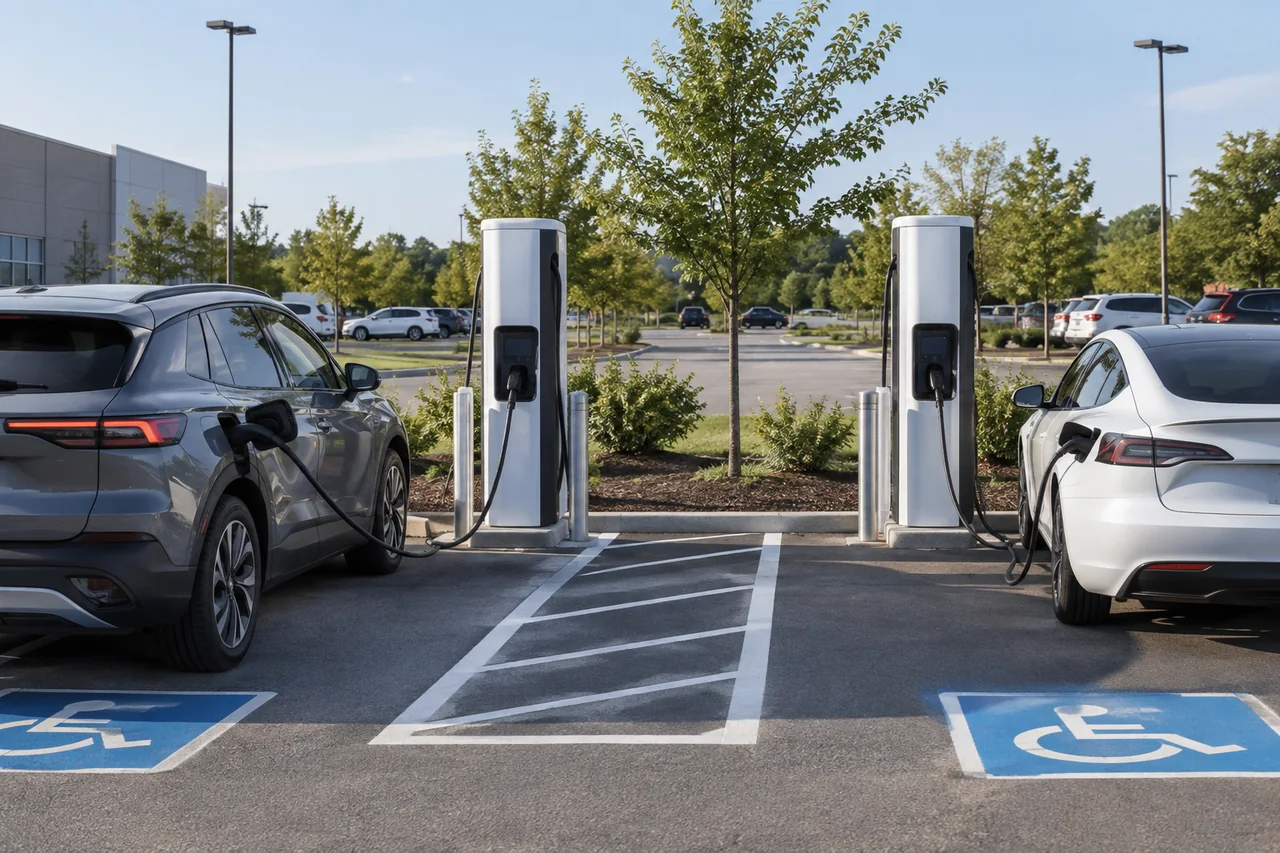
Commercial electric car charging is a site-based service that sells energy and parking access to drivers, employees, guests, and fleets. Starting an electric car charging station business means choosing who owns the hardware, who operates the network, and how the site earns money. This overview covers business models, franchise terms, commercial charging installation, and whether stations can cover costs. It is not investment advice.
What a Commercial EV Charging Business Provides
A commercial electric car charging station serves drivers who are not charging at home: public parking lots, retail properties, workplaces, hospitality sites, and fleet facilities. The property owner, often called a site host, controls access and parking rules. A separate business may own the chargers, act as charging network operator, or provide software that authorizes sessions and collects payment. One company can fill several of those roles, or the work can be split by contract so each party handles only the functions it is equipped to manage.
The commercial objective is not always charging session revenue. A retailer may treat electric car charging points for business as an amenity that supports customer visits. An employer may offer workplace access as a staff benefit. A depot may run contracted fleet service on a schedule. Parking access, customer dwell time, and the energy those vehicles actually need determine what the site can sell. Short-stay lots favor faster charging; long-stay parking can support slower, lower-power units if drivers remain on site for hours.
How Charging Business Models Generate Revenue
An owner-operated electric car charging station business model keeps equipment, customer pricing, electricity bills, and ongoing service under one firm. That operator sets rates, pays the utility, and absorbs downtime. A site-host arrangement is different: the property owner may lease space or accept revenue sharing while another party installs and runs the chargers. Contract terms decide who owns the hardware, who pays electricity and maintenance, and how receipts are split. Managed charging services add a provider that handles software, billing, and support in exchange for recurring fees that belong in the plan.
Where local rules allow it, charging session revenue can come from a per-session fee, energy-based billing, parking charges while a vehicle occupies a stall, or a customer contract for workplace or fleet access. Not every method is permitted in every jurisdiction, so pricing design has to follow local electricity resale and disclosure rules. Direct receipts should be kept separate from hoped-for extra store sales. Additional retail traffic is an indirect benefit, not a substitute for documented charger utilization, and it should not be counted as charging income without site-specific evidence.
What to Check in a Charging Franchise Agreement
An electric car charging station franchise may bundle equipment, branding, software, and operating procedures when marketed as an electric car charging stations business opportunity. Confirm first that the offering is actually a franchise under applicable law rather than a dealer, license, or site-host contract using similar language. Terms that need review include upfront and recurring fees, territory rights, equipment ownership, software access, who controls customer pricing, and contract duration. Those clauses decide how much independence the operator keeps after signing.
Franchise papers should also assign utility bills, maintenance duties, charger uptime commitments, customer support, and revenue allocation, because those items become the operator's day-to-day obligations. Earnings claims need substantiation with assumptions, not marketing averages. Independent legal review of disclosure documents, renewal conditions, transfer rights, and exit obligations is warranted before money changes hands. Network fees, software lock-in, and who pays for failed hardware after the warranty period can shift the economics even when the brand looks familiar.
Choosing a Site and Planning Commercial Charger Installation
How to start an electric car charging station business at a given property begins with demand, not hardware catalogs. Parking activity, dwell time, access hours, nearby destinations, and any prospective fleet commitments indicate whether drivers will occupy stalls long enough to take a meaningful charge. The intended service then sets power requirements. Existing electrical capacity still needs professional assessment, because a workplace AC bank and a public DC corridor place very different loads on transformers, panels, and utility interconnection.
Commercial charging installation typically moves through site control, utility consultation, engineered design, permitting, accessibility planning, construction, inspection, and commissioning. Capital cost categories include equipment, utility upgrades, electrical work, trenching, payment systems, signage, and contingency; actual amounts vary by site and should not be treated as a published average. Utility capacity, approvals, and physical site conditions can delay or block a project even when the parking layout looks suitable. Electrical installation and testing belong with qualified professionals.
Do EV Charging Stations Make Money?
Do electric car charging stations make money? Profitability depends on paid usage, realized charging rates, electricity costs, operating expenses, and the cost of establishing the site. A planning estimate of charging receipts can multiply assumed paid energy delivered by an assumed price per unit of energy, then add any assumed session or parking fees. Those inputs are assumptions for illustration, not forecasts. Without measured charger utilization, a commercial electric car charging stations plan cannot show whether session volume will cover the electricity bill.
The expense side must include electricity tariffs, potential electricity demand charges, conversion losses, network fees, payment processing, rent, insurance, maintenance, and lost hours from downtime. A site-specific break-even utilization level is the paid usage needed to cover those operating costs at the planned rates; stress-testing usage, electricity expenses, and equipment availability shows how sensitive that figure is. Operating profit is not the same as recovering installation costs or cash remaining after financing. This discussion does not promise earnings or recommend an investment.
Operating the Business and Checking Local Requirements
An operating plan for commercial electric car charging stations should name who watches for faults, who helps stranded drivers, who resolves payment problems, who performs maintenance, and who restores service after an outage. Useful performance measures include paid energy delivered, session counts, charger utilization, charger uptime, operating expenses, and net charging revenue. Those figures show whether the electric car charging points business is delivering the service it advertised, and they separate hardware availability from the narrower question of whether sessions were paid.
Local rules for electricity resale, pricing disclosure, accessibility, tax treatment, permits, and public charging operation must be verified for the site, not assumed from another market. Readers considering electric car charging points for business UK should confirm planning, electrical connection, public charging, payment, and tax requirements that apply to their location; this is a bounded check, not a substitute for local advice. Incentives can reduce capital or operating cost only if eligibility and availability are confirmed before they enter the financial plan. Unverified grants are not income.