Choosing a Stacked-Plate Transmission Cooler
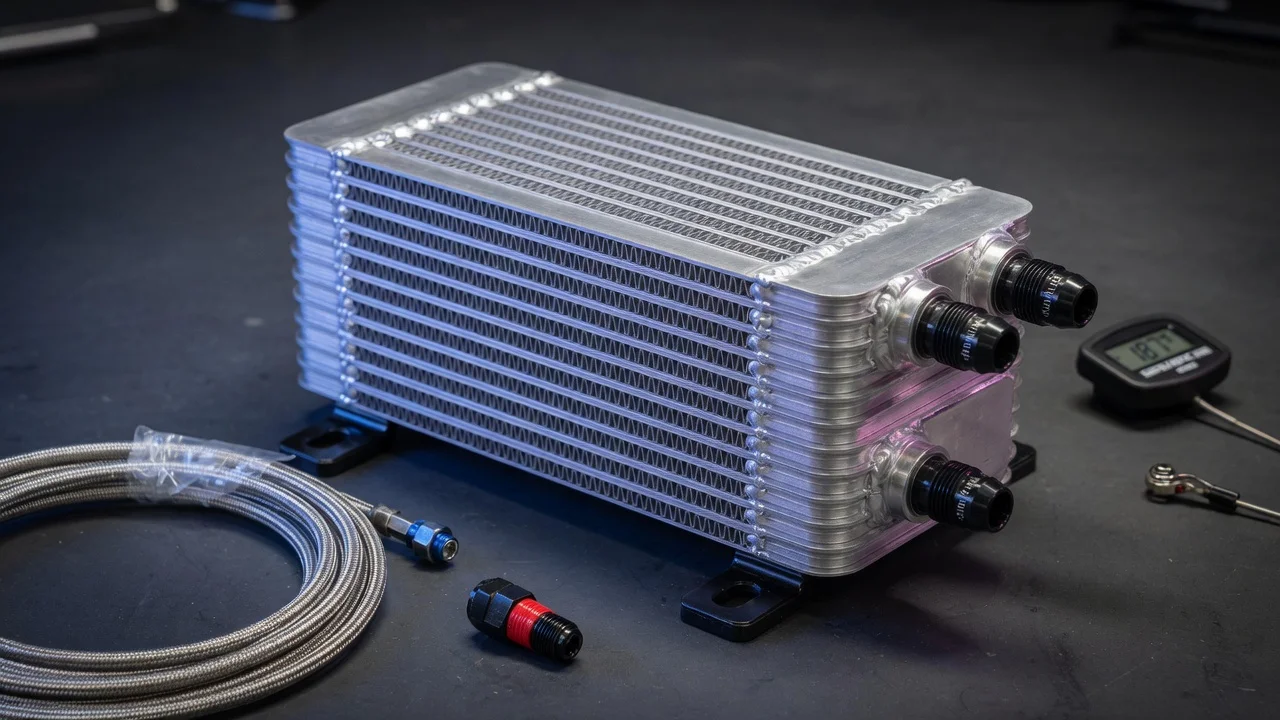
A stacked-plate transmission cooler adds heat-rejection capacity to an automatic transmission by passing fluid through a series of flat, brazed plates with internal fins. It can be a sensible upgrade for towing, hauling or hot-climate driving, but the right unit depends on your transmission type, cooler line setup, mounting space and how the vehicle is actually used. This guide explains how to match a cooler to the job rather than to a box label.
Define the job the cooler must do
Start with how the vehicle is used. A pickup that regularly tows a camper over mountain grades has a different heat load than a commuter car in stop-and-go summer traffic, and both differ from a lightly used vehicle in a cold region. Write down the heaviest load you tow or haul, how often you do it, the climate you drive in, and whether long idling or low-speed work is common. These factors affect fluid temperature more than horsepower figures do.
Next, confirm there is a heat problem worth solving. Many vehicles report transmission fluid temperature through the dash, a scan tool or a plug-in monitor, and readings taken under your real towing conditions are more useful than assumptions. Review the service history too: old or degraded fluid, a low fluid level or a restricted factory cooler can all raise temperatures. Treat symptoms carefully. Harsh or delayed shift behavior, slipping or stored diagnostic codes related to fluid temperature can have several causes, from fluid condition to sensor faults to internal wear, and an auxiliary cooler addresses only one of them. If the transmission already slips or flares between gears, have it diagnosed before spending money on cooling.
Check compatibility
Identify the exact transmission type first. Conventional automatics, CVTs and dual-clutch units manage heat differently, and some modern transmissions rely on a warmer or a coolant-to-fluid heat exchanger with a thermostatic valve to bring fluid up to temperature quickly. Adding an external cooler to such a system may be supported, may require a specific connection point, or may not be advisable, so check the factory service information or the transmission builder's guidance for your model. The fluid specification does not change with a cooler, but the added core and hoses increase fluid volume, so plan to top up with the correct fluid and recheck the level using the factory procedure.
Fitment then comes down to the interfaces. Measure the cooler line diameter and note the fitting style at the factory connections, such as quick-connect, inverted flare or barbed hose ends. The cooler's own ports may be barbed, threaded or designed for adapters, and every hose and clamp must be rated for hot transmission fluid. Many installations place the auxiliary cooler in series, often on the return line after the factory cooler, but follow the instructions for your vehicle and the product. Finally, measure the space in front of the radiator or condenser, or wherever you plan to mount the unit, including clearance from the grille, bumper, hood latch and any moving parts.
Features that affect the choice
Stacked-plate construction is popular because the plate design, with turbulators inside each passage, can transfer heat efficiently in a compact core, and the flat passages tend to be sturdier than a single thin tube. Tube-and-fin coolers are usually cheaper and simpler, while plate-and-fin designs sit somewhere in between depending on construction. The more meaningful choice is core size and airflow: a larger frontal area that sees steady air movement generally rejects more heat than a thick core tucked behind other components.
Treat capacity labels with caution. Many coolers are marketed by a gross vehicle weight or towing figure, but these numbers do not come from a uniform industry test, and real results depend on mounting location, ambient temperature, fluid flow and the transmission itself. Useful evidence includes stated core dimensions, port size, construction details and installation guidance for vehicles like yours. Optional extras deserve the same scrutiny. An electric fan helps at low speed or idle but adds wiring and another failure point. A thermostatic bypass can prevent overcooling in cold weather. A sturdy bracket kit is preferable to mounting methods that rely on straps pushed through the radiator fins.
Limitations and ownership costs
Budget beyond the cooler itself. Expect hoses, clamps, adapters, brackets and extra fluid, plus labor if you are not comfortable cutting into cooler lines and checking the fluid level correctly afterward. Mistakes such as kinked hoses, reversed flow on units that specify a direction, or loose connections can cause leaks or starve the transmission of fluid, so a careful leak and level check after a test drive is part of the job.
A cooler also has clear limits. It cannot repair worn clutches, a failing torque converter, a faulty solenoid or a sensor problem, and it does not replace scheduled fluid service. Stacked-plate cores have many small internal passages that can trap debris, so after an internal transmission failure many transmission shops recommend replacing the auxiliary cooler rather than trying to flush it. Exposed coolers can be damaged by road debris, which makes periodic inspection of the core, hoses and mounts worthwhile. In cold climates, too much cooling can keep fluid below its intended operating range, which is one reason thermostatic bypass options exist.
Build a practical shortlist
Narrow the candidates with a short checklist rather than a ranking. First, confirm the transmission type and whether the manufacturer or builder permits an auxiliary cooler and where it should connect. Second, match line size and fitting style, including any adapters you will need. Third, compare core dimensions against your measured mounting space and airflow path. Fourth, check whether the unit or kit includes hoses, clamps and a bracket, or whether you must source them separately.
Then weigh the extras against your use: a thermostatic bypass for cold climates, a fan for slow-speed towing, and a gauge or other monitoring method to confirm the result. Note the added fluid volume and make sure you have the correct fluid on hand. Finally, compare total installed cost, warranty terms and repair options if a leak or damage occurs. A cooler that fits cleanly, connects correctly and suits your real driving will serve better than the largest unit on the shelf.