Solid-State EV Batteries Explained: Range, Timelines and Developers
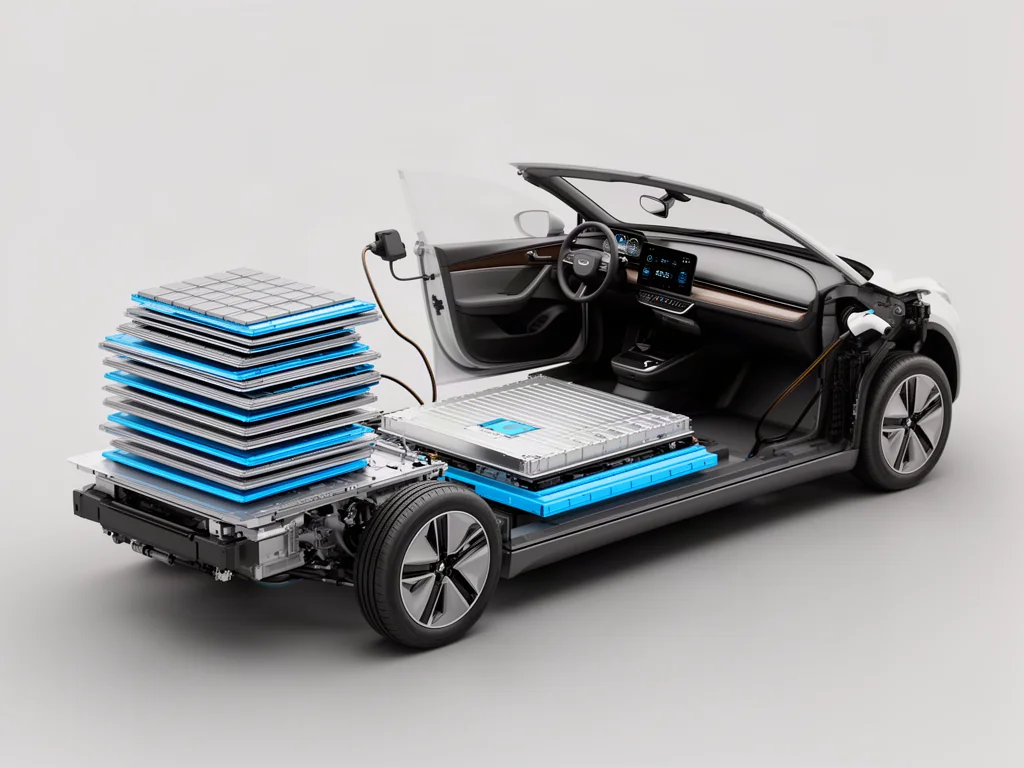
A solid-state battery for EV use replaces liquid electrolyte with a solid electrolyte so lithium ions still move between electrodes while charging and driving. Developers pursue higher cell energy density and a wider charge window; semi-solid designs mix solid and liquid or gel components. Range and availability still depend on pack integration, not the cell label alone.
What Makes an EV Battery Solid-State
During charge and discharge, lithium ions move through the electrolyte between anode and cathode while electrons travel the vehicle circuit. Conventional packs typically use a liquid or gel electrolyte. A solid state battery for EV cells uses a solid electrolyte instead, which may be ceramic, sulfide, polymer, or another solid conductor. That solid-state battery in EV label covers multiple materials and cell designs. All-solid-state describes electrolyte state, not one chemistry.
Choosing a solid electrolyte does not lock in anode chemistry, usable pack capacity, or vehicle performance. Some development cells pair the solid conductor with a lithium-metal anode; others retain graphite-like hosts or composite layers. Higher cell energy density and safety gains are design goals that still require pack-level validation. A solid-state EV battery still needs thermal management, mechanical protection, and battery pack integration because heat, pressure, and crash loads remain.
Semi-Solid Batteries and Claims of Vehicle Availability
A semi solid-state battery EV design keeps liquid or gel electrolyte alongside solid components, so ion transport is not fully solid. The semi-solid electrolyte may be a slurry, gel, or residual liquid in a predominantly solid matrix. Marketing often blurs that line, applying solid-state, semi-solid, or hybrid labels to different architectures. Judge a vehicle claim by whether the cell uses a fully solid electrolyte or a mixed system, and whether the description refers to cell, module, or pack.
An EV with solid state battery branding is not the same as a customer-ready product. Availability is established only when a named vehicle, market, battery configuration, and delivery status are all identified. Demonstrations, fleet trials, and limited deployments should stay labeled as such, including dates and regions. A show car, prototype drive, or press sample does not prove showroom stock. Until those four facts are public, treat an EV with solid-state battery language as a development story rather than an orderable model.
How Range and Charging Targets Translate to Driving
Solid-state EV battery range is not set by cell chemistry alone. The same reading applies to solid state battery EV range claims. Driving distance follows from cell energy density, usable pack capacity, vehicle efficiency, and pack mass after battery pack integration. A denser cell can help, yet a heavier pack or conservative charge window can erase that gain. Any range figure should state whether it is a development target, simulation, test result, or certified rating, including the test cycle.
Charging claims need the same discipline. Time-to-charge depends on the stated charge window, battery temperature, charger power, and whether the pack can sustain that power or only briefly peak. Cycle life, operating temperature, cell pressure hardware, and pack cooling can all constrain promised benefits once cells leave the lab. A cell-level result cannot establish an EV's real-world range or charging time. Solid state battery EV range and recharge behavior become meaningful only after vehicle testing under documented conditions.
Toyota and Lexus Solid-State Battery Plans
Toyota solid state battery EV work is a multi-year materials, cell, and vehicle program, not a single announced pack. Public Toyota solid-state battery EV comments usually describe laboratory progress, prototype testing, or intended introduction windows, and those stages are not interchangeable. When Toyota EV solid-state battery timing is quoted, ask whether it means prototype evaluation, first vehicle introduction, or later production expansion. Headlines about a Toyota solid state EV battery or Toyota EV solid-state battery still describe a planned application until a named model, market, and delivery status exist.
Lexus solid-state battery EV discussion sits inside the same Toyota group program and should be read separately from a confirmed model assignment. A Lexus application may be a stated ambition or a shared roadmap, which does not confirm which vehicle will receive the cells. Material supply, manufacturing development, and vehicle validation all still stand between a cell sample and customer deliveries. Until those steps produce an orderable configuration, neither a Toyota nor a Lexus solid-state application should be treated as showroom inventory.
The Automakers and Suppliers Developing Solid-State Cells
EV solid state battery manufacturers include automakers, cell developers, electrolyte producers, and manufacturing partners, and those roles should stay distinct. QuantumScape has focused on ceramic-separator cells intended for a lithium-metal anode, while Solid Power has developed sulfide solid-electrolyte cells and supplied automotive samples. Nissan and Honda have described in-house all-solid-state programs that include process development and vehicle-oriented testing rather than only laboratory chemistry. Each participant's role matters: an automaker may fund, specify, and validate, while a cell developer owns the stack design.
Partnerships and sample deliveries show that cells have left a research bench, not that production is guaranteed. A joint development agreement, a pilot production line, or automotive A-sample shipments demonstrate a milestone; they do not lock volume, cost, or a production vehicle. Remaining work typically includes durability under automotive duty cycles, manufacturing yield, pack integration, and quality at scale. New solid-state EV battery announcements should be labeled by demonstrated scale and remaining validation, without ranking companies or predicting a commercial winner.
Samsung's Silver-Carbon Battery Research
Samsung solid-state battery for EV research has included a silver-carbon anode in which a silver-carbon layer is applied on the anode side of the cell. That layer is intended to help guide lithium deposition and reduce dendrite-related damage during cycling, supporting a lithium-metal-related anode rather than replacing the cathode or the solid electrolyte. A silver EV battery, including Samsung EV battery silver descriptions, names that anode interlayer rather than a standardized pack category. How that layer is deposited and how it ages in cycling are cell-engineering details, not a consumer battery type.
Keep laboratory cell findings, Samsung SDI development announcements, and automotive qualification steps tied to their own organizations and dates. A research-cell energy-density result is not the same as a qualified automotive cell, and an SDI process update is not a named vehicle application. Material supply and manufacturing questions are real, because silver-carbon processing, layer uniformity, and scale-up affect cost and yield. Public material is not sufficient to state silver mass per vehicle, future commodity demand, or a confirmed automaker application.
Reading Battery News and Production Timelines
Solid-state EV battery news is easier to read when laboratory cells, automotive samples, pilot production, vehicle validation, and commercial production are kept as separate stages. Announced production capacity does not establish manufacturing yield, delivered volume, or customer availability. A plant rating can outrun actual output if yield, formation time, or quality gates lag. Repeatable manufacturing, durability validation, pack integration, and cost control remain the usual hurdles after a promising cell result. Scale is demonstrated only when those steps produce consistent packs.
Publicly described programs as of late September 2026 should be separated from company forecasts, which are not completed milestones. When a new solid-state EV battery story appears, identify whether it is all-solid or semi-solid, plus demonstrated scale, test conditions, vehicle application, and delivery status. Note whether cycle life, charge window, and energy-density claims were measured on a cell, module, or vehicle pack. The same questions apply to EV solid-state battery news, so a laboratory headline does not imply a launch date.