Small Block Chevy Timing Chain and Cover Guide
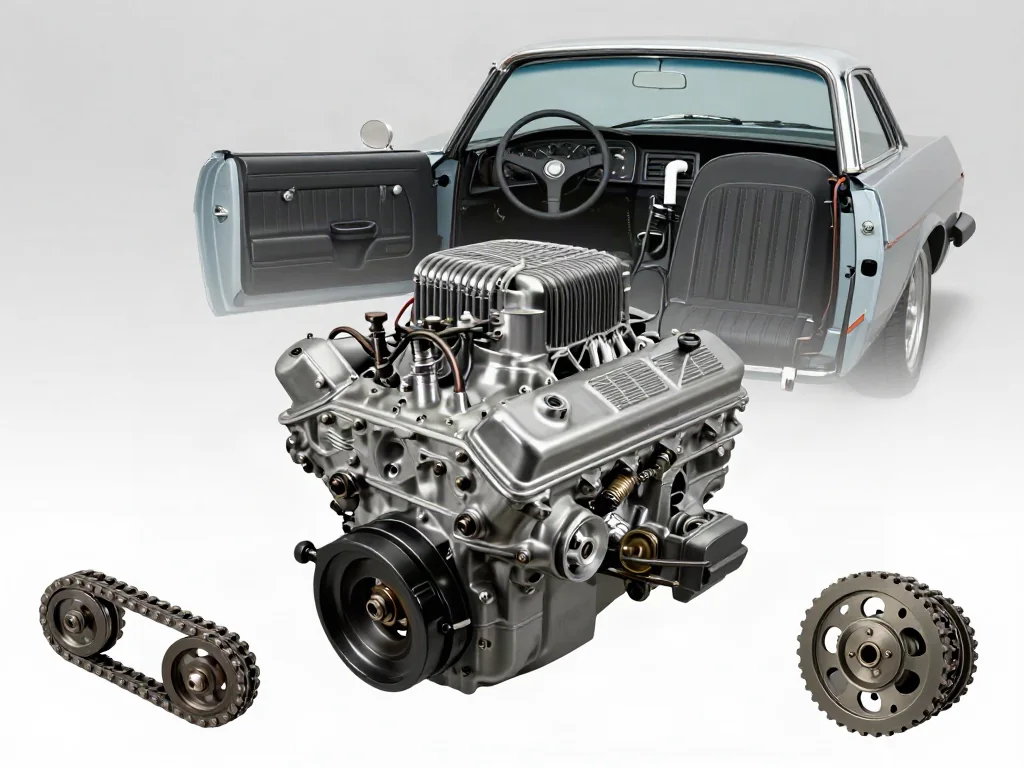
A small block Chevy timing chain keeps the crankshaft and camshaft turning in step, so valve events stay aligned with piston travel. Classic Chevy V8 owners facing timing chain replacement, cover removal, or leaks and noise still cannot treat an SBC label as enough to pick the right timing set or cover. Confirm the engine, camshaft arrangement, and any swap or aftermarket parts before ordering hardware or planning access.
Identify the Small Block Chevy Before Planning Timing Work
The timing chain on a small block Chevy links the crankshaft sprocket to the camshaft sprocket so both shafts rotate together at the designed ratio. If that relationship drifts, valve opening no longer matches piston position, and the engine can run poorly or suffer mechanical interference on some camshaft arrangements. A generic SBC tag, a year, or a vehicle model does not by itself identify the correct timing set, cover shape, or seal arrangement. Generations, water-pump drives, and aftermarket camshafts change cover clearance and sprocket design.
Before any SBC timing chain work, confirm which engine is actually in the vehicle, how the camshaft is driven, and whether a swap, roller conversion, or custom timing set is already installed. In a vehicle with an engine swap, the block may not match the chassis year. A shop needs casting numbers, pad stamps, installed sprocket tooth counts, chain type, cover fastener pattern, timing pointer style, and notes on prior camshaft or cover changes. Photographs of the installed cover and harmonic balancer nose help establish fitment before parts are ordered.
Recognize Symptoms Without Assuming the Chain Is Worn
Front-engine rattle, a metallic slap at idle or startup, unstable timing readings, and rough running can all raise suspicion about an sbc timing chain, but none of those findings by itself proves the chain or sprockets are worn. Ignition advance problems, a slipping harmonic balancer, a loose timing pointer, vacuum leaks, fuel delivery faults, and valvetrain noise can overlap the same complaints. Camshaft endplay that is out of range can also change how the front of the engine sounds without the chain being the failed part. Treat those signs as reasons to inspect, not as a diagnosis.
Note when the noise or misfire appears at cold start, hot idle, or acceleration, and list any recent camshaft, balancer, or cover work without probing moving parts or running exposed-engine tests. If the engine develops severe front-end noise, a sudden loss of power, or an oil-pressure warning, shut it off and arrange professional evaluation rather than continuing to drive. Those conditions can involve lubrication loss or a timing relationship that no longer protects the valves. A shop can then compare mechanical timing marks, ignition timing, and related systems before anyone assumes the chain must be replaced.
Locate Timing Cover Leaks and Confirm Cover Fit
An SBC timing chain cover can weep at the timing cover gasket, the front crankshaft seal, or the oil pan seal junction where the cover, pan, and block meet. A technician may inspect those three areas, yet oil on the cover may have traveled from a valve cover, sender, fuel-pump block-off, or intake gasket. Visible oil near the cover therefore does not establish the leak's origin. Dye, a clean-and-watch check, and tracing the wet path with the engine off are more useful than replacing the cover on appearance alone.
Before ordering a replacement cover, confirm the installed timing set, cover-to-sprocket clearance, seal type, timing pointer location, and how the oil pan mates to the cover on that engine. Cover clearance around a roller timing set or a raised camshaft sprocket, and pointer alignment with the timing marks, have to be verified on the parts that will actually be used. With the engine off and cool, note whether fresh oil is wet at the seal lip, gasket edge, or pan junction, and whether it drips to the ground. Those observations help a shop decide what sealing work is actually required.
Understand What Timing Cover Removal Involves
Removing an SBC timing chain cover is not a cover-only job. Front accessories, belts or a fan, the harmonic balancer, and, depending on the installation, the oil pan sealing junction must come apart enough to free the cover without tearing the pan gasket. Balancer removal needs a suitable puller and installation tools so the crank snout and damper are not damaged. Cover alignment, the front crankshaft seal, and the sealing surfaces also depend on service information for that engine family. Guessing fastener locations or prying on thin cover flanges can create a worse leak.
The repair plan should state how the oil pan junction will be accessed and resealed on the actual engine, not as a generic instruction. Some installations allow the pan to drop slightly; others need more disassembly because headers, a crossmember, or a tight engine bay block the front. Keep this at a planning level: do not improvise cover removal around unknown modifications, rounded bolts, or a damaged balancer hub. Limited access and broken hardware favor professional service, where the shop can protect timing marks, the crankshaft sprocket, and the camshaft sprocket while the cover is off.
Plan Timing Chain Replacement Around Verified Findings
An sbc timing chain replacement should follow inspection, not a parts-counter guess. With the cover off, the chain, camshaft sprocket, crankshaft sprocket, and related hardware need evaluation for stretch, tooth wear, keyway condition, and whether the set still matches the camshaft. The replacement timing set must fit the verified engine and camshaft arrangement, including cover clearance and any camshaft endplay controls the cam uses. A double-roller set that contacts the cover, or a sprocket that does not index to the existing marks, is the wrong combination even if it bolts on.
Mechanical timing verification, fastener torque and thread treatment, and gasket or sealant choices belong to vehicle- and component-specific procedures, not a one-size method. The estimate should list diagnostic findings, the timing set and seals included, access labor for the balancer and pan junction, sealing work at the cover and oil pan, and an allowance for damage found once parts are apart. Worn keys, a damaged crank snout, or a cover that will not seal after previous overtightening can expand the job. Those line items keep the owner from treating chain replacement as a simple parts swap.
Check Repair Results and Address Returning Symptoms
Before the repair is considered complete, a technician should verify mechanical timing against the engine's timing marks and perform any ignition timing checks that apply to that distributor or ignition setup. Confirmation of normal operation includes a leak inspection of the repaired cover, front crankshaft seal, and oil pan seal junction after the engine has been run and then allowed to sit. Fresh sealer can look wet without being a leak, so the distinction between residual oil and a new drip matters. Do not treat a quiet idle alone as proof that the timing relationship is correct.
After service, watch for fresh oil spots under the balancer, returning front-end noise, warning indicators, and changes in starting or idle quality. A new rattle, hard starting, or a timing light reading that will not stabilize can mean the chain is not the remaining problem, or that mechanical timing was not verified after assembly. Recurring symptoms deserve prompt follow-up with the shop that did the work. Persistent poor running is a reason for further diagnosis of ignition, fuel, and valvetrain issues rather than repeating cover or chain work without new evidence.