Silverado, Sierra 1500, Tahoe and Colorado Differential Fluid Guide
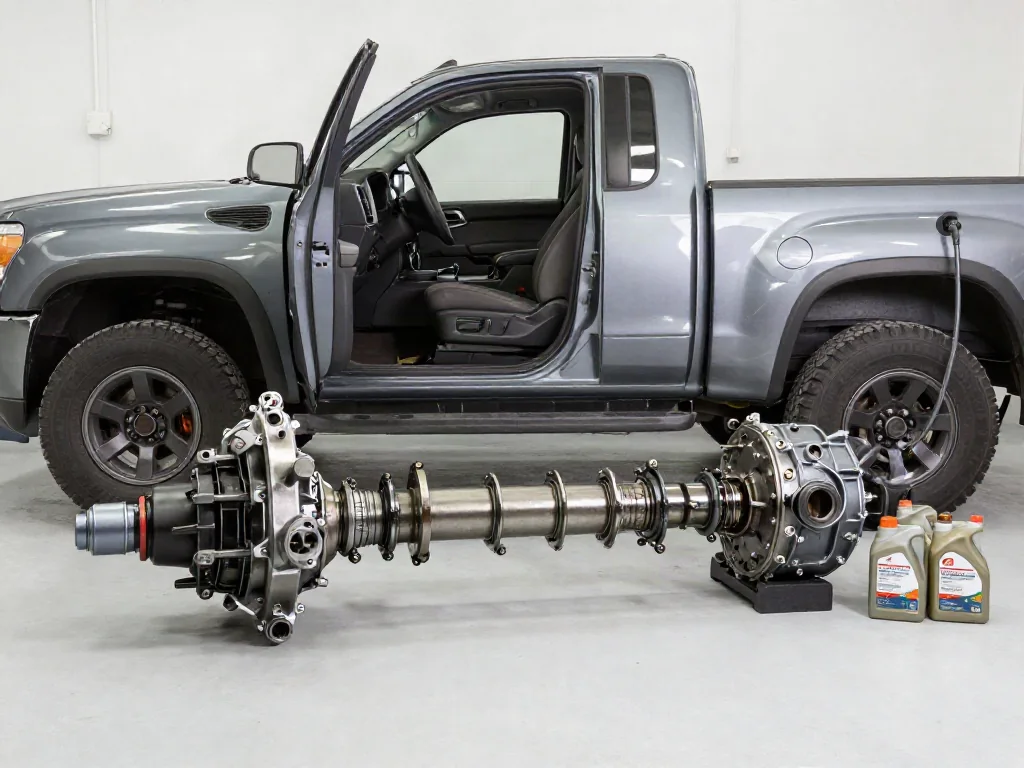
Changing differential fluid in a Chevy Silverado, GMC Sierra 1500, Tahoe, or Colorado starts with identifying the exact axle, because capacity and lubricant requirements vary by model year, drivetrain, and installed differential. The requested years span from the 1998 K1500 through the 2021 Tahoe, and only some configurations share specifications. A G80 locking differential may need specific fluid or a friction modifier, so treating all GM axles as identical invites expensive mistakes.
Identify the Vehicle and Axle Before Choosing Fluid
Before selecting fluid or estimating capacity, confirm the exact application. The model year, specific vehicle line such as Silverado 1500 or Colorado, drivetrain, and installed differential must all match service information. A Tahoe shares platforms with half-ton trucks but has different axle options, while the older K1500 uses assemblies that differ from later generations. Even within a single year, a Silverado may have an 8.6-inch, 9.5-inch, or another rear axle depending on options like the max trailering package, and each can require a different fill volume.
Vehicle documentation is useful, but axle identification is decisive because an axle may have been replaced during the truck’s life. Look for the axle code or stamped ratio and compare it against the build configuration. For a G80 locking differential, the presence of that option must be confirmed on the specific assembly rather than assumed from the window sticker. Differential lubricant requirements are always established for the assembly being serviced: the housing, cover, and internal design dictate what fluid is safe, not a generic model-year chart that omits axle details.
Rear Differential Capacity by Year and Axle
Rear differential capacity varies by axle, not just by year. For the 1998 K1500, the common 8.5-inch rear axle typically holds about 2.2 quarts of gear oil when filled to the plug, while a 9.5-inch semi-float axle takes more, often 2.75 quarts. The 2000 through 2006 Silverado 1500 trucks share similar 8.6-inch assemblies, but final drive ratio and locking differential presence can alter internal volume slightly. For a 2003 or 2005 application, the owner needs to identify the ring gear size and whether it has a limited-slip or G80 locker before trusting a published capacity number.
Later Silverado and Sierra 1500 applications are equally varied. The 2011, 2013, 2014, 2015, 2016, 2017, and 2018 model years may use a 9.5-inch or 9.76-inch rear axle, with service-fill volumes around 2.75 to 3.2 quarts depending on configuration. A 2017 GMC Sierra 1500 or 2018 Silverado with the max trailering package may require a different amount than a base truck. Always treat the listed number as nominal fill to the specified level-check method, usually with the vehicle level and fluid just at the fill plug opening; the actual refill quantity after draining is often slightly less because some fluid remains trapped in the axle tubes and differential case.
Front Differential Capacity for K1500 and Silverado
Front differential service applies to four-wheel-drive and all-wheel-drive applications. The 1998 K1500 has a front differential that requires gear oil, typically around 1.3 to 1.5 quarts for the 8.25-inch IFS axle. To confirm that a vehicle has a front differential requiring service, verify the drivetrain: if there are front axle shafts and a differential housing, it is a 4WD or AWD model. Two-wheel-drive trucks have no front differential, and the front axle is simply a beam or independent suspension without a gear carrier.
For the 2015 Silverado, the front differential is commonly an 8.25-inch IFS unit with a capacity near 1.5 quarts. Lubricant requirements must be verified for the identified assembly because earlier K1500 axles may call for conventional 80W-90 gear oil, while later Silverados often specify a synthetic 75W-85 or 75W-90. The transfer case is a separate unit behind the transmission and has its own fluid specifications, typically a different type than what goes in the differential. Do not confuse transfer case fluid with front differential gear oil when shopping for service supplies.
Fluid Specifications and G80 Additive Requirements
Choosing the right fluid for a rear or front differential begins with viscosity and specification. Older GM light trucks, including the 1998 K1500 and early 2000s Silverado, commonly use SAE 80W-90 API GL-5 gear oil. Many newer applications, including 2014–2018 Silverado and 2015 Sierra 1500, call for a synthetic 75W-85 or 75W-90, often meeting GM’s own specification. The product label must state the required API GL-5 or the specific GM standard, because a generic gear oil may not protect hypoid gears under load. For the 2021 Tahoe, confirm whether the rear differential is an open or limited-slip unit before selecting fluid; the owner’s manual or build sheet gives the axle code.
The G80 locking differential complicates additive requirements. A G80 is a mechanical locker, not a clutch-type limited-slip, so many GM service instructions do not require a friction modifier. However, some aftermarket recommendations and older service literature suggest adding a limited-slip additive to quiet clutch chatter. Only the vehicle-specific service information can settle this. A locking-differential label on the bottle or a statement that it is for limited-slip axles does not prove the additive is needed for a G80. Confirm the installed G80 application and its lubricant instructions; if a friction modifier is specified for that axle, add only the amount the service information calls for.
When Differential Fluid Service Is Due
The 2020 Silverado differential fluid change interval depends on the applicable maintenance schedule and operating conditions. Under normal service, many late-model trucks list rear axle fluid changes at 97,500 miles or longer, while severe service such as frequent towing, off-road use, or dusty conditions may shorten the interval to 45,000 miles. A 2020 Silverado owner who tows a trailer regularly should follow the severe schedule, but the owner’s manual remains the only reliable source for the exact miles and months. Do not adopt an interval from an earlier generation Silverado for a newer truck.
Certain observations can prompt earlier inspection. Fresh oil spots beneath the parked vehicle near the differential, unusual noise that changes with speed or during turns, or a known water crossing deep enough to submerge the axle vent should lead to a check. However, noise, odor, or dark fluid appearance alone cannot establish lubricant condition or identify an internal fault. Gear oil naturally darkens with use, and a limited-slip or G80 may produce some noise during tight turns. Only a drain and inspection of the old fluid, along with a visual check of the gears and case, can reveal metal debris or water contamination.
What a Differential Fluid Change Involves
A differential fluid change begins with confirming the application, then inspecting for leaks around the cover, pinion seal, and axle seals. The old fluid is removed using the assembly’s service method: many rear differentials have a drain plug, but some require removing the cover, while most front differentials have a drain plug. After draining, the sealing materials are renewed: a reusable gasket may be reconditioned, or a new gasket or RTV sealant is applied. The unit is refilled to the prescribed level, usually until fluid reaches the bottom of the fill plug hole with the vehicle level.
For the Chevy Colorado, service details require its own model year and axle information because the Colorado may use a different axle family than full-size trucks. During the service, the technician checks for abnormal debris in the drained oil, damage to the sealing surface, and leaks after refilling. Fine metallic particles on the drain magnet can be normal, but chunks or a silvery paste indicate gear or bearing failure requiring further diagnosis. Owners can safely observe leaks and listen for new noise, but should avoid lifting the vehicle or attempting under-vehicle repairs without proper equipment. Used gear oil must be collected in a sealed container and taken to a recycling center or auto parts store that accepts waste oil.
What Determines Differential Fluid Service Cost
A differential fluid service quote includes the specified lubricant, required quantity, labor, sealing materials, and a disposal fee. Synthetic gear oil and a new gasket add cost compared with conventional oil and RTV. Labor varies with axle access and method: a differential with a drain plug is faster to service than one requiring cover removal, and a front differential on a 4WD truck may require skid plate removal. A shop should itemize whether the estimate covers only the rear axle or both front and rear, and whether leak repair or further diagnosis is authorized separately.
A routine fluid change cannot promise to cure noise or mechanical damage. If the old fluid contains metal chunks or the gears show scoring, the technician may recommend a bearing or gear replacement at additional cost. The quote should separate preventive maintenance from any repairs found during service. Before approving work, confirm which axle or axles the estimate covers, what fluid and quantity are included, and whether the shop adds a disposal fee. A lower advertised price may omit the front differential, the correct synthetic fluid, or a new gasket.