Should You Wax a New Car? When and How to Protect Fresh Paint
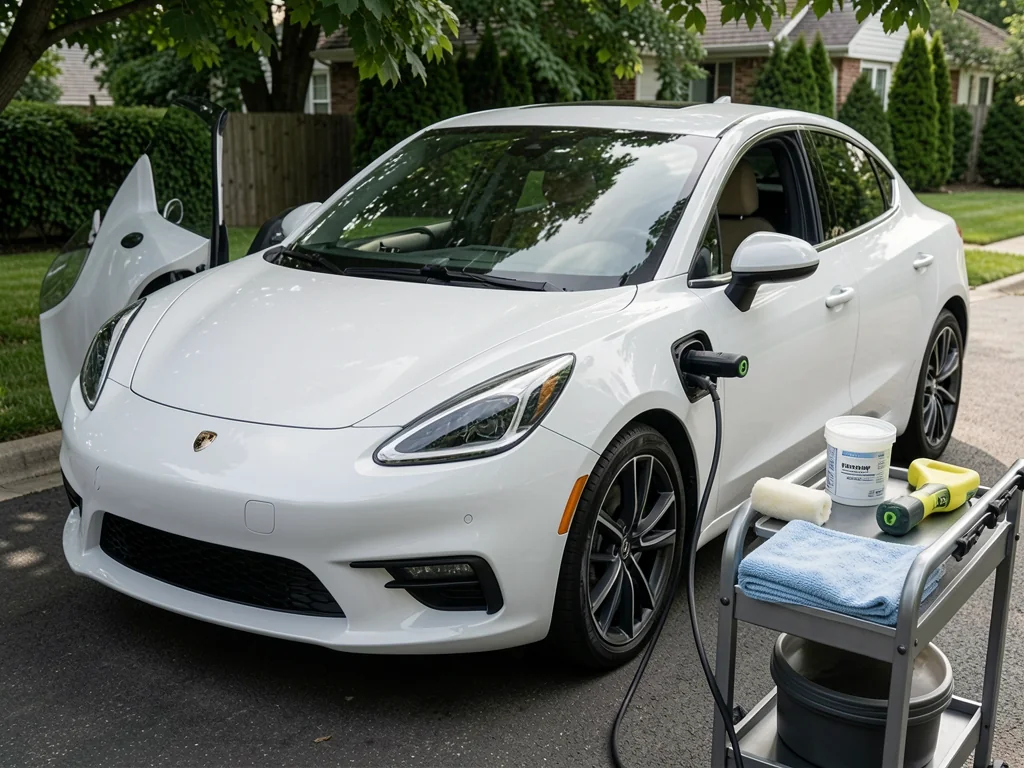
You can wax a new car, and many owners do, but delivery day does not automatically mean the factory paint needs a coat of wax. Compatible wax or paint sealant can add a sacrificial layer on glossy clear coat, while the best car wax for a new car is the one approved for that finish, applied after washing, and used according to the label rather than a ranking.
Does Your New Car Need Wax?
Compatible wax can give new glossy paint a sacrificial protective layer that takes some of the weathering and washing wear instead of the clear coat. That does not mean every new vehicle needs wax the moment it leaves the lot. Delivery paperwork, dealer treatments, and the manufacturer's paint-care notes should be read first, because some cars already carry paint protection, a ceramic coating, or a film that changes what you may apply. Routine washing still matters even when a coating is already in place.
Wax on a new car does not stop stone chips, make the finish scratchproof, or replace prompt removal of bird droppings, sap, and other surface contamination. It is a thin sacrificial film, not armor. If you should wax a new car at all depends on what is already on the paint and how you intend to wash and park the vehicle. Review the delivery documents for existing protection and its care rules before adding new car wax, a sealant, or another product.
When You Can Wax New Factory Paint
Intact factory paint generally does not need an arbitrary waiting period after delivery before you wax it, provided the finish is fully assembled, undamaged, and the vehicle's paint-care instructions allow it. Can you wax a new car the week you take delivery? Often yes on original clear coat, but the owner's materials still govern. Recently refinished panels are a different case. A repair shop's curing and aftercare guidance decides when wax for a new car is appropriate on that panel, and that timeline can differ from the rest of the body.
Transport time, the delivery date, and the vehicle's age cannot tell you whether a panel was recently repainted. A car wax for new cars is still only appropriate on a refinished area after the shop's materials have cured as directed. Confirm any documented paint repairs, unclear dealer-applied treatments, or aftermarket film before adding a product. If paperwork is missing or the finish looks uneven compared with adjacent panels, wait for a qualified assessment rather than assuming factory paint is uniform across the whole vehicle.
Choosing a Wax or Sealant for Your Vehicle's Finish
The best wax for a new car is the one that matches the finish, not a generic ranking. Look for explicit approval on glossy clear coat, a nonabrasive wax or paint sealant, application conditions you can actually meet, and care directions you can follow. Wax and paint sealant are meant as a sacrificial top layer that sheds some dirt and water and is renewed as it wears. They are not a substitute for washing, and they do not convert ordinary clear coat into a ceramic coating.
Paste, liquid, and spray formats all work when their labels match your workspace, temperature, and how much dwell time you can control. A paste formula sold as new car wax may need more working room than a spray you can apply in a shaded driveway. Require explicit compatibility with matte finish or satin paint, wraps, paint protection film, and existing coatings, then follow those care instructions. Sound new paint does not automatically need an abrasive cleaner wax, polishing compound, or paint correction, which can cut clear coat without a documented need.
Prepare the Paint Before Applying Protection
Wash first with an automotive shampoo suited to the finish, rinse thoroughly, and dry with clean materials so you are not sealing dirt into the clear coat. The best car wax for new cars still fails if it is spread over grit or leftover soap. Inspect the clean paint in good light for residue, bonded contamination, or delivery damage such as rail dust, tape marks, or chips. Those findings change the next step more than the calendar date on the window sticker.
Clay treatment and polishing are conditional, not automatic requirements when you wax a new car. They can mark paint if the lubricant is wrong, the surface is dirty, or the pad is contaminated. If bonded surface contamination remains after a careful wash, or you cannot tell film from factory texture, stop and consult a qualified detailer. Persistent defects, haze, or damage identified at delivery belong in the dealer's process, not under a foam applicator full of wax.
Apply Wax Without Marking the Finish
Work on a cool, clean surface in conditions the product allows, usually out of hot sun and away from blowing grit. The best car wax for new vehicles still hazes badly if the panel is hot or dusty. Use a clean foam applicator or the pad named on the label, and spread a thin, even layer. Section size and how long the film sits before removal are label decisions, not habits copied from another product.
Remove residue with clean microfiber towels, turning to a fresh face as the towel loads, and stop immediately if you feel grit or unexpected resistance. Trim, glass, textured plastics, and rubber need explicit product approval before contact, because many formulas stain those materials. Follow any label-directed curing time and restrictions on water exposure after you apply wax for new car paint. Skipping those steps can leave streaks or wash a fresh film off before it has set as intended.
Maintain Protection After the First Application
After the first application, regular gentle washing and prompt removal of droppings, sap, and industrial fallout do more for paint protection than a heavier second coat. Reapply the best wax for new cars according to the product's guidance, your exposure, washing habits, and how the surface actually looks and feels, not a made-up calendar interval. A car that sits outside near trees needs more frequent attention than a garage-kept vehicle washed with a mild shampoo.
Water beading alone cannot reliably show remaining protection or paint health, because a dirty panel can still bead and a healthy clear coat can sheet. Watch for persistent haze, etching, peeling, or discoloration instead of relying on droplets. Wax will not repair those defects. Have a professional assess them, especially where delivery damage, chemical etching, or an incompatible coating may be involved. Even a well-chosen wax for new vehicles still only maintains sound paint and will not cure those finish problems.