Should You Warm Up Your Car Before Driving in Winter? How Long Is Enough
Many drivers still let the engine idle for several minutes on a cold winter morning, yet the old advice that cars need a long warm-up no longer applies to most modern vehicles. Understanding how long to warm up car before driving in winter means separating engine health from cabin comfort. Fuel-injected engines handle cold starts differently, so a brief idle followed by gentle driving is usually the best way to reach operating temperature while clearing frost and reducing fuel waste.
Do Modern Cars Still Need to Warm Up Before Driving in Winter?
The habit of idling to warm up a car before driving in winter comes from carbureted engines that relied on a choke and mechanical adjustments. They ran poorly when cold and could stall without a long idle. Modern fuel-injected engines use sensors and electronic controls to adjust the air-fuel mixture immediately after a cold start, so they run smoothly without a lengthy stationary warm-up. The owner's manual is the authoritative source for any specific model, but most manufacturers now advise against prolonged idling.
Warming up actually covers two goals: mechanical readiness for the engine and drivetrain, and a comfortable cabin with clear glass. An engine reaches operating temperature faster under light load than at idle because combustion creates more heat when the vehicle is moving. Sitting at idle warms the engine slowly and does nothing for the transmission, differential, or wheel bearings. Those components need gentle driving to warm up together, so the best approach is usually to start the engine, clear snow and ice, and then drive off calmly.
How Long to Let Your Car Idle on a Cold Morning
For most modern cars, a brief idle of 30 seconds to a minute is enough after a cold start. That allows engine oil to circulate and the idle speed to settle from the elevated cold-start level. You do not need to wait until the coolant temperature gauge moves, because that takes much longer while stationary. Long idling wastes fuel and produces more cold-start emissions without efficiently warming the engine or cabin. It also does not warm the transmission fluid, which only heats up when the vehicle is driven.
Practical cues after starting include watching the tachometer: when the needle drops from fast idle to its normal warm idle speed, the engine is ready for light load. Check that no warning lights remain illuminated beyond the usual cold-start indicators. In extreme cold, some models may recommend a slightly longer idle or special procedures, so consult the owner's manual rather than relying on a universal number. If temperatures are well below freezing, giving the engine a minute while you clear snow is often enough before driving gently.
Drive Gently for the First Few Miles Instead of Idling
Driving gently for the first few miles warms the engine, transmission, and other fluids more evenly than idling. Smooth acceleration and moderate engine speeds put a light load on the engine, which generates heat faster while allowing oil to circulate through all bearings. Hard acceleration or high rpm on a cold engine increases wear and can starve components of oil that is still thick at low temperatures. Keeping engine speed below roughly half the redline until the temperature gauge starts to move is a sensible, conservative practice.
Cold tires, suspension bushings, and steering systems can feel stiffer and respond more slowly, so early driving should be calm with gradual inputs. The coolant temperature gauge or indicator is a useful guide: once the needle moves off the cold stop and approaches the normal range, you can gradually increase engine load. However, fluids like transmission and differential oil may lag behind coolant temperature, so continue to avoid full-throttle acceleration or towing until the vehicle has been driven several minutes at operating temperature.
Getting Clear Visibility and a Warm Cabin Safely
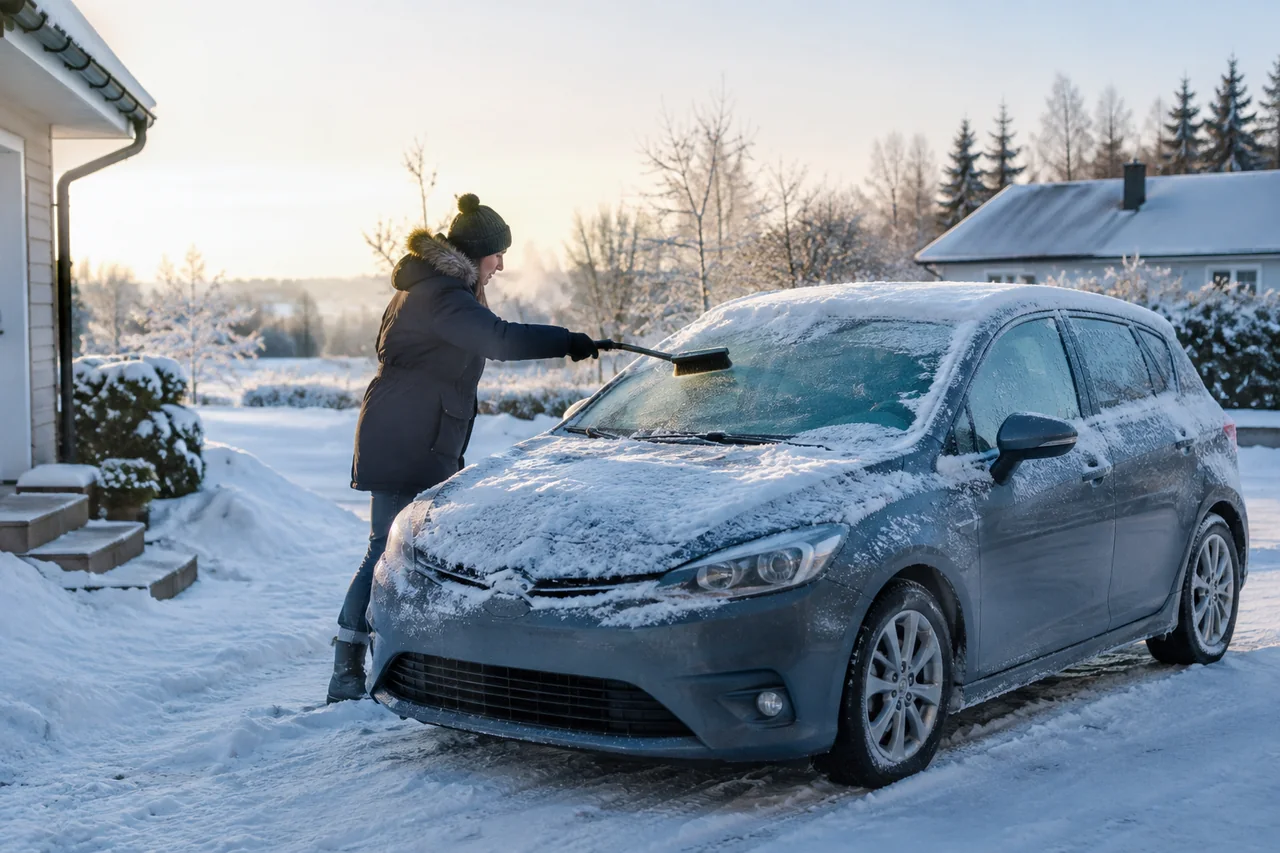
Clearing visibility is a separate task from engine warm-up. Windows, mirrors, lights, and the roof must be cleared of snow and ice before driving regardless of engine temperature, because a partially cleared windshield or obscured mirror is dangerous and often illegal. Use a plastic ice scraper and a snow brush with soft bristles to avoid scratching glass or paint. A windshield cover installed the night before can save several minutes of scraping and reduce the temptation to idle while the defroster works.
The defrost setting works best when directed at the windshield with warm air, but until the engine produces heat it will blow cold air that can temporarily fog the glass. On many vehicles, turning on the air conditioning with the heat helps dehumidify the cabin air and clears interior fog faster. Engine heat rises more quickly when driving gently, so start the car, clear all glass, and then drive with low fan speed and the temperature set to defrost. A warm cabin will follow sooner than if the car idles in the driveway.
Safety Rules for Idling a Car in Cold Weather
Never run the engine in an enclosed or attached garage, even with the door open. Carbon monoxide is odorless and colorless, and it can build up quickly in a garage or seep into the house through shared walls. Before starting or idling on a cold day, check that the exhaust outlet is not blocked by snow, ice, or debris; a blocked tailpipe can force exhaust gases back into the cabin. Idling in deep snow can also melt snow around the exhaust and cause it to refreeze, so keep the area clear.
Leaving a running car unattended, even on a driveway, invites theft and may violate local idling or unattended-vehicle laws. Some areas restrict idling for more than a few minutes, especially near schools or in public lots. Remote start systems have safeguards, but a keyed ignition left running while you return indoors is risky. Always keep a winter emergency kit in the car with items like gloves, a blanket, flashlight, ice scraper, jumper cables, and traction aids, because cold-weather breakdowns or stranded situations can happen even on short trips.
Gentler Warm-Up Options: Remote Start, Block Heaters and Preconditioning
Remote start can warm the cabin and begin defrosting before you enter the car, but it still involves idling and should be used briefly. Most remote start systems default to a 10- or 15-minute run time, which is more than enough to take the chill off the interior. Using remote start while the car is covered in snow can leave the exhaust blocked and cause carbon monoxide to enter the cabin, so clear the tailpipe area first if possible. For efficiency, start the car only a few minutes before you plan to leave.
In very cold climates, an engine block heater warms the coolant or engine oil before starting, which reduces cold-start wear and helps the heater produce warm air sooner. Block heaters must be installed or used according to the vehicle maker's or a qualified technician's guidance because fitment and electrical requirements vary. Many hybrids and electric vehicles offer cabin preconditioning that warms the interior and battery while still plugged in; this uses grid energy rather than fuel and provides the most comfortable start without idling. Heated seats and steering wheels, where equipped, deliver warmth directly and more efficiently than waiting for cabin air to heat up.
Cold-Start Signs That Deserve a Professional Check
Certain symptoms on cold starts are worth noting: hard starting that requires long cranking, a rough idle that does not settle after a few seconds, warning lights that stay on, or unusual noises such as knocking or squealing. A weak battery is the most common cold-weather problem because low temperatures reduce its cranking capacity. Battery testing is best done with a professional load tester at a shop or parts store, not by guessing based on age or voltage alone. Also confirm that engine oil and coolant are the correct viscosity and type for winter as specified in the owner's manual.
Persistent cold-start problems, such as repeated misfires, stalling, or a check engine light that remains on, need professional diagnosis rather than replacing parts one by one. Fault codes are evidence to interpret, not proof that a specific sensor or component has failed; many codes can be triggered by a weak battery, poor fuel quality, or a loose gas cap. A technician can inspect cold-start fuel trims, coolant temperature sensor readings, and battery health under load. Addressing the underlying cause prevents unnecessary parts replacement and makes winter starting more reliable without excessive warm-up idling.