Should You Buy a Car Without Test Driving It? Risks and Safer Alternatives
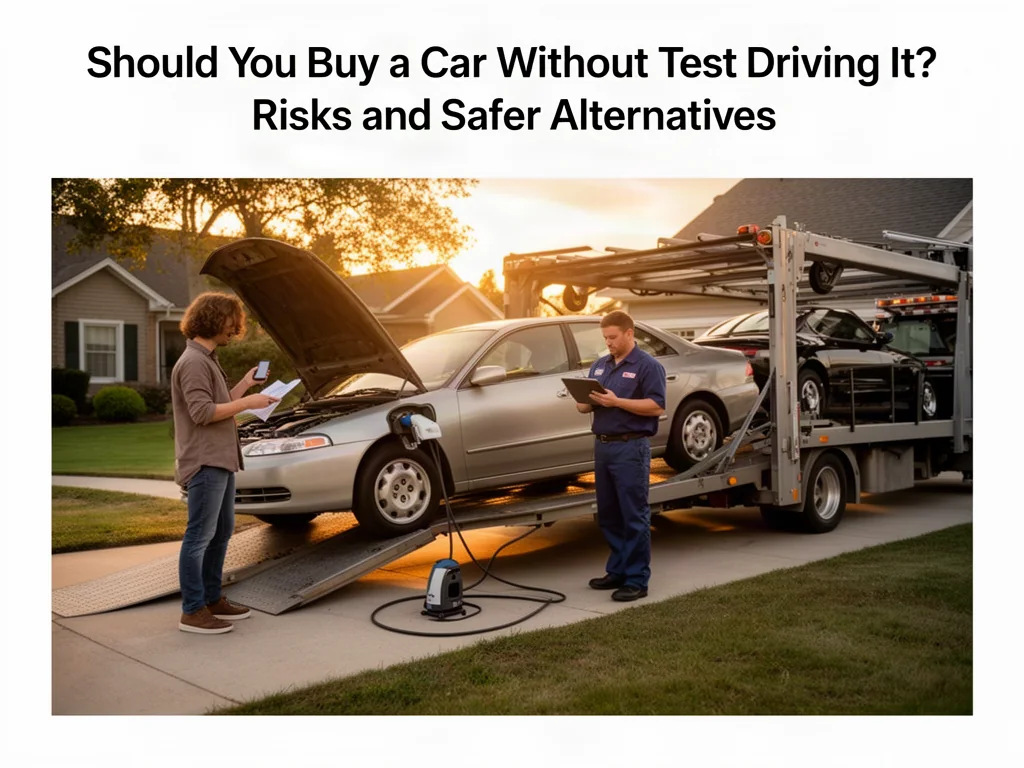
Buying a car without test driving it is increasingly common with online retailers and long-distance purchases. No law requires a test drive, but skipping it removes your chance to detect hidden faults, judge comfort, and verify how the vehicle actually performs. Whether you should buy a car without test driving it depends on the seller’s return policy, inspection options, and your own risk tolerance. This guide explains what you risk and how to protect yourself if you proceed.
Can You Buy a Car Without Test Driving It?
There is no universal rule against buying a car without test driving it. As long as you have the funds and sign the correct paperwork, a dealer or private seller can legally complete the sale whether or not you ever sit in the driver’s seat. This is especially common with online car retailers that deliver to your home, where you often buy the vehicle before ever seeing it in person.
Sight-unseen purchases also happen with out-of-state deals, auctions, and private sellers who refuse to allow a test drive. Once you sign the purchase agreement, you have typically accepted the car in its current condition. Many used-car sales are as-is, and in most states there is no automatic cooling-off period for vehicles. Always check the specific sale terms and your state’s consumer rules before assuming you can return the car later.
What You Risk When You Skip the Test Drive
A test drive often reveals problems that photos and videos cannot capture. You may hear odd engine or suspension noises, feel rough shifting, or notice the car pulling to one side. Vibration under braking, a soft brake pedal, or warning lights that appear only under load can signal expensive repairs. HVAC issues like a weak air conditioner or faulty heater are also easier to detect when driving.
Comfort and fit are highly personal and impossible to judge from a listing. Seating position, visibility, blind spots, road noise, and ride quality all affect daily satisfaction. Some mechanical faults appear only when the engine reaches operating temperature or at highway speed, so a short video walkaround may miss them. On used cars sold as-is, any repair costs discovered after purchase usually become your responsibility.
How Buying a Used Car Online Works Without a Test Drive
Online sellers typically replace the test drive with extensive documentation. You will see dozens of high-resolution photos, condition reports noting scratches or dents, and often a 360-degree virtual tour. They may disclose prior damage, title status, number of keys, and any reconditioning work performed. Read the listing carefully and compare the written description with what the photos show.
A return policy or money-back guarantee can function as an extended test drive. Confirm exactly how many days you have, the mileage limit, any restocking fees, and the required condition. Ask what happens if a problem appears during delivery or the return window, and who pays return shipping. Policies vary by seller and may change over time, so do not rely on generic claims from reviews or advertisements.
When Skipping a Test Drive Can Be a Reasonable Choice
Skipping a test drive can be reasonable when you already know the model well from owning or renting one. If the seller offers a written return window and you can afford the time and cost to return the car if needed, the risk drops. A trusted independent inspection also mitigates the danger of hidden mechanical faults. In these cases, buying without driving may make sense.
A new car from a dealer generally carries less mechanical risk than an older used car sold as-is, though fit and comfort still matter. Consider test driving an identical model and trim at a local dealership to judge seating, visibility, and ride quality. Red flags include pressure to skip an inspection, a vague vehicle history, refusal to share the VIN, or unusual payment requests. Use these signals to decide whether the remaining risk is acceptable.
Safeguards to Use Before You Commit
A pre-purchase inspection by an independent mechanic is the strongest safeguard. For remote purchases, many mobile inspection services will visit the car, perform a thorough check, and provide a detailed report with photos. This can reveal issues with the engine, transmission, suspension, brakes, and leaks that you would otherwise miss.
A vehicle history report is useful but limited. It can show reported accidents, title brands, odometer readings, and service records, but unreported damage or repairs may not appear. Always check the VIN for open safety recalls through official lookup tools and confirm the title status before paying. Get all promises, return terms, and disclosed defects in writing, and keep a copy of the original listing. Use secure, traceable payment methods; never wire money to an unverified private seller.
Test Driving a Car Without Buying: What's Normal and Expected
Test driving a car without buying is completely normal and does not obligate you to purchase. Dealers typically ask for a valid driver’s license and sometimes proof of insurance. A salesperson may ride along for insurance reasons or to answer questions, but you should still feel free to evaluate the vehicle honestly without pressure.
Before the drive, do a cold start and listen for unusual noises. Then cover city streets, highway speeds, and braking. Test parking, all controls, and visibility. If you decide not to buy, simply thank the seller and say you need time to think. For private sellers, schedule ahead and arrive on time to show you are a serious buyer.