Shift Solenoid A–D Codes P0973–P0983: Meanings and Diagnostic Checks
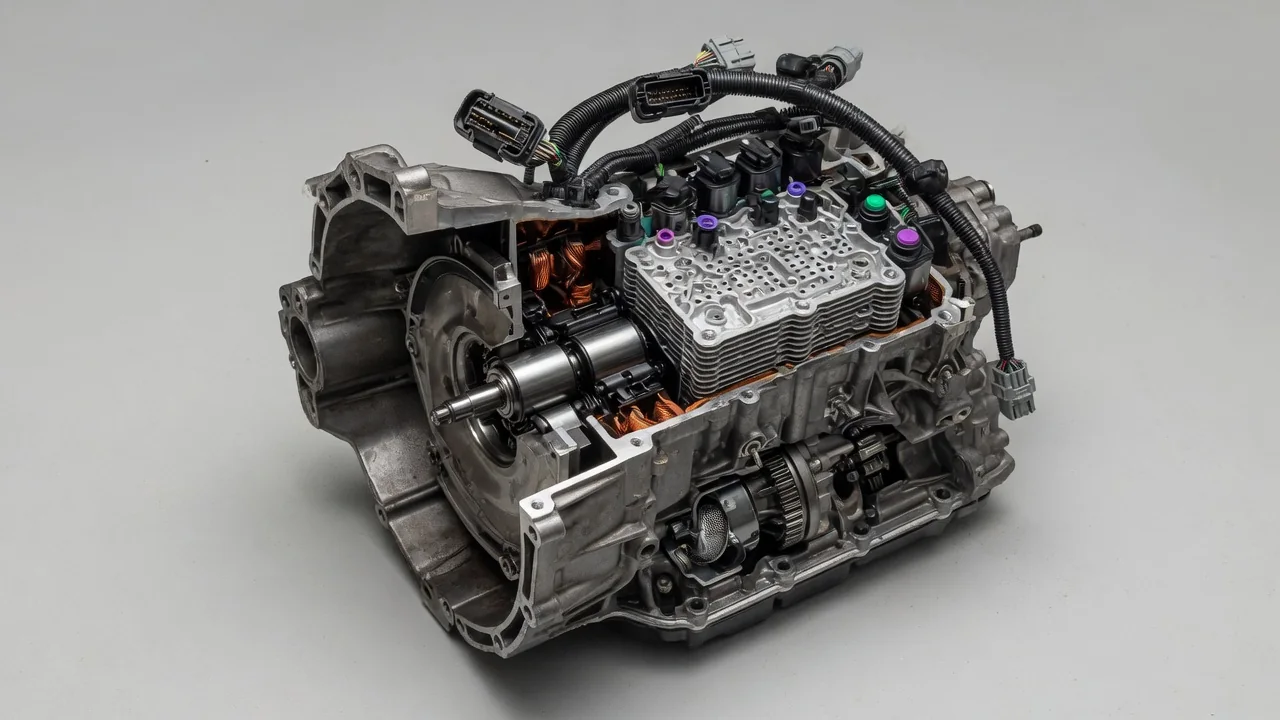
Shift solenoid A through D codes from P0973 through P0983 report monitored control-circuit conditions, not a parts list. A P0974 code, along with P0973, P0976, P0977, P0979, P0980, P0981, P0982, and P0983, flags circuit low, circuit high, or range/performance against transmission control module thresholds. Nearby P0986 and P0988 codes need separate definitions. Confirm the exact description for the vehicle, year, and transmission first.
Solenoid A: What P0973 and P0974 Identify
Before treating any P0973 code or P0974 code as a diagnosis, confirm the manufacturer's exact wording for that vehicle, model year, and transmission. Circuit layouts and the thresholds that define a shift solenoid control circuit fault are not universal. Under common labels, P0973 identifies shift solenoid A control circuit low, and P0974 identifies the matching circuit high condition. Those labels compare a monitored electrical signal with specified limits, not a hydraulic map of gear selection.
Circuit low and circuit high describe electrical conditions relative to those thresholds. Neither P0973 nor P0974 states that transmission fluid is low or that line pressure is out of range. The stored code is evidence that the monitored circuit did not behave as expected during the test window. It does not establish that solenoid A has failed. A technician still must separate harness, connector, winding, and module-driver possibilities using vehicle-specific information.
Solenoid B: P0975, P0976, and P0977
The same pattern applies to solenoid B. Standard descriptions list P0975 as shift solenoid B control circuit range/performance, a P0976 code as circuit low, and a P0977 code as circuit high. Range/performance means the monitored circuit response fell outside expected behavior under the diagnostic criteria for that powertrain, which may include timing, voltage, or current the module cannot reconcile with the command. These are electrical-monitor results. They do not by themselves describe fluid condition or clutch apply pressure.
A P0975 range/performance result alone does not prove a sticking valve, contaminated fluid, or internal transmission damage. Those mechanical possibilities stay on the list only when supporting evidence appears. Letter B is a control-circuit identifier, not a universal physical location on the valve body and not a fixed gear assignment. Vehicle-specific wiring and solenoid identification are required before treating P0976 or P0977 as a particular connector or shift event. Misreading the letter as a gear number sends diagnosis the wrong way.
Solenoid C: Reading P0979 and P0980
Under standard labels, P0979 identifies shift solenoid C control circuit low, and a P0980 code identifies the matching circuit high. Those entries belong with the A and B circuit-low and circuit-high family. Possible paths include transmission wiring harness damage, connector faults, solenoid electrical faults, and a transmission control module driver fault. Frequency is not implied. An open, a short to ground, or a short to power can set either label depending on how that circuit is designed and monitored.
Do not assign one wiring fault universally to circuit low or circuit high. The same broken wire can look different if the solenoid is high-side versus low-side driven, or if the monitor samples voltage versus current. Keep accompanying codes and freeze-frame data rather than clearing them first. Freeze-frame data records conditions when the circuit set, helping a technician judge whether the event lined up with a shift command, temperature extreme, or ignition cycle. That context belongs to interpreting P0979 and P0980.
Solenoid D: P0981, P0982, and P0983
Standard descriptions list P0981 as shift solenoid D control circuit range/performance, P0982 as circuit low, and P0983 as circuit high. Those labels follow the same electrical-monitor logic used for solenoids A through C. How solenoid D participates in gear selection depends on the transmission design. On some units it influences a clutch or brake circuit; on others it supports a different hydraulic function. Letter D does not name a gear or identify which ratio was commanded when the monitor failed.
An intermittent P0981, P0982, or P0983 still warrants evaluation even if later driving feels normal. The monitor can catch a brief open, moisture at a connector, or a driver glitch that does not repeat on the next trip. Multiple solenoid codes can justify inspecting shared power, grounds, or connections, because several circuits may share a transmission wiring harness. Shared-path inspection is a reasonable question, not proof of a common fault. Each circuit still needs confirmation against that vehicle's documentation.
Nearby Codes P0986 and P0988 Need Their Own Definitions
A P0986 code is not another A-through-D solenoid result. Its standard description is shift solenoid E control circuit high, subject to vehicle-specific verification of the label and the circuit. Because E is a different solenoid identifier, diagnosis developed for P0973 through P0983 cannot be copied onto P0986 automatically. The same caution applies to pinouts, connector cavities, and hydraulic function. Confirm the published definition for that powertrain before grouping solenoid E with the A-D family.
A P0988 code uses a different standard description: transmission fluid pressure sensor/switch E circuit range/performance, again subject to vehicle-specific verification. That entry concerns a pressure sensing circuit, not a shift solenoid E winding or driver. Range/performance here means the sensor or switch signal sat outside expected limits, unlike a solenoid control circuit high or low. Applying an A-D solenoid plan to P0988 can miss the sensing path. Keep these nearby codes identified, then diagnose them on their own terms.
Shift Symptoms and When to Stop Driving
Circuit codes in this family can appear with harsh or delayed shifts, unexpected gear selection, limited gear availability, and a transmission warning or check-engine light. Some vehicles enter a protective operating mode often called limp mode, which may hold one ratio or restrict gears. Whether that strategy appears depends on the vehicle and the transmission control module's fail-safe programming. The same P0974 or P0980 label can coincide with obvious shift complaints on one car and little more than a lamp on another.
Symptoms and code labels together still do not establish the failed component or the extent of internal damage. A circuit high result can share a harsh-shift complaint with an unrelated hydraulic problem. Stop safely and arrange assistance if the vehicle loses drive, slips severely, shows overheating warnings, or engages unpredictably. Those conditions are safety concerns, not a parts verdict. No universal remaining driving distance applies, so treat drivability as the deciding factor rather than the code number.
Safe Observations and Professional Circuit and Valve Body Testing
Before any codes are cleared, record the exact numbers, warning messages, symptom timing, and recent service history, including fluid service if performed. That record remains useful after a lamp memory fades and freeze-frame data is gone. Limit owner observations to visible leaks and readily accessible wiring damage with the vehicle parked and switched off. Where the owner's manual includes a fluid-level procedure, follow it; skip fluid checks the manual does not describe. These notes support a later diagnosis; they do not replace circuit testing.
Professional circuit diagnosis may assess power supply, grounds, connector integrity, harness continuity, and solenoid electrical behavior against vehicle-specific specifications. Commanded operation, scan data, and appropriate hydraulic testing can show whether valve body investigation is justified. Recommend a solenoid, valve body, or transmission control module only with supporting evidence. A P0977 code or P0983 result remains a circuit condition until tests separate winding, wiring, and driver. Replacing a valve body from the letter alone skips that locating work.