Service TPMS System or TPMS Fault Message: Causes and Fixes
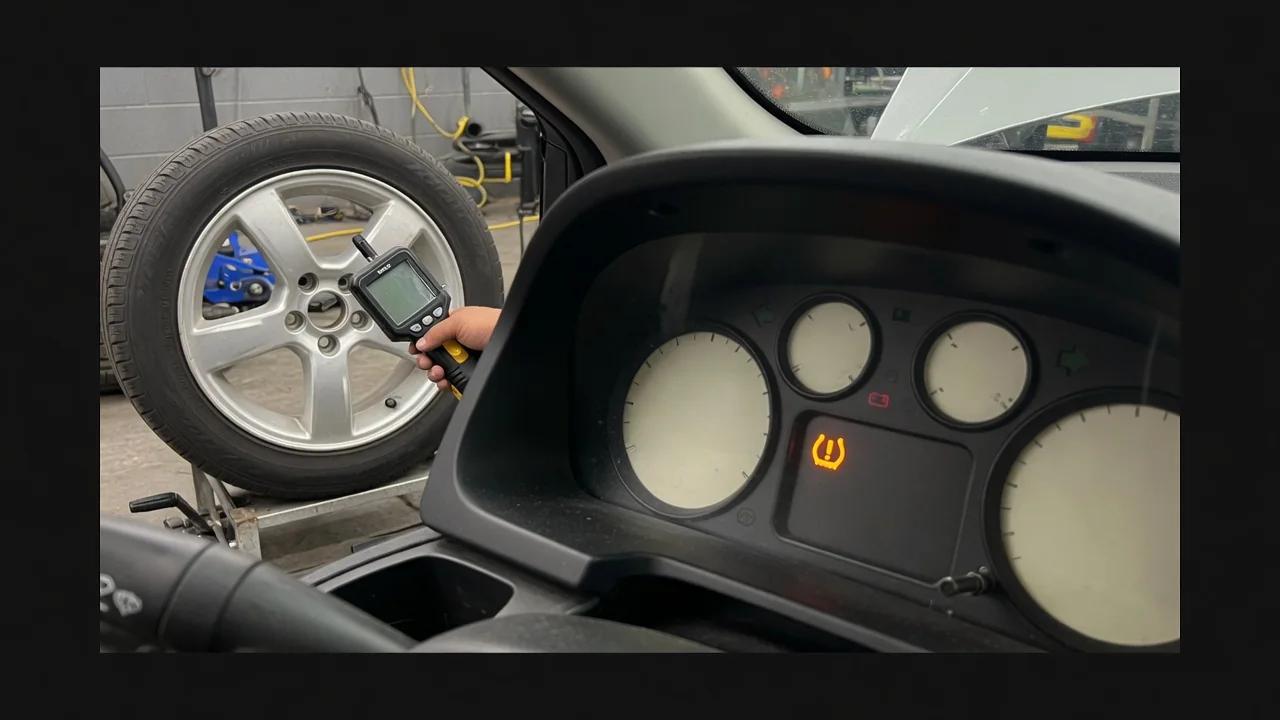
A tire pressure warning usually means a tire needs air, but a service message or fault warning points to something different: the monitoring system itself is not working as designed. This guide explains how to tell the two apart, what commonly causes a faulty tire pressure monitoring system, how technicians track down the problem, and what a proper repair involves.
What a TPMS Fault or Service TPMS Message Actually Means
A steady low tire pressure lamp reports a measurement: at least one tire has dropped below the threshold the system watches. A fault or service message means something else. It says the tire pressure monitoring system cannot do its job. On many vehicles the lamp shows the difference. It flashes for a period after startup and then stays lit, or a text alert such as Service Tire Pressure Monitor appears. A solid lamp with no flashing and no message usually points to low pressure rather than a system problem.
The message describes the system, not the tires. It does not mean a tire is flat, but it does not confirm the tires are fine either. Check every tire cold with a reliable gauge and compare the readings with the placard on the door jamb. A system in fault mode may not be able to warn you about a real leak until it is repaired. Lamp behavior and wording vary by manufacturer, so the owner's manual is the authoritative guide to what a specific message means on your vehicle.
Common Causes: Dead Sensor Batteries, Damaged Sensors, and Module Problems
In a direct TPMS, each wheel carries a sensor, often built into the valve stem, that measures pressure and transmits the reading by radio. These sensors run on sealed batteries that cannot be replaced. As a battery weakens, the sensor may report on and off before it goes silent. When the receiver stops hearing from one wheel, it sets a fault. Physical damage causes the same symptom. Corrosion around the stem, a curb strike, a stem snapped during a tire change, or a sensor hit by mounting equipment can all stop transmission.
Wheel and tire swaps are another common trigger. Winter wheels without sensors, or with sensors that use a protocol the vehicle does not recognize, leave the system with missing signals. Even correct sensors may need a relearn or registration step after replacement or rotation on many vehicles, and skipping it can keep the fault active. Less often, the receiver module, an antenna, wiring, or radio interference is to blame. These problems tend to produce a system-level fault rather than a single wheel dropping out.
Brand-Specific Wording: Chevrolet Service Tire Pressure Monitor and Ford TPMS Fault
Manufacturers describe the same kind of problem in different words. GM vehicles, including many Chevrolet models, may show a message along the lines of Service Tire Pressure Monitor System. Ford vehicles may show a Tire Pressure Sensor Fault message. In general terms, both point to a malfunction in the monitoring system rather than a low pressure reading. The safest approach is to note the exact wording on your display and match it to the definition in your owner's manual. Don't rely on a description written for another brand.
It is also a mistake to assume one cause or one fix applies to every brand. Sensor types, relearn methods, and diagnostic access differ between manufacturers, and often between models from the same maker. Some vehicles allow a relearn through dashboard menus, while others need a dedicated tool. The display message rarely identifies which wheel or component failed, so having the stored codes read is far more useful than guessing. For model-specific procedures or recall questions, the owner's manual, a dealer, or a qualified technician is the right source.
How a TPMS Fault Is Diagnosed
Diagnosis usually starts with a TPMS scan tool held near each wheel. The tool wakes the sensor and reads its ID, pressure, temperature, and, on many sensors, battery status. That quickly shows which sensor is silent or weak. A diagnostic scanner connected to the vehicle can then pull stored TPMS trouble codes. Treat those codes as evidence to interpret, not proof that a part has failed. Code meanings can depend on the manufacturer and must be confirmed for the specific vehicle before anyone orders parts.
Owners can gather useful clues without tools. If the dash shows individual tire pressures, note which position shows dashes or no reading. Consider whether the warning appeared right after a tire change, rotation, or wheel swap, and whether the lamp flashes at startup. Still, the message alone cannot distinguish a dead battery from a broken sensor, a missed relearn, or a module fault. If every sensor responds to a tool and the warning persists, the problem likely lies in the receiver, wiring, or module, which calls for professional testing.
What TPMS Servicing Involves
TPMS service usually means testing each sensor, replacing any that have failed, and completing the vehicle's relearn or programming procedure so the receiver recognizes the new sensor IDs. Replacement sensors may be original equipment, direct-fit aftermarket units, or programmable universal sensors configured to match the vehicle. Whatever the choice, the shop should confirm the sensor is compatible with that specific system rather than assume any sensor will work. A sensor that uses the wrong protocol will never be heard by the receiver.
Many shops also use a TPMS service kit whenever a tire comes off the wheel, replacing the valve core, cap, seal, and nut. Worn or corroded parts can leak slowly or damage the sensor body over time. Because the tire must be dismounted, this work is often done together with tire replacement, wheel changes, or seasonal swaps. Technicians position mounting equipment carefully to avoid breaking the sensor. After service, the lamp should clear once the relearn finishes and pressures are set correctly. If the light returns, another sensor may be weak or the system may have a deeper problem.
How to Fix a Tire Pressure Sensor: What Owners Can Do and When to Use a Shop
Start with the steps that are safe and free. Check every tire with a gauge while the tires are cold, including the spare if it has a sensor, and inflate to the placard values. Drive for a short time so the system can receive fresh readings. If the owner's manual describes a manual relearn procedure, follow it as written. These steps can clear faults caused by a missed relearn or a confused system. They cannot revive a sensor whose battery has died or whose housing is damaged.
A failed sensor cannot be repaired, only replaced. That requires dismounting the tire, which is not a driveway job for most owners. New sensors usually must be programmed or registered to the vehicle, so buying one without access to a compatible tool often leaves the fault active. Ignoring the problem carries real risk. The vehicle can no longer warn you of a slow leak, and some regions treat a disabled system as an inspection concern. If the warning stays on after these steps, or more than one wheel stops reporting, have a shop diagnose it.