Service Electronic Stability Control Warning: Meaning, Causes and Next Steps
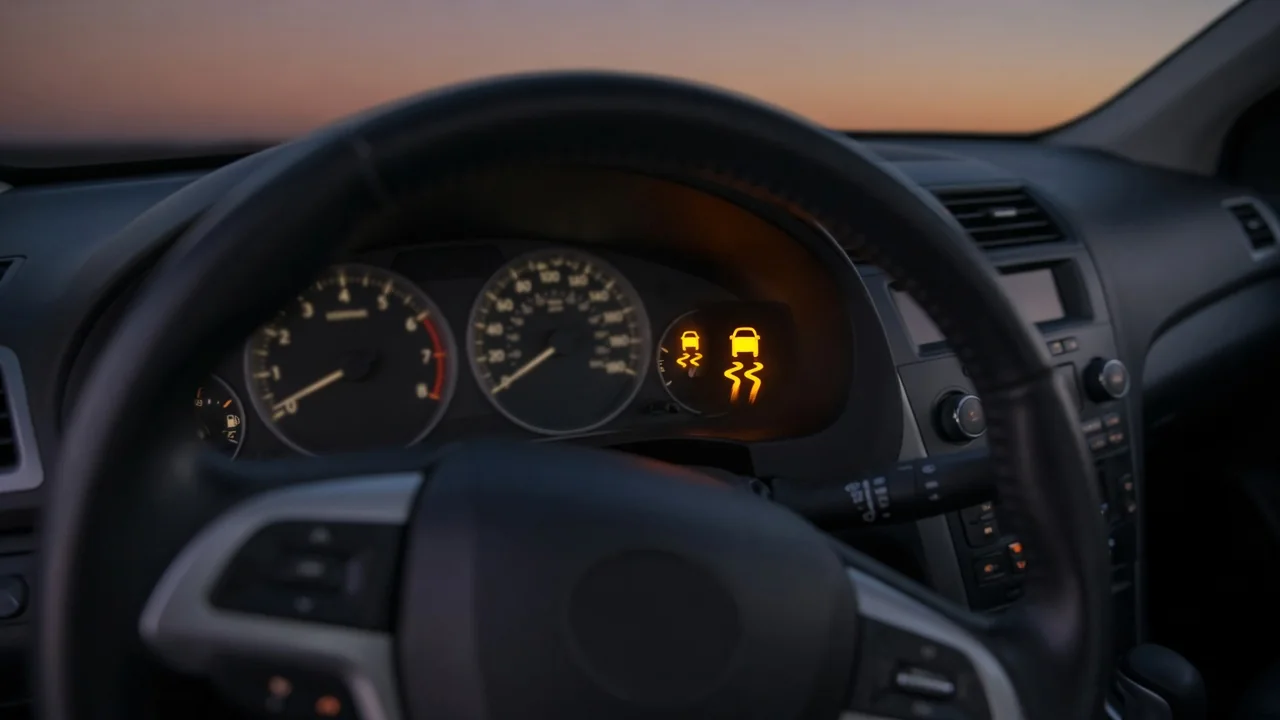
A Service Electronic Stability Control message can appear suddenly on Jeep, Ram, Dodge and Chrysler dashboards, often with a traction control light or ABS warning light. It means the system has a malfunction. It is not a scheduled maintenance reminder. Knowing what the warning means, how to drive with it and how technicians find the cause helps owners avoid guessing and paying for parts they don't need.
What the Service Electronic Stability Control Message Means
Electronic stability control is a safety system that keeps comparing where the driver is steering with where the vehicle is actually going. It reads each wheel speed sensor, the steering angle sensor and a yaw rate sensor, which measures how quickly the body is rotating. When those signals show a skid starting, the stability control system brakes individual wheels or cuts engine power to pull the vehicle back onto the path the driver intended.
So what does service electronic stability control mean? It means the control module found a fault and may have shut the system off, partly or fully. The message often appears with the ESC and traction control lights, and sometimes the ABS warning light, but the pattern varies by vehicle. The wording alone does not point to a cause. The stored diagnostic trouble codes have to be read and checked against the specific make, model and year.
Symptoms of an ESC Fault and Driving Safely With the Warning On
Common signs of an ESC fault include warning lights that stay on, traction control that no longer steps in on slippery pavement, and other driver assistance warnings showing up at the same time, because some of those features share the same sensor data. Some vehicles also cut engine power. If the message appears together with a check engine light, an engine or charging fault may be sending bad data to the stability system, so both sets of codes matter.
Normal braking usually still works, but skid and traction help may be gone. Leave extra stopping distance and take sharp turns and wet, icy or gravel roads gently. A red brake warning light, a soft or low pedal, grinding, pulling or loss of ABS means you should stop driving and have the vehicle inspected. If the warning comes and goes, note whether it shows up after rain, over bumps, while turning or on cold starts. That pattern helps a technician tell a wiring problem from a failed part.
How a Service Electronic Stability Control Warning Gets Diagnosed and Fixed
Possible causes fall into broad groups: wheel speed sensors or their tone rings, steering angle sensor calibration, the brake light switch, low battery or charging voltage, damaged wiring and connectors, and the ABS control module itself. Because the fault is stored in the ABS/ESC module, a basic engine-code reader may show nothing. A scan tool that can reach chassis modules reads the actual codes and live sensor data, and that is where real electronic stability control service starts.
Owners can safely check the battery and its terminals, look for torn sensor wiring near the wheels, confirm that tire sizes match and pressures are even, and think back to any recent alignment or steering work. If the car won't start or cranks slowly when the message appears, weak battery voltage is a strong lead. Clearing codes or restarting may make the message go away for a while, but a reset is not a repair. Steering angle calibration and module procedures depend on the vehicle and usually need professional tools.
Service Electronic Stability Control on Jeep Models
Owners of the Jeep Grand Cherokee, Wrangler (including the JL), Cherokee and Gladiator all see the same service electronic stability control wording, but the cause can differ by model and year. Off-road driving exposes wheel sensor wiring to mud, rocks and water. Larger or mismatched tires, lift kits and aftermarket wheels can also change the wheel speed and steering readings the module receives, and it may reject readings it considers out of range.
Before deciding how to fix service electronic stability control on a Jeep, check whether the warning appeared after recent tire, suspension, alignment or battery work, and give that history to the technician. A steering part replaced on a Wrangler or a new battery in a Grand Cherokee can be relevant. Look up what the codes mean for your model, and check for open recalls or service campaigns through official Jeep dealer channels. Don't assume a popular online fix applies to your vehicle.
Service Electronic Stability Control on Ram 1500 and Ram 2500 Trucks
Ram 1500 and Ram 2500 trucks, including earlier Dodge Ram models, show the same message and call for the same codes-first approach. Each code's meaning should be checked against the truck's exact cab, drivetrain and equipment. Truck use adds more variables: towing with a trailer brake controller, heavy payloads that change how the chassis responds, and larger aftermarket tires or lift and leveling kits that change the wheel speed and steering readings the stability system expects.
When working out how to fix service electronic stability control on a Ram 1500 or a heavier Ram, limit DIY checks to battery condition, tire sizing and visible wiring damage. Brake hydraulic work belongs with a qualified technician. Write down when the message appears, such as while towing, after shifting into 4WD, after washing the truck or after a rough road. Those details help a technician narrow down a wiring, sensor or calibration fault quickly.
Service Electronic Stability Control on Dodge and Chrysler Vehicles
On the Dodge Charger, Challenger and Durango and the Chrysler Pacifica and 300, the message works the same way, but the cause has to be confirmed on each vehicle. Performance owners should know that track mode, launch mode and other drive mode settings change ESC behavior on purpose, and the ESC off button only reduces how much the system steps in. None of that is a fault, and none of it will safely turn off a real service warning. That warning stays on until the problem is repaired.
Aftermarket wheels and tires with a different overall diameter can throw off wheel speed comparisons on Chargers and Challengers. In family vehicles like the Pacifica and Durango, a warning that arrives with several driver-assist alerts should be diagnosed promptly, because collision and lane-keeping features may also be limited. Before trying to reset service electronic stability control on a Dodge Charger, or paying for a part promoted as the standard fix, confirm the codes and check bulletins or campaigns with a dealer.
What Affects the Cost of Fixing an ESC Warning and When to See a Professional
Repair cost depends on diagnostic time, which part actually failed, how hard it is to reach, whether calibration is needed afterward, and whether a dealer or independent shop does the work. A damaged connector may be a modest repair, while a control module or hydraulic unit costs much more. Whether you drive a Jeep or a Dodge Charger, the cost to fix this warning starts with a proper diagnosis. Several sensors can trigger the same message, and guessing often means buying parts that were never needed.
Ask the shop for the stored codes and test results, and ask whether steering angle or module calibration is included in the estimate. Check warranty or campaign coverage with a dealer. You should get professional help when the warning stays on, brake symptoms appear, codes point to modules or hydraulic parts, or a calibration is required. Fixing the problem promptly restores stability and traction protection, which matters most on the slippery roads where drivers rely on it.