Serpentine Belt Sizes: Read Charts, Measure Length and Confirm Fit
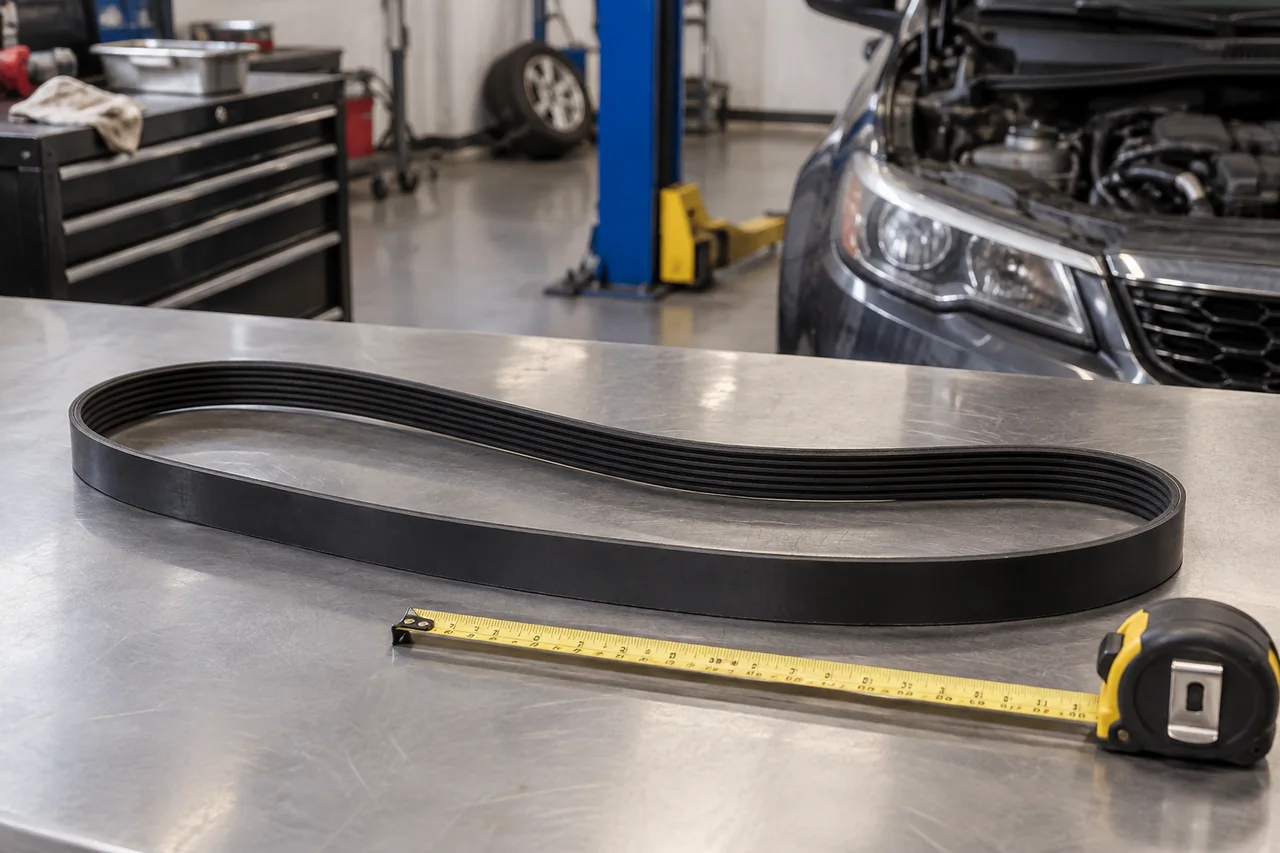
Choosing a serpentine belt by size chart starts with more than a single length figure. Serpentine belt size is defined by rib count, belt profile, and the length convention the chart uses, then confirmed against the vehicle. This size guide explains how to read serpentine belt sizes, interpret a length chart, measure an old belt, use a part number cross reference, and decide what size serpentine belt you need before buying a replacement.
Identify the Specifications That Define Belt Size
Selecting a replacement requires rib count, belt profile, and specified length together. A length alone does not establish fit because two belts can share a similar circumference yet differ in ribs or groove shape. Serpentine belt specifications also distinguish effective length from outside circumference. Effective length is the working length used in many catalogs, while outside circumference follows the outer surface. A serpentine belt size chart or length chart is useful only when it states which convention applies, so you do not mix figures from different measurement methods.
Belts with similar dimensions can still differ in construction. Stretch-fit designs are installed without a conventional automatic tensioner and are not interchangeable with a standard accessory-drive belt of similar length. A practical selection sequence starts with the vehicle application catalog, then existing belt identification, then dimensional checks against a sizes chart, and finally fitment verification on the engine. That order keeps serpentine belt sizing from collapsing into a single number pulled from a chart without confirming how the accessory drive is actually laid out.
Read Rib Counts and Belt Part Number Markings
A 6 rib serpentine belt has six longitudinal ribs that mate with matching pulley grooves. That rib count is only one part of size. It does not identify complete replacement specifications such as length, profile, or construction. Metric belt markings often use a PK convention: the leading number is rib count, PK names the profile, and the following figure is length in millimeters. A marking such as 6PK would therefore start with six ribs and a PK profile, with the remaining digits carrying the millimeter length used by that manufacturer.
Before treating those digits as a buying number, check the manufacturer's marking guide for the exact length definition and any suffixes. Some suffixes identify construction, materials, or special fit families rather than extra length. Branded catalog numbers can use entirely different formats from metric PK strings, so one decoding rule does not apply to every brand. Record the entire marking from the old belt or the catalog listing, then confirm what each segment means in that maker's system before using it as serpentine belt length or size.
Read Serpentine Belt Size and Length Charts
A serpentine belt by size chart is read by locating the matching rib count and profile first, then the part number, length value, units, and length convention in that row. Keep inch and millimeter values consistent using 25.4 millimeters per inch, but do not treat a rounded conversion as proof of fit. Charts often list nearby lengths that look interchangeable after rounding, yet the accessory drive can be sensitive to small differences. Align the chart's unit system with the marking or measurement you already recorded.
When searching a Gates serpentine belt size chart or Gates serpentine belt length chart, read the column labels and any accompanying definitions supplied with that listing. Do not assume every product family uses identical notation, or invent chart entries that are not shown. A dimension chart, including a serpentine belt sizes chart, helps identify candidates that share rib count, profile, and listed length. It does not establish vehicle fitment and does not authorize choosing the nearest listed length when the exact specification is unavailable.
Measure an Already Removed Belt and Understand the Limits
Knowing how to measure a serpentine belt after it is already off the engine starts with a mark at one point on the outer surface. Wrap a flexible tape around that outside path without stretching the belt, return to the mark, and treat the reading as an approximate outside circumference, not an automatic effective-length match. Count intact ribs at the same time and record any readable markings. Those notes matter when you later compare the tape result with a chart that may list a different convention.
A dedicated serpentine belt sizing tool measures according to its own instructions, which may report effective length, outside circumference, or another defined path. The result is useful only when it uses the same convention as the selected chart. Damage, distortion, or an incorrect previous belt can undermine both tape and tool readings. If the belt is missing, do not improvise a measurement around installed pulleys. Use application and accessory drive routing information, or have the drive professionally sized, rather than guessing how to measure for a serpentine belt in place.
Use a Cross Reference to Check a Replacement Candidate
A serpentine belt cross reference starts with the complete existing or specified part number, not a shortened fragment. Consult the replacement manufacturer's cross-reference information and treat the returned number as a candidate, not an automatic match. Confirm rib count, profile, length convention, and belt construction for that candidate before ordering. A part number cross reference can map one brand's catalog code to another, but it does not replace checking whether the listed length and construction still match the drive you are servicing.
Cross-referencing an incorrectly fitted old belt can preserve the original sizing mistake. That is why the vehicle application still needs verification even after a clean cross reference serpentine belt lookup. Missing, ambiguous, or multiple matches should be resolved through the catalog's application notes or supplier confirmation. Do not assume interchangeability just because two numbers appear in the same table. Construction differences, stretch-fit versus tensioned designs, and small length offsets can remain after a successful number match.
Confirm the Correct Size for the Vehicle
Answering what size serpentine belt you need for a specific vehicle begins with an application lookup using model year, make, model, engine, and the relevant accessory configuration. When catalog choices remain ambiguous, VIN-based clarification can separate similar engines or option packages. Original accessory drive routing, added accessories, and separate drive belts all affect selection. A stock application listing may not cover a modified accessory layout, so a belt that fits the catalog description can still be the wrong length for the pulleys actually present.
Professional fitment checks look at routing, rib engagement, specified belt type, and tensioner position where a tensioner is used. An abnormal position within or outside the tensioner operating range can have causes beyond belt length, including a weak tensioner or a misrouted path. Squeal, frayed edges, or a belt that will not seat correctly cannot establish the needed length. Keep observations limited to an engine-off, cool system and seek professional inspection when fitment remains uncertain rather than forcing a longer or shorter candidate onto the drive.