Sequential Manual Transmission Explained
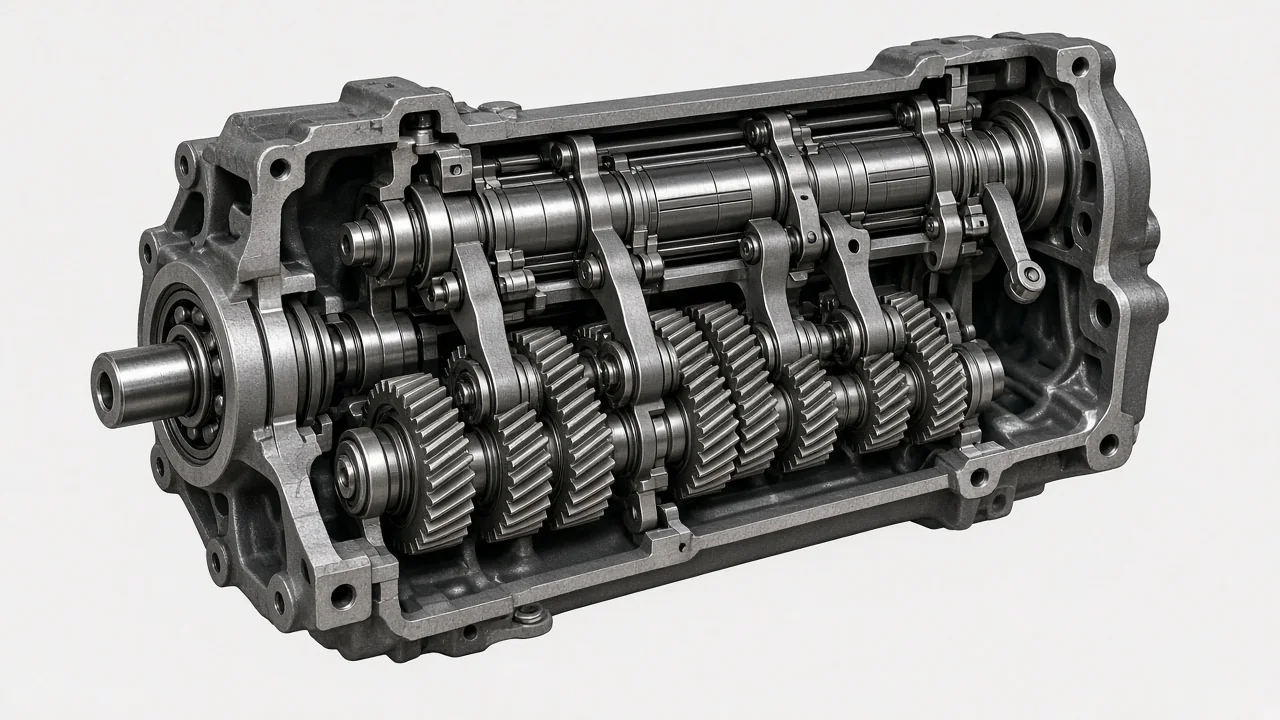
A sequential manual transmission moves through forward gears in a prescribed order, one shift command at a time, instead of allowing a jump to any ratio in an H-pattern gate. The driver still requests each change; clutch operation and shift assistance depend on the installation. A plus-minus selector or paddle does not, by itself, identify the internal gearbox design.
What Sequential Manual Transmission Means
Sequential selection means the gearbox can move only to the next higher or lower available forward ratio from the currently engaged gear. Each lever pull, foot click, or paddle request advances one step in that order, so the driver cannot skip from first to third in a single command the way an H-pattern lever can. An H-pattern describes a gate with individual positions for each gear, including a distinct path to reverse on many layouts. Sequential describes the ordered selection mechanism itself, not the shape of the cabin control.
Manual in this context describes the driver's role in requesting shifts rather than a fully automatic decision to change ratio. Clutch operation and any shift assistance remain installation-specific: some sequential gearboxes still use a conventional clutch pedal for every change, while others add actuators or electronics that reduce or time clutch work. A plus-minus shifter or steering-wheel paddles can operate a sequential gearbox, an automated manual transmission, or even a conventional automatic's software mode. The cabin control alone therefore does not prove what sits inside the case.
How the Selector Engages Each Gear
A sequential command does not pick a gear by sliding a lever into a labeled slot. The lever, foot pedal, or actuator indexes a selection mechanism that then moves selector forks according to the next position in the sequence. A shift drum is a common example: rotating the drum a fixed amount follows cut grooves that translate the forks so one ratio is engaged and another is released. Other sequential layouts use different cam, barrel, or hydraulic selector arrangements, so the drum is typical rather than universal.
Many sequential gearboxes keep several pairs of gears in constant mesh so the ratios are already turning together, and engagement comes from locking a chosen pair to the shaft rather than sliding gear teeth into mesh. Dog engagement uses prominent faces or dogs that interlock quickly once speeds are close enough, which suits rapid sequential changes. Construction still varies, and not every sequential unit uses identical dogs or shaft layouts. The selector only chooses which ratio is locked; the clutch remains the device that connects and disconnects engine torque from the gearbox input.
Clutch Use, Upshifts, and Downshifts
Whether the driver must use the clutch when starting, stopping, or changing gear depends on the particular transmission and its control systems. Some motorcycle transmissions and many motorsport gearboxes still expect a clutch for launches and low-speed work even when mid-range upshifts are assisted. During a shift, engine torque is interrupted while the next ratio is selected, which is why a poorly timed change can lurch or flare. Equipped systems may coordinate ignition cuts, throttle blips, or clutch actuation so the interruption is shorter and more consistent.
On a downshift, engine-speed matching brings crankshaft speed closer to what the next lower gear will demand once the clutch or dogs take up drive. That matching reduces driveline shock and helps the next ratio engage cleanly, but it is a control strategy, not a reason to force the selector. Sequential selection does not inherently block an inappropriate downshift or prevent engine overspeed if road speed and requested ratio disagree. Rev-limiters, shift maps, and mechanical locks, where fitted, vary by installation and are vehicle-specific protections rather than a universal safety net.
Where Sequential Gearboxes Are Used
Motorcycle drivetrains are the most familiar sequential layout for many drivers: a foot lever clicks the transmission up or down through the available ratios while the rider still manages clutch and throttle. That foot-operated selection keeps both hands on the bars and makes the prescribed order feel natural in a compact gearbox. Sequential motorcycle transmissions are still manual in the sense that the rider requests each change; they are not automatic transmissions simply because the lever moves in a straight plus-minus path.
In motorsport, a sequential gearbox supports driving by making each upshift or downshift a repeatable input rather than a search through an H-gate under load. Hand levers, foot levers, and paddles can operate that mechanism, and some installations add hydraulic or electronic assistance so the driver only requests the change. The same cabin control can also command an automated manual transmission, so paddles alone do not prove a particular internals package. The point of these applications is consistent ordered gear selection, not a shared hardware recipe across every competition or street motorcycle.
Operating Demands and Ownership Considerations
Because ratios are selected in order, moving across several gears generally requires successive commands. Dropping from a high cruising ratio to a low one for a corner or a restart means clicking or pulling through each intervening step rather than sweeping the lever diagonally. That successive action is part of the operating demand and affects how quickly a driver can prepare the driveline. It also means a missed or incomplete command can leave the gearbox between intended ratios until the next valid selection is completed.
Engagement design, clutch setup, and calibration influence noise, shift feel, and low-speed behavior. Dog-type sequential units can feel abrupt and audible compared with a synchromesh H-pattern, especially when rolling in traffic. Competition-focused installations often carry specialized inspection and servicing requirements set by the builder and the duty cycle, rather than a generic passenger-car schedule. Suitability for road driving depends on the complete installation: how it starts from rest, whether neutral is easy to find, and whether reverse is provided and selected in a documented way.
Identifying the System and Recognizing Shift Problems
The vehicle or gearbox documentation is the reliable way to establish the actual transmission type and the approved operating procedure. Sequential wording on a shift gate, instrument cluster, or owner's note can describe a true sequential gearbox, a software mode on an automatic, or paddle control of a dual-clutch unit. Those labels do not establish internal architecture. Confirming whether the driver must operate a clutch, how reverse and neutral are selected, and what the manufacturer allows during shifts prevents treating every plus-minus control as a manual sequential transmission.
Repeated missed shifts, unexpected disengagement, new grinding noises, or a sudden change in shift effort are reasons to stop experimenting and seek professional assessment. Note when the symptom appears—starting, upshifts, downshifts, or while holding a gear—because that timing helps a technician interpret the complaint. Do not force the selector or keep testing a transmission that will not stay engaged; continued loading can turn a selection problem into broader gearbox damage. A harsh or incomplete shift is evidence that engagement or control is not behaving as intended, not proof that one particular part has already failed.