Semi Truck Steering Linkage: Components and CDL Identification
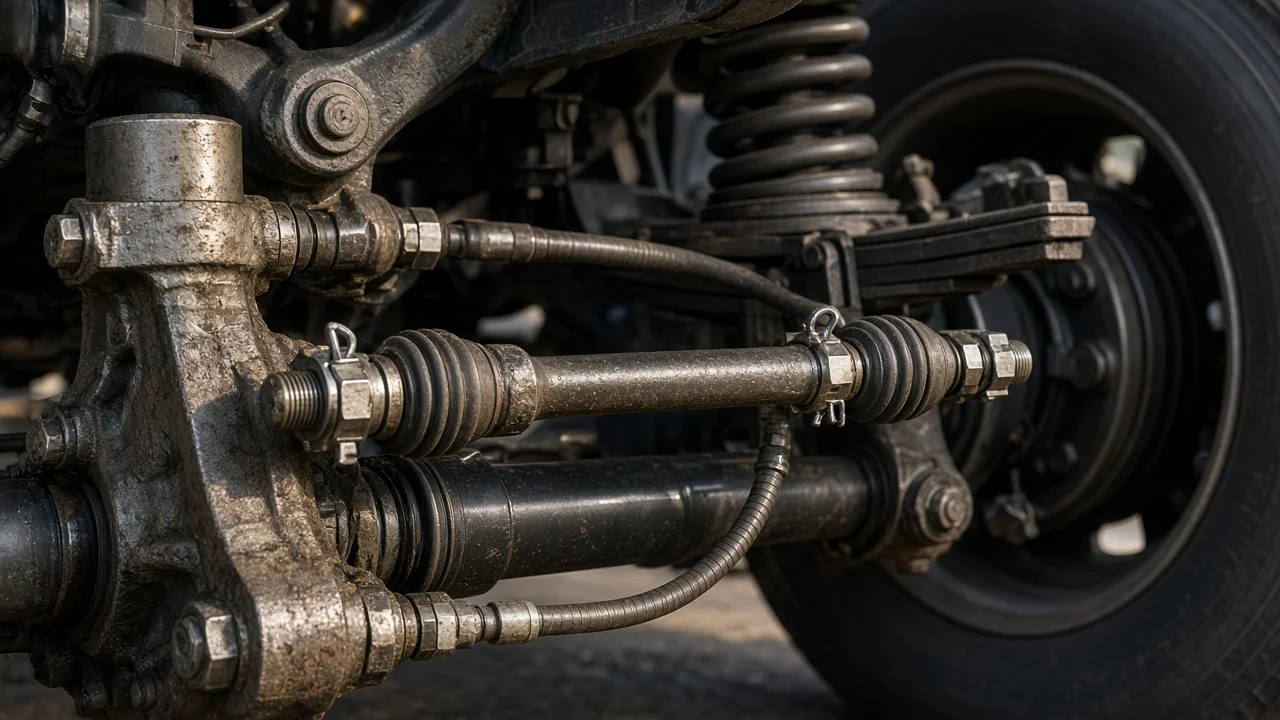
The steering linkage on a semi truck is the chain of arms, rods and joints that carries motion from the steering gear box to the front wheels. You may be studying for a CDL pre-trip exam or checking your own tractor. Either way, knowing what each part is called, how it moves and what a fault looks like helps you describe it correctly and catch problems before they become roadside failures.
The short answer: what the steering linkage includes
On a typical conventional Class 8 tractor with a solid front steer axle, the linkage starts at the steering gear box bolted to the frame rail. The pitman arm is splined to the gear box output shaft and swings forward and back as the wheel turns. The drag link connects the pitman arm to the steering arm on the driver-side steering knuckle. Each knuckle pivots on a kingpin and carries the spindle and wheel. The tie rod, often called the cross tube, joins the two knuckles through tie rod arms so both wheels turn together, with a tie rod end at each side. Upstream of the gear box, the steering column and steering shaft with universal joints carry input from the steering wheel.
For CDL purposes, the phrase 3 piece steering linkage usually refers to how some training programs group the parts you name during the pre-trip: pitman arm, drag link and steering arm, with the tie rod or cross tube called out separately or as part of the front axle. Other schools group them differently, so follow the wording in your state CDL manual and your instructor's checklist. What examiners consistently look for is that you point to each part, state that it is not cracked, bent or broken, and confirm it is secured with no missing nuts, bolts or cotter pins.
How motion travels from the wheel to the tires
Turning the steering wheel rotates the steering shaft, which passes through one or more universal joints to the gear box input. Most heavy trucks use an integral power steering gear: hydraulic pressure from an engine-driven pump assists the internal mechanism, multiplying driver effort and converting rotation into an arc at the output shaft. The pitman arm turns that arc into a push-pull movement of the drag link, which rotates the driver-side knuckle about its kingpin. The cross tube then transfers the same motion to the passenger-side knuckle.
Each connection between these parts is a ball-and-socket joint or a pinned pivot. Those joints let the linkage follow the axle as it moves up and down on the springs while the gear box stays fixed to the frame. That is why joint play matters: small amounts of looseness at several joints add up, letting the wheels wander before the gear responds. The tie rod is also adjustable in length, which sets toe, one of the wheel alignment angles that controls tire wear and straight-line tracking.
What changes the layout on a particular truck
Not every semi uses the same arrangement, so a steering linkage diagram for one model may not match yours. Cab-over trucks and some set-back front axle tractors route the drag link at a different angle than a set-forward conventional. Twin-steer trucks and some heavy-haul configurations add relay arms, a second drag link or an auxiliary power steering cylinder on the axle. Less common front suspension designs use different geometry altogether. Before naming or inspecting parts, identify what is actually installed rather than assuming a textbook layout.
Condition also changes how the linkage behaves. A change in ride height after spring work, sagging or broken front springs, a bent axle from an impact, or worn kingpins alter the angles the drag link and tie rod operate at. That can cause bump steer, pulling or a crooked steering wheel even when the linkage parts themselves are sound, which is why suspension and alignment are checked together with steering.
What the owner or driver can check
Park on level ground, set the parking brakes and chock the wheels. Work through the parts in order: the gear box, looking for secure mounting points on the frame and fluid leaks; then the pitman arm, drag link, steering arm, tie rod and tie rod ends. Look for cracks, bends, rub marks, loose or missing fasteners and missing cotter pins on castle nuts. Check power steering hoses for leaks, chafing and secure fittings, and confirm the fluid level against the reservoir markings. Torn joint boots and dry grease fittings are worth noting, since they often come before wear.
Steering free play is part of the CDL check. Many state CDL manuals note that more than about 10 degrees of play, roughly 2 inches at the rim of a 20-inch steering wheel, can make the truck hard to steer. With power steering, check with the engine running. A practical shop-floor method is to have a helper rock the wheel slightly while you watch each joint: any part that moves before the next one responds shows lost motion and points to the worn joint.
Checking joint play with the front wheels off the ground requires proper vehicle support. Use a jack rated for the axle load, place stands on solid support points and never work under a truck held only by a jack. If you do not have that equipment, the visual and helper checks above are as far as a driver should go.
Symptoms that point toward the linkage
Wandering that needs constant correction, delayed response to small inputs, a clunk over bumps or when starting a turn, and a steering wheel that sits off-center on a straight road all suggest wear in the linkage. Feathered or unusually fast wear on the front tires often points to a toe change caused by a worn or bent tie rod. These symptoms overlap with tire, brake, kingpin and alignment problems, so treat them as reasons for a closer inspection rather than proof that a specific part has failed.
Limitations and when to get professional help
This overview covers common layouts, not every model. Part names, fastener specification, joint wear limits and alignment settings come from the truck or axle manufacturer's service information, and those values should never be guessed. Manufacturers generally prohibit heating, straightening or welding steering components, so a bent or cracked part is replaced, and a new tie rod or drag link is followed by a wheel alignment check.
If you find a cracked, bent or loose steering part, a missing cotter pin, a leaking gear box or excessive play, do not drive the truck until a qualified heavy-duty technician has inspected and repaired it. Steering defects are commonly treated as out-of-service conditions, and a linkage failure at highway speed can mean a complete loss of control.