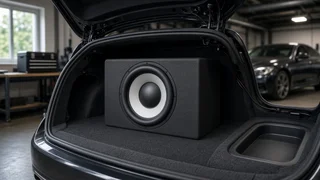
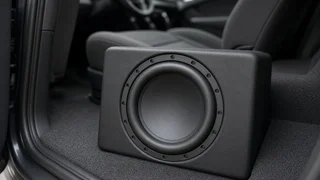
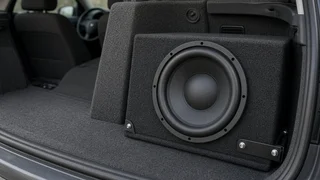
Sealed vs Ported Car Subwoofer
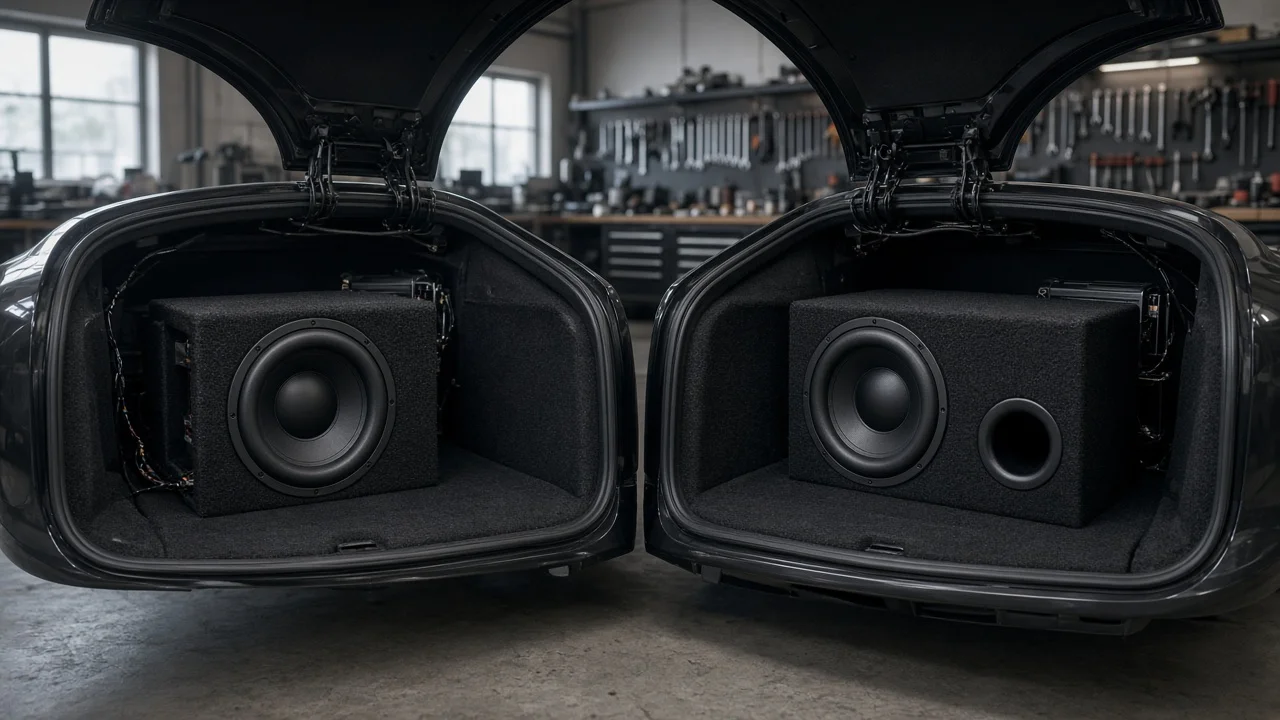
Choosing between a sealed and ported car subwoofer shapes how bass is felt and heard. A sealed subwoofer box for car use creates a controlled, accurate low end with a smaller footprint, while a ported design trades some precision for greater output and low-frequency reach. The comparison is not about one option being universally better; it is about matching enclosure behavior to listening taste, available cargo space, music type, and how the subwoofer integrates with the head unit, speaker wiring, and the rest of the vehicle.
Direct answer
For most listeners deciding between a sealed vs ported subwoofer for car audio, a sealed car subwoofer delivers tighter, more accurate bass and requires less space, making it the safer everyday choice. A ported enclosure is the stronger option when maximum output, deeper rumble, and pronounced low-frequency emphasis matter more than transient precision or compact installation.
The trade-off is physical. A ported box uses a tuned vent to reinforce output near the tuning frequency, so it can sound louder with the same amplifier power but is larger and more sensitive to box volume errors. A sealed enclosure relies on the trapped air behind the cone as an acoustic spring, which damps cone motion, improves control after a bass note stops, and forgives modest air leaks or build variation better than a vented design.