Small-Block Chevy Brake Booster Vacuum Hose: Choosing the Correct Part
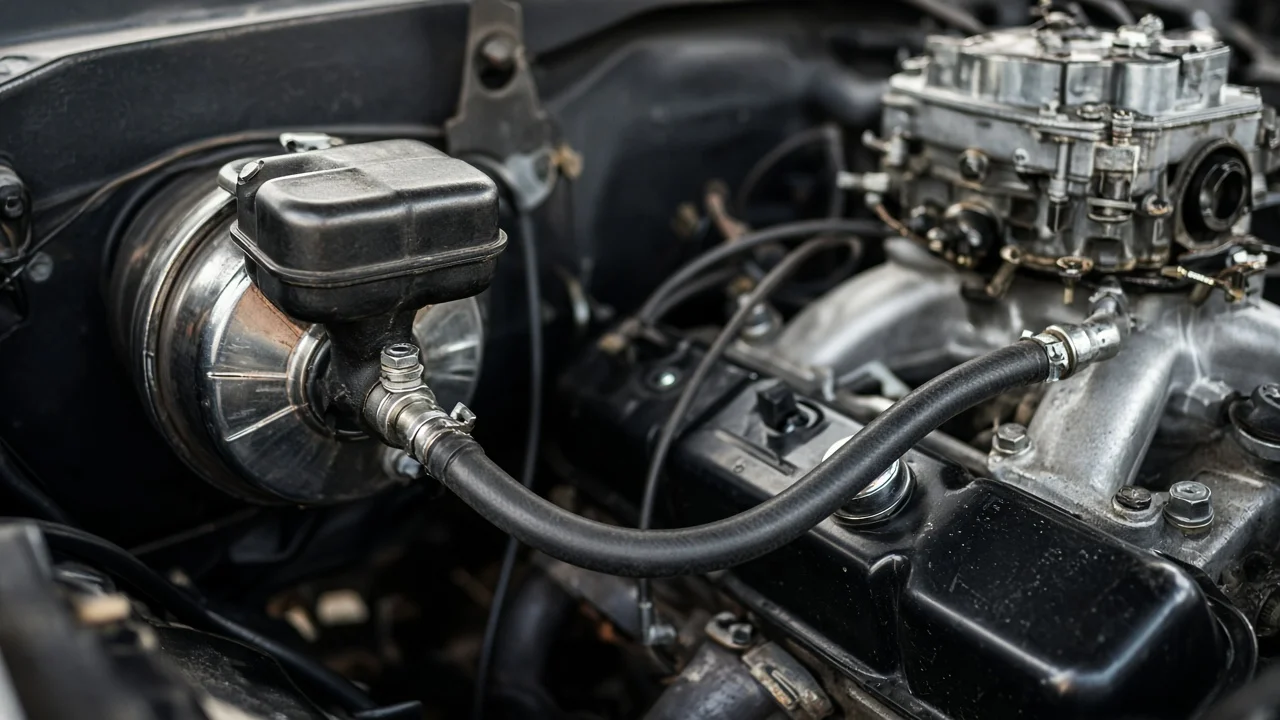
The hose between a small-block Chevy intake and the power brake booster looks like the simplest part of the brake system. The wrong one can still collapse under vacuum, slip off a barb, or connect to a port that gives no assist at idle. Choosing correctly means matching the hose to your vacuum source, the booster check valve and the conditions under your hood, not grabbing any rubber line that happens to fit.
Define the job the hose must do
A power brake booster uses the difference between engine vacuum and atmospheric pressure to multiply the force from your foot. On a small-block Chevy, the vacuum hose carries that vacuum from a manifold port to the check valve on the booster shell. The check valve holds vacuum inside the booster when manifold vacuum drops under heavy throttle or the engine stalls, giving a reserve for a few assisted stops. The hose has to stay fully open under strong vacuum, seal tightly at both ends, tolerate engine heat and oil vapor, and stay clear of anything that moves or runs hot.
Before shopping, define your build. A stock-style restoration with a factory booster, a street car with a mild camshaft, and a modified engine with headers, an aftermarket intake, a long-duration cam or a throttle body fuel injection conversion each put the vacuum source in a different place and route the hose through different heat and space conditions. Decide too whether appearance matters. Some restorers want correct-looking hose and fittings, while a driver usually needs durable, properly rated hose that fits cleanly.
Check compatibility before you buy
Start with inside diameter. Small-block boosters and manifold fittings commonly take hose around 11/32 or 3/8 inch inside diameter, but the correct size depends on the booster maker, the check valve style and the manifold fitting. Measure the barb on the check valve and the barb on the manifold fitting instead of assuming. Hose that is too small is hard to install and can split at the end; hose that is too large leaks or pulls off. If the two ends differ, use a proper reducer rather than stretching the hose over a larger barb.
Next, confirm the vacuum source. The booster needs full manifold vacuum, taken from the intake plenum below the throttle plates, either through a port in the manifold or a large manifold-vacuum port on the carburetor base or throttle body. Ported vacuum, taken above the throttle plates, reads little or nothing at idle and leaves the pedal hard at low speed. Many aftermarket intakes provide a tapped pipe-thread hole at the rear for a barbed fitting, so check the thread size and whether it is currently plugged. A vacuum gauge on the candidate port at idle settles any doubt.
Then look at the check valve and the route. The valve may be a straight or elbow fitting pressed into a rubber grommet on the booster, or an inline valve spliced into the hose; an inline valve must face the correct direction, with flow toward the engine. Measure length along the actual path, allowing slack for engine movement on its mounts, and plan the route so the hose does not kink near the elbow.
Features that affect the choice
Collapse resistance matters most. Hose sold specifically as vacuum brake hose uses a wall construction or reinforcement intended to stay round under vacuum, and quality hose is often marked as meeting the SAE J1403 vacuum brake hose standard. Ordinary heater hose and many general-purpose hoses are built mainly to resist internal pressure. Under vacuum, particularly when hot, they can flatten partly or completely and cut booster assist without any visible leak.
Material is the second trade-off. Rubber vacuum brake hose is the conventional choice and handles the oil and fuel vapor present in manifold vacuum. Silicone tolerates heat and looks tidy, but standard silicone is not well suited to long exposure to oil and fuel vapor, and some thin-wall silicone is not vacuum-rated at all; use it only if the listing states both properties. Molded hoses made for a specific vehicle can solve tight routing, while straight bulk hose works for most custom installs.
Treat labels such as heavy-duty, performance or racing as marketing unless the listing also gives inside diameter, a vacuum rating and a temperature range. Plan clamps as well: spring clamps or worm-drive clamps sized to the hose work on barbed fittings, but overtightening a worm clamp can cut soft hose. If you use push-lock hose and fittings, confirm the hose is rated for vacuum service.
Limitations and ownership costs
A hose only transmits vacuum; it cannot create it. If a long-duration cam leaves the engine with weak idle vacuum, or the booster diaphragm leaks, a new hose will not restore assist. Low-vacuum builds may need a vacuum reservoir, an electric vacuum pump or a hydraulic assist system, each with its own cost and fitment requirements. A hose also does nothing for worn brake pads, glazed friction material, damaged brake rotors, a sticking caliper or old brake fluid. Check those against the wear limits and specifications in your vehicle's service information.
The hose itself is inexpensive, but heat cycling hardens it and cracks the ends over time. Inspect it whenever you work under the hood, looking for cracks, soft spots, oil soaking or a section that flattens at idle. A leaking hose can also cause a rough idle and a lean condition. A simple check is to pump the pedal several times with the engine off, hold light pressure and start the engine; the pedal should move down slightly as assist returns. If the pedal turns hard, fades or behaves inconsistently, stop driving the vehicle and have the brakes professionally inspected.
Build a practical shortlist
Compare candidates against the same points: measured inside diameter at both ends, required length plus slack, a confirmed full manifold vacuum port with known fitting thread, check valve style and direction, a stated vacuum brake hose rating, temperature and oil-vapor resistance, and suitable clamps. On a small-block Chevy, also check clearance from the distributor cap and plug wires near the rear of the intake, from the throttle linkage, and from headers or exhaust manifolds.
Favor listings that state these specifications over ones that only say the hose fits a small-block Chevy, since engine family alone does not settle vehicle fitment. After installation, confirm idle vacuum with a gauge at the booster end and repeat the pedal check. If assist is still weak with a sound, correctly connected hose, look at engine vacuum, the check valve and the booster rather than buying another hose.