Saturn Vue Rough Idle: Causes for 2003-2006 Models
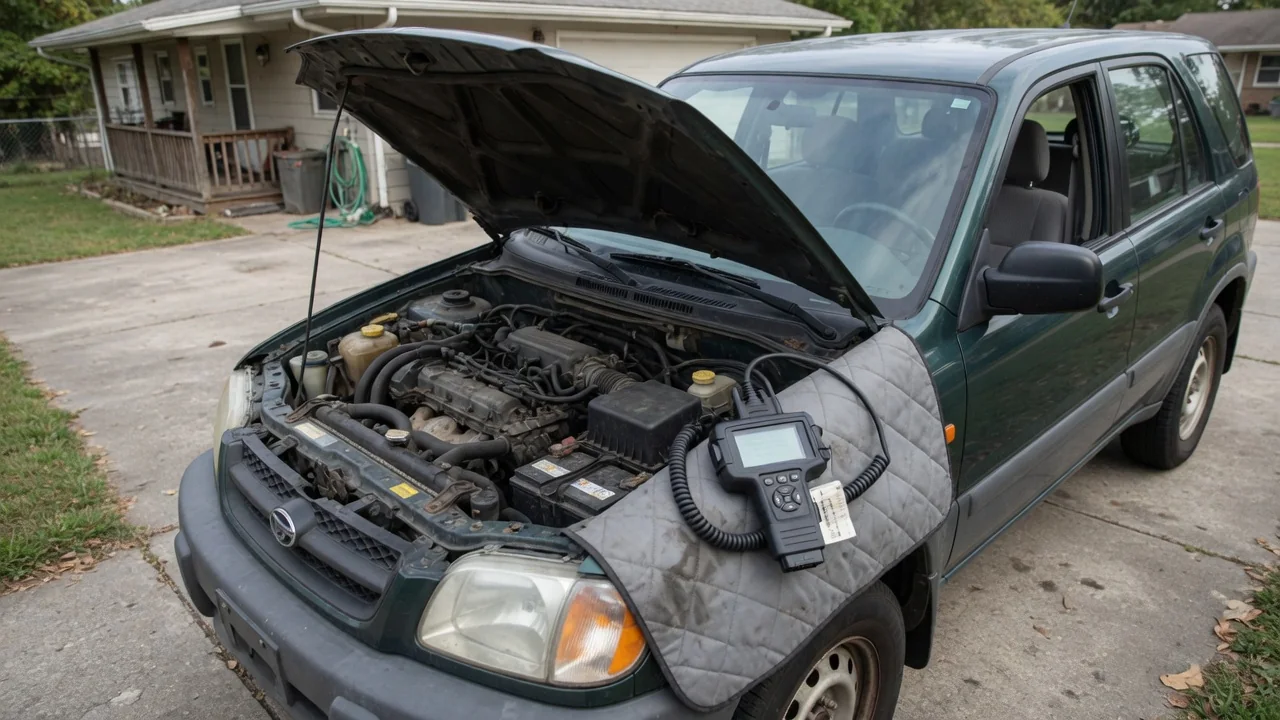
A rough idle on a 2003 or 2006 Saturn Vue can feel like a steady shake, a rhythmic stumble, or a wandering idle that nearly stalls. The Vue’s engine options—including the Ecotec four-cylinder and different V6 sources—change how you approach the problem. Recording symptoms and reading trouble codes narrows the search among ignition, vacuum, fuel, and sensor faults. This guide explains what to check and when testing must go beyond a home inspection.
Confirm Your Saturn Vue's Engine Before Diagnosing a Rough Idle
The engine under the hood shapes every diagnostic step because the 2003–2006 Vue range used more than one powerplant. The four-cylinder Ecotec and V6 options have different ignition layouts, vacuum hose routing, and sensor locations. On some model years the V6 came from Honda, while others used a GM design, and each responds differently to idle faults. Knowing which engine you have prevents wasted time chasing parts that do not exist on your vehicle.
Confirm the engine with the eighth character of the VIN, the owner’s manual, or the under-hood emission label instead of trusting a trim badge. Write down the model year, engine type, current mileage, and any recent work before touching anything. A repair or service done just before the idle problem started can point directly at a loose hose, a damaged connector, or an incorrect part. These notes keep later diagnosis focused.
Describing the Rough Idle: Symptoms Worth Recording
A rough idle is not one sensation. A steady shake can point to an engine mount or a constant misfire, while a rhythmic stumble often follows one cylinder dropping out. A hunting or surging idle that rises and falls suggests the engine computer is fighting an air or fuel error. An idle that nearly stalls when you stop may involve the throttle body or an idle control fault. Naming the exact feel helps separate combustion problems from mounting or control issues.
Note when the roughness appears. A cold-start-only stumble can relate to engine coolant temperature readings or fuel enrichment, while a warm-idle shake may follow a vacuum leak that opens as parts expand. Idle quality can change in Drive versus Park, with the A/C compressor engaged, or after refueling when evaporative vapors reach the intake. Additional signs like a steady or flashing check engine light, fuel smell, hesitation, hissing, or worsening fuel economy should all be written down before scanning.
Possible Causes of a Rough Idle on a 2003 Saturn Vue
Ignition problems, unmetered air, fuel delivery faults, and EGR issues can all upset a 2003 Vue at idle. Worn spark plugs or failing ignition coils create misfires that shake the engine. Vacuum leaks from cracked hoses, intake gaskets, or a failed PCV valve let air enter without passing through the mass airflow sensor, so the computer cannot fuel the mixture correctly. A dirty throttle body restricts the small airflow needed at idle, and EGR valves that stick open dilute the intake charge.
Age works against rubber and plastic parts. Hoses become brittle, intake gaskets shrink, and PCV elbows crack, creating leaks that are hard to see. A faulty mass airflow or oxygen sensor can also skew the air-fuel calculation, but a sensor code only means the reading fell outside expected range—the wiring, a vacuum leak, or exhaust leak may be the true cause. Worn engine mounts transmit normal combustion vibration as a rough idle and must be separated from actual running faults. None of these possibilities can be confirmed without testing.
Possible Causes of a Rough Idle on a 2006 Saturn Vue
Before inspecting a 2006 Vue, confirm whether it has the four-cylinder Ecotec or the V6. The V6 in this model year may be a Honda-sourced unit with a different ignition coil layout and intake manifold design than the GM V6 used in earlier years. Access to spark plugs, PCV lines, and throttle body bolts changes between engines. A misfire on one cylinder in either engine can come from a worn plug, a failing coil, or an injector that drips or clogs, but the replacement path is not the same.
Unstable idle speed can be caused by intake leaks, throttle body deposits, or electronic throttle behavior. A small crack in an intake boot or a leaking gasket lets in air that the oxygen sensors see as a lean mixture. Deposits around the throttle blade reduce the small airflow gap at closed throttle, forcing the computer to compensate. Fuel pressure problems from a weak pump or restricted filter lean the mixture, while low-quality fuel or a saturated evaporative canister can create rich or erratic idle conditions. Each requires testing rather than assumption.
Reading Trouble Codes and Understanding Their Limits
A basic OBD-II scan tool reads stored and pending diagnostic trouble codes along with freeze-frame data captured when the fault occurred. This information is collected without disassembly and shows which cylinder misfired, under what engine load and temperature, and whether fuel trims were shifted. A code like a random misfire or a cylinder-specific misfire does not identify the failed component—it tells you the engine computer detected an abnormal crankshaft speed change or combustion event.
Manufacturer-specific codes for the Saturn Vue can mean different things depending on the engine and calibration. Check the exact definition in reliable service information using the VIN before replacing any part. Do not clear codes before recording them; the freeze-frame data that disappears may show the fault only happens at a certain temperature or rpm. A rough idle can also exist with no stored codes, especially if the condition is caused by a small vacuum leak or a mechanical issue that does not set a threshold.
Safe Checks at Home and Limits of What They Show
Visual checks can be done without special tools. With the engine idling and the hood open from a safe position, look for disconnected or cracked vacuum hoses, listen for a hissing sound that changes when you gently move a hose, and check connectors for oil soak or physical damage. An oil-soaked ignition coil connector on the Ecotec can cause a misfire that clears when the connector is cleaned. These observations narrow where a technician should look next.
Service records reveal whether spark plugs, air filters, or other ignition parts were replaced recently or have been neglected, but no specific mileage interval can be assumed from this article. Keep hands, clothing, and tools away from moving belts and fans, and avoid hot exhaust and cooling system surfaces. A visual check can identify an obvious split hose or a loose clamp, but it cannot confirm fuel pressure, compression, sensor accuracy, or internal engine condition. Those require instruments and controlled testing.
When a Rough-Idling Saturn Vue Needs Professional Testing
Certain symptoms demand professional testing. A flashing check engine light indicates a severe misfire that can damage the catalytic converter, so the vehicle should not be driven until it is checked. Stalling in traffic, a strong fuel smell, overheating, visible smoke, or an idle that worsens day by day all mean the cause may be more than a simple maintenance item. Continuing to drive under these conditions can turn a small vacuum leak or coil failure into an expensive repair.
A technician can perform a smoke test to find vacuum leaks, measure fuel pressure under load, run a compression or leak-down test, and watch live data while the engine idles. These tests isolate whether the fault is air, fuel, ignition, or mechanical. Repeatedly replacing parts based on guesses often hides the real problem and adds cost. Bring your written symptom notes, any stored codes, and freeze-frame data to the shop; they shorten diagnosis and prevent unnecessary work.