Safe Tire Tread Depth: How to Interpret Measurements and Decide When to Replace Tires
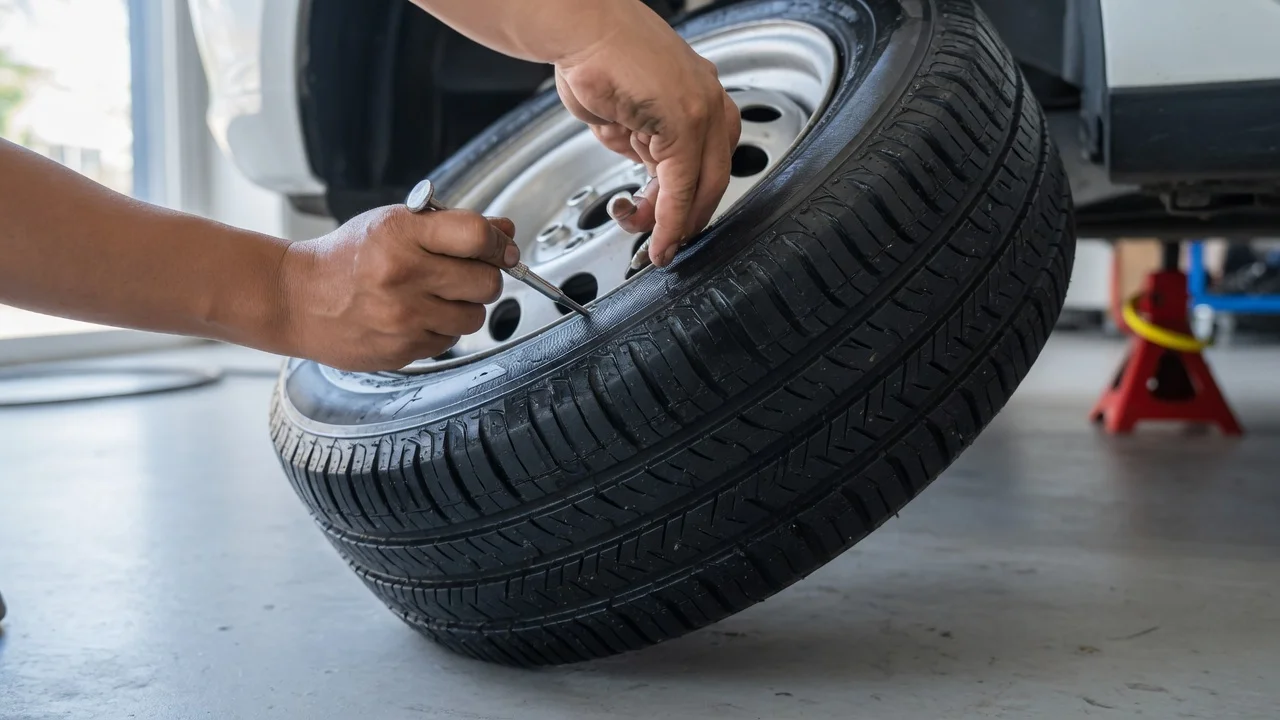
The minimum that matters
Tread depth is the remaining rubber in a tire’s main grooves, measured from the groove floor to the top of the tread blocks. For ordinary passenger cars and light trucks, the legal minimum in most U.S. states is 2/32 inch, which is 1.6 millimetres. The European Union and the United Kingdom use the same 1.6 mm legal minimum across the central three-quarters of the tread. Molded wear bars in the grooves sit at that height; when those bars sit flush with the surrounding rubber, the tire is at the legal limit.
A tire that still meets the law can already be a weak wet-weather tire. Many tire makers and safety agencies treat 4/32 inch (about 3.2 mm) as the practical replacement point for rain and standing water, because shallower grooves shed water less effectively and raise hydroplaning risk. Dedicated winter tires are commonly replaced at about 6/32 inch (about 4.8 mm) so the voids can still pack snow. New passenger tires typically leave the factory with about 10/32 to 11/32 inch of tread.
Vehicle class changes the floor. In the United States, commercial vehicles are typically required to keep at least 4/32 inch on steer-axle tires and 2/32 inch on other positions. Local statute, inspection rules, and the tire or vehicle manufacturer can set a stricter number than the general passenger-car figure. Confirm the rule that applies to your location and vehicle before you treat any single reading as legal or illegal.
How to interpret 2/32 through 8/32
U.S. shops and gauges usually report depth in 32nds of an inch. Elsewhere the same heights are given in millimetres. Use the lowest reading you find in a main groove. That lowest figure is the one that governs legality, wet grip, and remaining life.
Tread depth What the reading means Typical next step; 2/32 in (1.6 mm) Wear bars flush; legal minimum for most passenger cars in the U.S., EU, and UK Replace now; the tire is at the compliance limit; 3/32 in (about 2.4 mm) Above the common legal floor; below the usual wet-weather replacement point Schedule replacement, especially before a rainy season or highway trip; 4/32 in (about 3.2 mm) Common wet-weather threshold; quarter-test fail point in the U.S. Replace tires used in rain or at highway speeds in wet conditions; 5/32 in (about 4.0 mm) Mid remaining life for an all-season passenger tire Serviceable on dry roads; treat wet performance as already reduced; 6/32 in (about 4.8 mm) Common replacement point for dedicated winter / snow tires Replace winter tires kept for snow; all-seasons may continue in mild climates; 7/32 in (about 5.6 mm) Substantial remaining groove Healthy remaining life for ordinary all-season highway use; 8/32 in (about 6.4 mm) Good remaining tread relative to a new passenger tire Comfortable margin for mixed dry and wet driving
Those 4/32 and 6/32 figures are safety working depths, not a second legal minimum. Dry pavement can still feel acceptable at 3/32 inch. Rain, standing water, and packed snow are the conditions that make the extra groove depth matter. A single “safe” number does not cover dry, wet, and snow equally; match the threshold to the weather you actually drive in.
How to measure tread depth
A dedicated tread-depth gauge that reads in 32nds of an inch or in millimetres is the right tool. A U.S. penny and quarter can give a rough check only. Park on level ground, set the parking brake, and switch the engine off. Stay clear of live traffic. If you need the inner shoulder, turning the steering to full lock is usually enough; crawling under a vehicle that is not properly supported is a stop condition. Structural damage—bulges, cuts to cord, or a puncture outside the repairable area of the tread—means a qualified shop should inspect the tire before you rely on a depth number.
Identify the grooves you will measure.
Find the main circumferential grooves. Those are the wide channels around the tire, separate from the fine sipes cut into the blocks.
Take several readings on each tire.
Stand the gauge upright in an open groove so the shoulders rest on the tread blocks and the probe sits on the groove floor. Read the scale. Repeat on the inner, centre, and outer ribs, then at several points around the circumference, for example every quarter turn. Uneven wear often shows up as a shallow inner or outer rib.
Keep the lowest reading and compare it with the right threshold.
Record the lowest groove reading on each tire. That lowest value is the one you compare with 2/32 inch for the common legal floor, 4/32 inch for wet-weather replacement, and 6/32 inch for winter-tire snow use. If a penny is all you have, insert it with Lincoln’s head upside down, facing you: a fully visible head means 2/32 inch or less. A quarter used the same way with Washington’s head indicates 4/32 inch or less when the entire head is visible. Treat coin tests as a screen, then confirm with a gauge.
You are done when every fitted tire has a lowest-groove figure, you know whether any tire is at or below the legal, wet, or winter threshold that applies to you, and you have noted inner-to-outer or around-the-tire differences that point to inflation, alignment, or suspension wear. Replacement, puncture repair, mounting, and balancing are shop work. Follow the vehicle owner’s manual and the tire manufacturer’s replacement and repair limits; those documents override a generic depth chart when they disagree.
When to replace the tires
Replace immediately when any main groove is at 2/32 inch, when wear bars are flush, or when the tire is below the legal minimum for your jurisdiction and vehicle class. Treat 3/32 inch as a tire that should come off the car soon. Replace at 4/32 inch when you drive in rain or at speed through standing water. Replace dedicated winter tires at about 6/32 inch if snow traction is the reason you fit them. Readings of 7/32 and 8/32 inch still leave useful life on a typical all-season passenger tire.
Depth is only one replacement trigger. Sidewall cracks, bulges, exposed cord, impact breaks, and punctures the maker will not repair are independent reasons to take the tire out of service at any remaining groove depth. Many manufacturers also ask owners to have tires inspected from about five years after the production date and to remove them by ten years from that date, even if groove depth still looks generous. The DOT week-and-year code on the sidewall is the date to use.
Replace at least the pair on the same axle, and match size, load index, and speed rating to the vehicle tire placard and the maker’s fitment rules. If one tire is much shallower than its mate, find the cause—underinflation, misalignment, or a worn suspension part—or the new tire will wear the same way. A compact temporary spare follows its own speed and distance limits in the owner’s manual; its shallow, narrow tread is a get-you-home design, not a second set of highway tires.
Limits of the number on the gauge
The 2/32 inch / 1.6 mm figure is a widespread passenger-car legal floor, not a universal law. Some states, provinces, and countries set a different millimetre or fraction, and commercial, trailer, motorcycle, and bus rules can sit higher. Where this guide cannot name your inspection standard, treat the legal claim as unverified for your plates and have a local inspector or the published vehicle code confirm it.
Load range, speed rating, and winter versus summer compound also change how much depth you should keep. A gauge reading answers remaining groove; it does not certify that a worn winter tire still meets a severe-snow sidewall mark, or that an aged tire with deep grooves is still structurally sound. When the owner’s manual, the tire maker’s replacement bulletin, or a local inspection rule is stricter than the chart above, follow that stricter instruction.