Saab Brake Booster Vacuum Hose: Identifying the Correct Part by Model
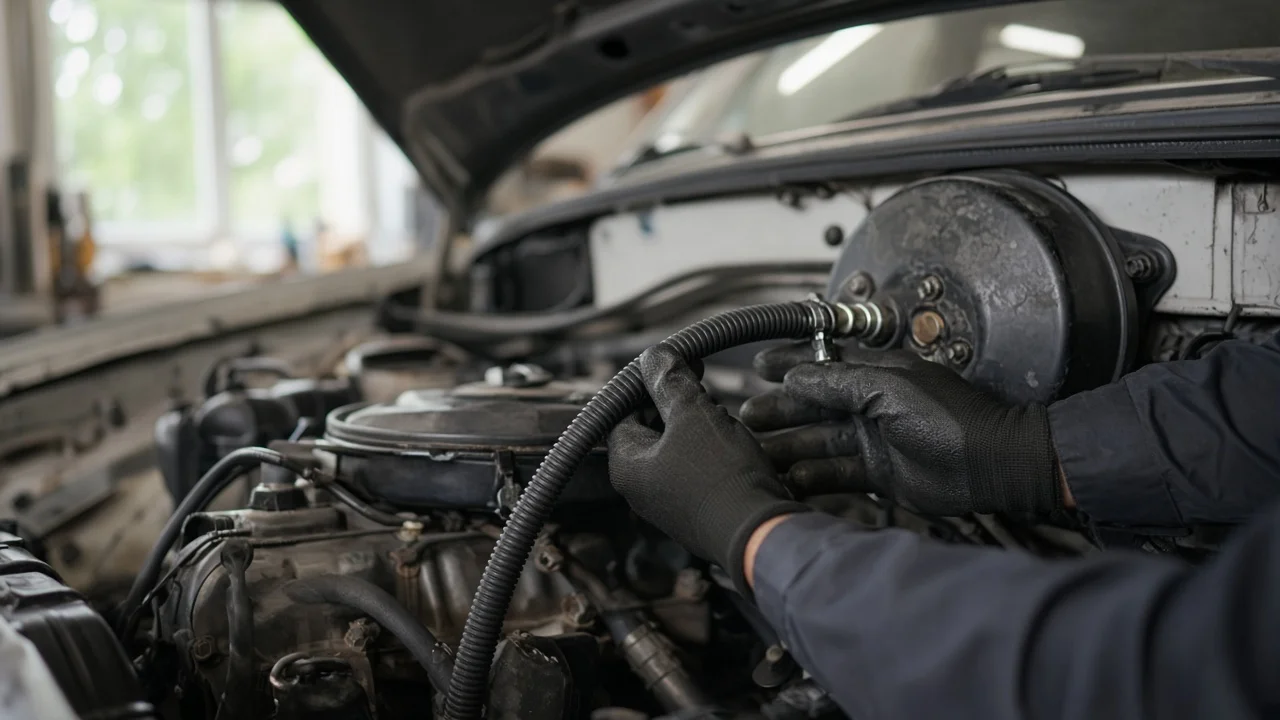
The vacuum hose that feeds a Saab brake booster looks like a simple piece of rubber, but the correct replacement depends on the model, generation, engine and sometimes the steering side of the car. A wrong hose can kink, leak or lack the check valve the system needs, and the result is a heavier brake pedal. This guide explains how to identify the right part for your Saab and when the problem calls for a professional rather than a parts order.
The short answer: match by VIN, engine and model year
No single brake booster vacuum hose fits every Saab. The reliable way to identify the correct part is to match it to the specific vehicle using the VIN, the model year and the engine designation, then compare the listed part against the hose on the car. Saab built distinct model families, including the classic 900, the 9000, two generations of the 9-3 and two of the 9-5, plus the GM-based 9-7X and 9-4X and the Subaru-based 9-2X. Each family can use its own routing, hose length, connector shape and check valve arrangement.
If a parts listing only says 'fits Saab' without narrowing by model, generation and engine, treat the vehicle fitment as unconfirmed. A dealer or specialist with access to the factory parts catalog can decode the VIN and identify the original part. That original part is the most dependable reference, even if you later buy an equivalent aftermarket hose.
How the booster vacuum hose works
A vacuum brake booster sits between the brake pedal and the master cylinder. It uses the difference between vacuum on one side of an internal diaphragm and atmospheric pressure on the other to multiply the force you apply to the pedal. The vacuum hose carries that vacuum to the booster from the intake manifold or, on some engines, from a separate vacuum pump.
A one-way check valve, either built into the hose assembly or fitted at the booster, lets air leave the booster but stops it flowing back in. This holds a limited reserve of vacuum if the engine stalls and, on turbocharged engines, keeps boost pressure in the intake from reaching the booster. If the hose cracks or collapses, or the valve fails, assist drops and the pedal becomes harder to push. The hose does not act on the brake pads, brake rotors, caliper or brake fluid directly; it only changes how much effort the driver needs to apply them.
Model and engine differences that change the part
Engine type is usually the biggest factor. Many Saab petrol engines are turbocharged, so the intake manifold sees both vacuum and positive pressure, and a working check valve is essential. Diesel engines generally produce little useful manifold vacuum, so diesel versions typically rely on an engine-driven vacuum pump, which means a different hose path and different connection points. Within one model, a four-cylinder and a V6 can also route the hose differently because the intake layout changes.
Generation matters as well. The first and second generations of the 9-3 and 9-5 are different cars underneath, so a hose for one will not necessarily fit the other despite the shared name. The GM-based and Subaru-based models follow the engineering of their donor platforms rather than older Saab designs, so their hoses are specified accordingly. Changes can also occur partway through a generation, which is why the model year alone is not always enough.
Steering side can change the routing too. On right-hand-drive cars the booster is on the opposite side of the bulkhead, so the hose length and shape may differ from a left-hand-drive car, and imported or converted vehicles deserve extra care. Body style, such as sedan, wagon or convertible, usually matters less than engine and year, but it should still be confirmed in the catalog rather than assumed.
What to check before ordering and fitting
Start with the car itself. Record the VIN, model year, engine code and transmission, and photograph the existing hose from end to end, including both connections and any valve. Note whether the check valve is a separate part pushed into the booster grommet or an integral section of the hose, and whether the ends use plain push-on fittings, quick connectors or clamps. Compare these details with the replacement before installing it. Shape matters: a molded hose that is too long or bent differently can kink and restrict vacuum.
Material counts as much as shape. Use a hose made for brake booster vacuum service, not generic fuel or heater hose, because it must resist collapsing under vacuum and tolerate oil vapor from the crankcase ventilation system. If the old valve or grommet is hardened or cracked, replace it at the same time, and confirm that the valve is oriented to allow flow from the booster toward the vacuum source.
A simple pedal check helps confirm the diagnosis. With the engine off, press the pedal several times to use up stored vacuum, then hold light pressure and start the engine; the pedal should sink slightly as assist arrives. A hissing sound near the bulkhead, a pedal that stays hard, or a rough idle with a lean fault code can point to a leak in the hose or valve. The same symptoms can also come from other vacuum lines or from the booster itself.
Limitations and the safe next step
This guide cannot replace the factory parts catalog or service information for your exact car. Part numbers, routing and superseded parts vary, and a description that looks right is not proof of fitment. If a replacement kit comes with a different valve design than the original, check the service information or ask a Saab specialist before fitting it.
Take braking symptoms seriously. A hard pedal, a pedal that sinks toward the floor, pulling to one side or grinding noises are not always vacuum problems; they may involve brake fluid, the master cylinder, a caliper or friction material worn past its wear limits. If the pedal feels abnormal, stop driving the car and have the braking system inspected by a qualified technician. After any repair to the booster vacuum supply, check pedal feel at low speed in a safe area before returning to normal driving.