Saab 9-3 Turbo Boost Control Valve: Identification and Checks
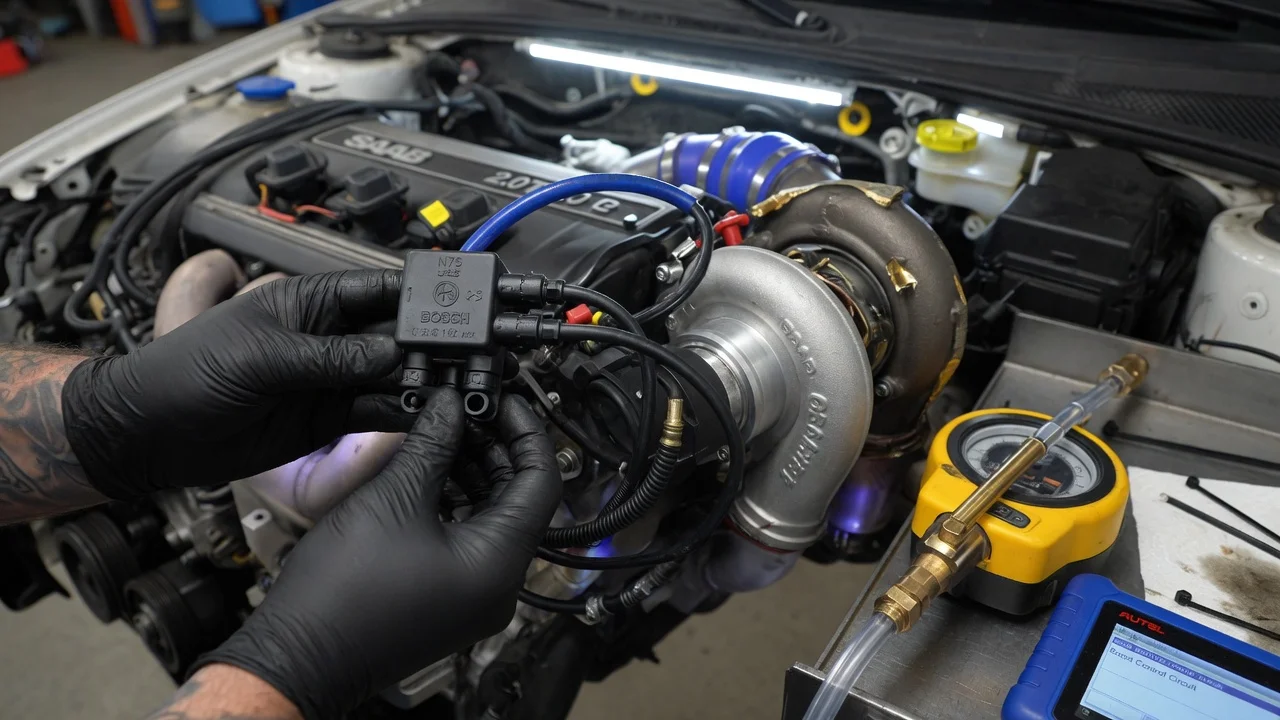
On a petrol turbocharged Saab 9-3, the boost control valve is an electrically operated solenoid. The engine control module uses it to regulate how much pressure reaches the wastegate actuator, which sets how much boost the engine makes. When the valve misbehaves, the car may feel flat, surge, or drop into reduced power. Several other faults cause the same complaints, so this guide covers identifying the valve, recording symptoms and checking it in an order that avoids replacing parts on a guess.
Establish the symptoms
Start by pinning down the exact vehicle configuration: model year, generation (the original 9-3 built through 2002 or the redesigned car from 2003 onward), engine, transmission and body style. Diesel versions use a different boost control arrangement, so confirm your engine before following any petrol procedure. Also note whether the engine has been tuned. Aftermarket software or a manual boost controller changes how the valve is commanded and what normal boost looks like, and it affects how any fault should be interpreted.
Next, record when the problem appears. Note whether it happens cold or warm, at light or full throttle, in a particular gear or rpm range, in hot weather or after a long climb. Describe how power changes: a gradual fade, an abrupt cut, or a surge that comes and goes. Write down whether the check engine light is on and, if the car has a boost gauge, whether it reads low, erratic or higher than usual. Listen for hissing, whooshing or fluttering under load. Finally, list recent changes from the service history, such as hose or intercooler work, a replacement turbocharger, engine repairs or a battery disconnection, because disturbed or misrouted hoses after work are a frequent source of boost complaints.
Distinguish plausible causes
The valve itself can stick, leak internally, develop an open or shorted coil, or lose contact through a corroded connector or damaged wiring. A sudden onset, a stored code pointing to the valve control circuit, and identical behavior regardless of temperature all support a valve or wiring fault. The case for the valve weakens if you find cracked hoses, a boost leak or another fault that fully explains the symptoms.
The small rubber lines connecting the valve to the turbo outlet, the wastegate actuator and the intake side age, soften and split, especially at their ends. Larger leaks from intercooler hoses, loose clamps or a failed bypass valve also reduce boost; low boost accompanied by hissing under load points toward a leak. A torn wastegate actuator diaphragm or a wastegate stuck open causes little or no boost, while a wastegate that will not open, or hoses connected the wrong way, can cause overboost and a protective fuel cut. Faulty pressure or intake air sensors feed the engine management wrong information, which can make a healthy valve look faulty. The engine management also reduces boost when it detects knock, so poor fuel quality or ignition problems can mimic a boost control fault. Turbocharger wear usually brings additional clues such as whining, oil smoke or oil inside the intake piping.
Checks in a useful order
Begin with safe observations, engine off and cool. Inspect every hose attached to the valve for cracks, splits, softness or loose ends, and compare the routing with the service information for your exact engine. Check the electrical connector for corrosion, a broken locking tab or chafed wiring. Look over the intercooler hoses and clamps for splits, movement or an oily film that suggests a leak. Fix anything obviously damaged before moving on, because later tests will be misleading if a known leak remains.
The following checks need tools and specifications. Read stored and pending codes with a scan tool that can access Saab engine data, and save them before clearing anything. Live data comparing requested and actual boost, along with the valve's commanded output, is the most useful view; logging it on the road needs a passenger and a safe, legal place to drive. Where the tool offers an output test, the valve should respond when commanded. Coil resistance and supply voltage must be compared with manufacturer specifications rather than generic figures. A smoke or pressure test of the intake tract finds leaks that cannot be seen, and a hand pump applied to the wastegate actuator shows whether the rod moves and the diaphragm holds pressure.
Leave work to a qualified technician if it requires raising the car, removing heat shields near a hot turbocharger, back-probing connectors without the right equipment, or interpreting boost logs you are not confident reading. A professional inspection is also sensible when results conflict with each other.
Interpret the findings
A cracked or misrouted hose explains many boost faults on its own. Repair it, clear the codes you recorded, and retest before considering a new valve. A control circuit code together with out-of-specification coil resistance points to the valve or its wiring; checking the harness and connector separates the two. If the engine management commands more boost but actual pressure stays low, look at mechanical causes first: leaks, the wastegate, the bypass valve or the turbocharger, with a stuck valve still possible. If actual boost exceeds the request while the commanded output drops, the wastegate is likely not opening, the hoses may be connected incorrectly, or the valve may be stuck.
A valve that clicks during an output test has not been proven good; it can operate electrically and still leak internally or regulate poorly. Fitting a known-good valve is a valid way to confirm the diagnosis, but verify that the part matches your vehicle configuration. After any repair, confirm the result with a repeat log under the same operating conditions rather than relying on how the car feels, since the engine management may take some driving to update its learned values.
Urgency and next action
Stop driving and arrange recovery or inspection if you see signs of overboost, such as a gauge reading far above normal or repeated abrupt power cuts, or if you hear knocking under load, see a flashing check engine light, notice blue or white smoke, smell burning, find oil leaking around the turbocharger or hear a new loud noise from it. If the car simply has reduced power with a steady warning light, drive gently to a workshop and avoid full throttle, towing and situations where you need strong acceleration, such as overtaking or merging, because limited power is itself a hazard. No fixed remaining mileage can be considered safe; it depends on the actual cause.
Give the workshop the information that shortens diagnosis: VIN, model year, engine, any tuning or modifications, the stored codes with freeze frame data, a log of requested and actual boost if you have one, the checks you have already completed and their results, and recent work from the service history. Ask for confirmation of the cause before parts are replaced, and request that the final test drive or data log confirm boost now follows the request.