Saab 9-3 Rough Idle: Common Causes and Fixes for 2006-Era Cars
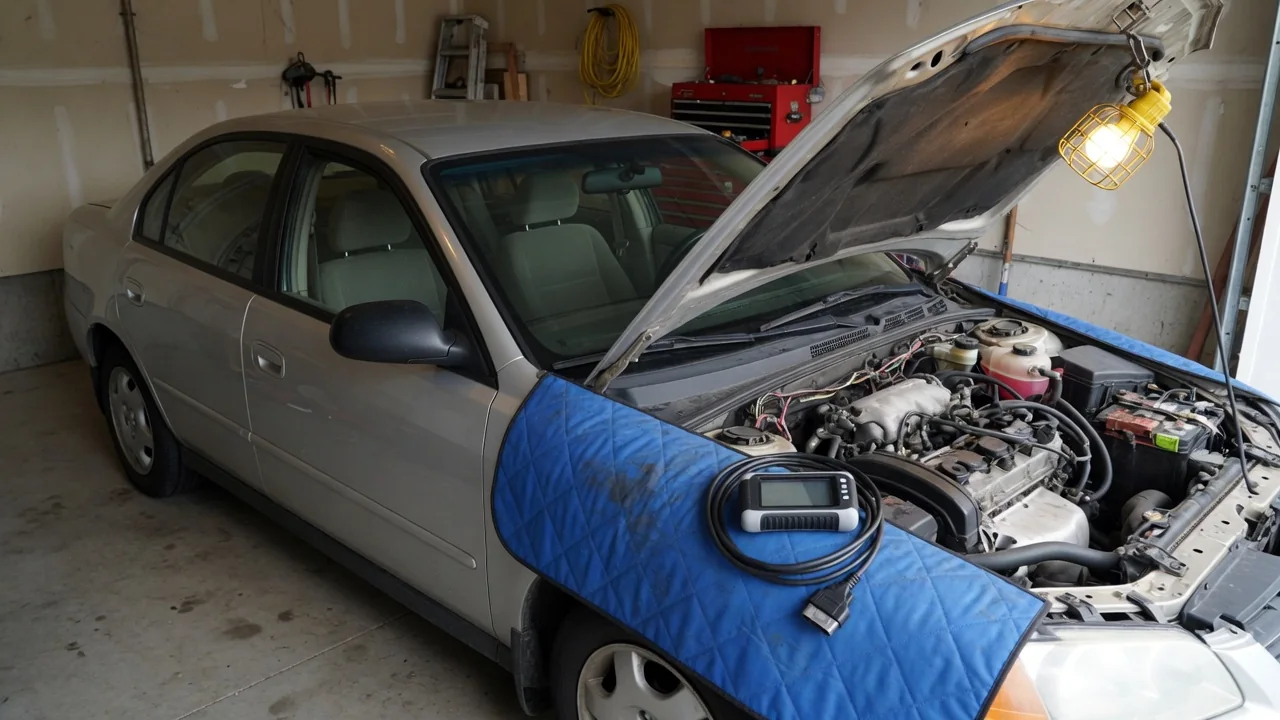
A rough idle on a 2006 Saab 9-3 often feels like an unsteady shake at stoplights, with the tachometer needle wandering between 600 and 1,000 rpm while the cabin trembles. Owners may notice the engine stumbling in drive but smoothing slightly in neutral or when the air conditioning cycles. These symptoms usually point to mixture, ignition, or idle-control faults rather than internal engine wear. Pinpointing the exact cause requires observing when the roughness occurs and whether the check engine light accompanies it.
What a Rough Idle on a Saab 9-3 Looks and Feels Like
The classic Saab 9-3 rough idle is a rhythmic trembling at rest that sometimes clears when the engine warms up, which hints at a cold-start mixture problem. In an automatic, shifting into drive often makes the vibration more pronounced because load increases and idle speed drops, while in park or neutral the shake may nearly disappear. A hunting idle—where the needle swings between 500 and 1,000 rpm in a repeating cycle—points to idle control or vacuum issues rather than a single-cylinder misfire, which tends to be a steady stumble at all engine speeds.
Note the conditions precisely: does the roughness appear only with the A/C on, after refueling, or during the first minute after a cold start? A flashing check engine light is a serious warning that raw fuel may be reaching the catalytic converter, so reduce driving and have the car inspected promptly. A steady light usually allows a short trip to a shop, but recording whether the light is on, off, or flashing when the idle is rough gives a technician a head start.
Identifying Your 2006 Saab 9-3 Engine Before Diagnosing
The 2006 Saab 9-3 was sold as a sedan, convertible, and SportCombi wagon, and engine choices varied by market and trim. The base model often used a 2.0-liter turbocharged four, while some markets also saw a 2.8-liter V6 or a diesel. Each engine has a different ignition system layout, intake manifold design, and sensor placement, so a fix that works for one may not apply to another. Confirming the engine code before ordering parts or following online repair guides prevents wasted effort and incorrect diagnosis.
The VIN contains an engine identifier—usually the fourth or fifth character, depending on the market—and the emissions label under the hood also states displacement and family. When symptoms point to a possible vacuum leak or throttle body issue, the hose routing and throttle location differ between the four and six, so a universal description of where to inspect is unreliable. Calling a Saab specialist or parts supplier with the VIN guarantees that replacement hoses, gaskets, or sensors will physically match the car.
Ignition Cassette and Coil Problems as a Rough Idle Cause
On many 2006-era Saab 9-3 engines, the ignition cassette combines the coil, igniter, and spark plug connectors in one housing mounted directly on the cylinder head. When this cassette begins to fail, it can produce misfires at idle that feel like a slight bucking or an intermittent drop in engine speed, often accompanied by codes P0300 through P0304. The problem may worsen in damp weather because moisture reduces the insulation's effectiveness, allowing spark energy to leak before reaching the plug.
Spark plugs and the cassette wear together, so a false diagnosis is common: old, wide-gap plugs can overload a marginal cassette, while a weak cassette can make new plugs misfire. Because the ignition system operates at very high voltage, even a momentary contact with a live terminal can cause a severe shock, so testing should be done with an insulated spark tester and the engine off unless proper training allows otherwise. A misfire code only identifies the cylinder that failed to fire; it cannot tell whether the cause is a plug, a coil, a fuel injector, or low compression.
Vacuum Leaks, Crankcase Ventilation and Unmetered Air
Any air that enters the engine after the mass airflow sensor is unmetered, meaning the computer injects too little fuel for the actual air charge and the mixture becomes lean. At idle a lean mixture burns slowly and unevenly, causing a fluctuating idle speed or a light stumble that clears as RPM rises. Common leak points on the 9-3 include the small vacuum hoses to the bypass valve, the oil filler cap seal, and the crankcase ventilation hoses connecting the valve cover to the intake pipe, which can crack with age and leak oil vapor.
A safe way to begin is to start the engine, let it idle, and listen for a hissing or whistling sound while moving your hand near—but not into—the belts and pulleys. Look for oily residue around hose connections, which often marks a slow crankcase ventilation leak. Lean codes such as P0171 or P2187 support the vacuum leak theory, but a smoke test performed by a shop fills the intake with a visible fog and quickly reveals the exact split or disconnected fitting without guesswork.
Throttle Body, Airflow Sensing and Idle Control
The electronic throttle body on the 2006 9-3 controls idle speed by moving a small motor that opens the throttle plate slightly when the accelerator is released. Over time, oil and carbon accumulate around the plate and bore, restricting the tiny airflow needed for a stable idle and causing the engine speed to dip below normal when coming to a stop. Symptoms include a rough idle that appears only after the car has been driven and then restarted, or a tendency to stall when coasting to a traffic light.
Cleaning the throttle body with a dedicated aerosol and a lint-free cloth can restore smooth airflow, but many 9-3 models require an idle relearn after the battery is disconnected or the throttle is disturbed. The procedure varies by year and module software and may involve turning the ignition on for a set time or driving through a specific speed range. A contaminated mass airflow sensor can cause identical stalling and rough idle symptoms, so checking live data for grams per second and sensor voltage is more accurate than replacing either part on speculation.
Other Possible Causes: Fuel Delivery, Sensors and Engine Mounts
Fuel-related causes of a rough idle include partially clogged injectors that deliver an uneven spray, a fuel pump or pressure regulator that cannot maintain the correct pressure at idle, or a tank of fuel with excessive water or ethanol phase separation. A faulty coolant temperature sensor can make the computer think the engine is cold and add too much fuel, creating a rich mixture that shakes at idle and smells like unburned gasoline. Similarly, a slow oxygen sensor can skew long-term fuel trims and gradually worsen idle quality.
Worn engine mounts are often overlooked because the engine itself may be running perfectly. At idle in drive with the brakes applied, a collapsed hydraulic mount or a hardened rubber transmission mount transmits normal engine vibrations directly to the subframe and seats. Rather than replacing spark plugs, coils, oxygen sensors, and a fuel pump one after another, a structured diagnosis using fuel pressure readings, injector balance tests, and a visual mount inspection can identify the true cause and save expensive trial and error.
Reading Codes Safely and Knowing When to See a Specialist
A basic OBD-II scan tool can display global codes like P0301 or P0171, but Saab and GM often add manufacturer-specific codes with different meanings depending on the vehicle's software version. Before interpreting any code as proof of a failed part, a reader should check the definition in Saab's own service information for that exact model and engine. For example, a generic tool might label a code as "ignition coil secondary circuit," while the Saab definition for the same number refers to a different circuit entirely.
A professional diagnosis on a rough-running 9-3 typically includes a look at live data such as short-term fuel trim, upstream oxygen sensor switching, mass airflow readings, and ignition timing. A shop can also perform a smoke test to find intake leaks, measure fuel pressure at idle and under load, and run compression or leak-down tests if a mechanical fault is suspected. Warning signs that justify immediate attention include a flashing check engine light, a strong fuel odor inside the cabin, rising coolant temperature, or stalling in traffic, where a sudden loss of power could create a hazard.