Saab 9-3 Brake Booster Check Valve: Choosing the Correct Part
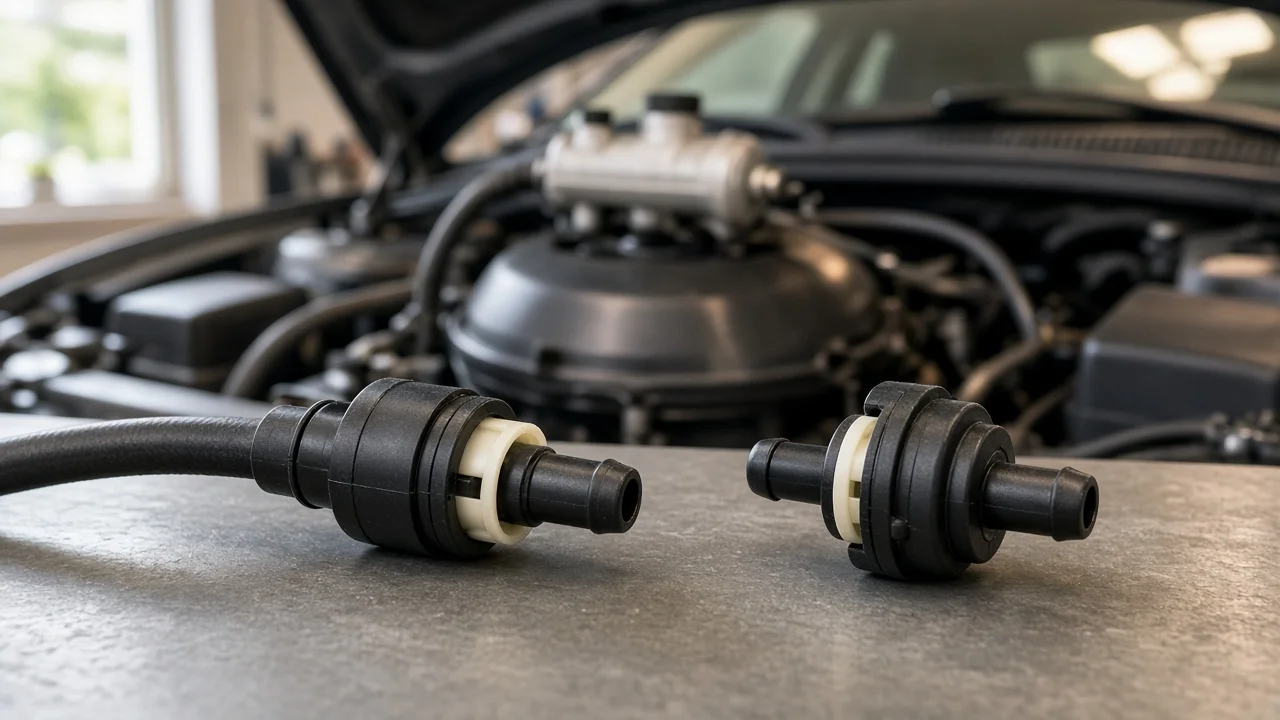
A failing brake booster check valve on a Saab 9-3 usually shows up as a hard brake pedal, a hiss under the hood or a pedal that loses its assist soon after the engine stops. The valve is small and inexpensive, but ordering the wrong one wastes time and can leave the brakes without proper assist. This guide explains how to confirm the valve is the problem, match a replacement to your car and weigh the available options before you order.
What the Check Valve Must Do on Your 9-3
The vacuum brake booster multiplies the force from your foot using a pressure difference across its diaphragm. The check valve is a one-way gate between the booster and the vacuum source. It lets air be drawn out of the booster and closes whenever the source can no longer supply vacuum: with the engine off, at wide-open throttle and, on turbocharged Saab engines, under boost, when intake manifold pressure rises above atmospheric pressure. That last condition is why the valve matters so much on a turbo 9-3. A valve that leaks in the reverse direction can let boosted air into the booster, which wipes out the stored vacuum and can stress the diaphragm. Diesel versions draw vacuum from an engine-driven pump instead of the manifold, but they still rely on a one-way valve between the pump and the booster.
Before buying anything, confirm the valve is actually at fault. Run the engine for a minute, switch it off, wait several minutes and press the pedal. A healthy system gives one or two assisted applications before the pedal turns firm. If it is hard from the first press, the vacuum reserve leaked away through the check valve, the hose, the booster grommet or the booster itself. A hiss near the pedal while braking with the engine running points more toward the booster diaphragm or its internal air valve than the check valve. With the valve removed, a hand vacuum pump should show it holding vacuum from the booster side and passing air freely toward the engine side. If the pedal is hard or the car does not stop as it should, limit driving and have the brakes inspected, because losing assist significantly increases the pedal effort needed to stop.
Check Compatibility Before Ordering
Saab 9-3 is not a single platform. The original car sold from the late 1990s through 2002 shares much of its engineering with the earlier 900, while the second generation from the 2003 model year onward uses a different platform, engine bay layout and vacuum routing. Within each generation, four-cylinder turbo, V6 turbo and diesel engines route their brake vacuum differently. Body style rarely matters for this part, but left-hand versus right-hand drive does, because the booster sits on a different side of the bulkhead and the hose length and bends change accordingly.
On many 9-3s the check valve is not a separate inline part at all. It may be built into a preformed vacuum hose assembly, or it may sit in a rubber grommet pressed into the booster shell. Identify which design your car has before shopping, then match the interfaces: hose inner diameter, the fitting at the manifold or pump end, whether that end uses a push-on connection or a quick-connect coupling, and any branch that feeds another vacuum consumer. The most reliable fitment check is a VIN lookup in a parts catalog combined with a side-by-side comparison against the removed part. Production-date splits within a model year are common, so a listing that names only the model and year is a weak basis for the order.
Features That Affect the Choice
The main decision is between a complete hose assembly and the valve alone. On cars where the valve is integrated, the assembly is usually the only correct replacement, and on high-mileage cars it is often the better choice anyway. Old nylon lines and plastic connectors become brittle with engine heat, and they frequently crack during removal even when the valve itself is the only component that failed. Buying the assembly also replaces aged rubber sections that can leak at the connections.
Source matters more than marketing language. A genuine Saab part or one from a supplier that produces original equipment vacuum components is the safest match for shape and fittings. Aftermarket assemblies vary: some replicate the original closely, while others use generic connectors that need adapting. Labels such as heavy duty or performance say nothing verifiable about a check valve. Useful evidence includes a clear part number cross-reference, published dimensions, photos that show the fittings and the molded flow-direction arrow, and fitment listed by VIN or engine code. A universal inline valve may look like a quick fix, but it must be designed for brake booster duty, sized for your hose and able to hold against boost pressure on a turbo engine. A valve meant for emissions or accessory vacuum lines is not an acceptable substitute.
Limitations and Ownership Costs
The part itself is usually a low-cost item, and on many four-cylinder cars it is reachable without removing other components. Access around the V6 can be tighter, and seized or brittle connectors often add time. Plan to replace the booster grommet if it is hard or cracked, use new clamps where the original design calls for them and install the valve with its arrow pointing toward the vacuum source, away from the booster. A valve installed backwards blocks vacuum completely and leaves the brakes without assist. After installation, repeat the engine-off reserve test and listen for leaks at idle; a vacuum leak at a new connection can also cause an unsteady idle.
A check valve only restores vacuum assist. It cannot correct brake pads with friction material worn past their wear limits, rotors that are scored or below minimum thickness, a sticking caliper, or low or contaminated brake fluid. A spongy pedal usually indicates air in the hydraulic system rather than a vacuum fault. Brake fluid found inside the booster or its hose points to a leaking master cylinder seal, and a pedal that stays hard with a confirmed good valve and hose suggests a failed booster. Those faults need professional diagnosis, and the car should not be relied on until they are repaired. Following the vehicle-specific service information for torque values, routing and fluid specifications protects both the repair and the braking system.
Build a Practical Shortlist
Start with the diagnosis: confirm that vacuum reserve is lost and that the valve fails a one-way test, or that its hose or connectors are damaged. Then record the details that define vehicle fitment: generation, model year and production date, engine, drive side and VIN. Note which design the car uses, whether that is a standalone inline valve, a valve built into a hose assembly or a valve mounted in the booster grommet, and photograph the fittings at both ends before removing anything.
Compare candidate parts against that record. Keep only options with a confirmed part number match or VIN-based fitment, fittings that match yours without adapters, a visible flow-direction marking and materials intended for under-hood heat. For turbo engines, rule out any valve not specified for brake booster use. Prefer a complete assembly when the original lines are brittle, add a new grommet and clamps to the order where needed and check the return policy in case the connectors differ. Once the part is installed, verify pedal feel and reserve assist before normal driving. If assist does not return, stop using the car for regular trips and have the braking system checked by a qualified technician.